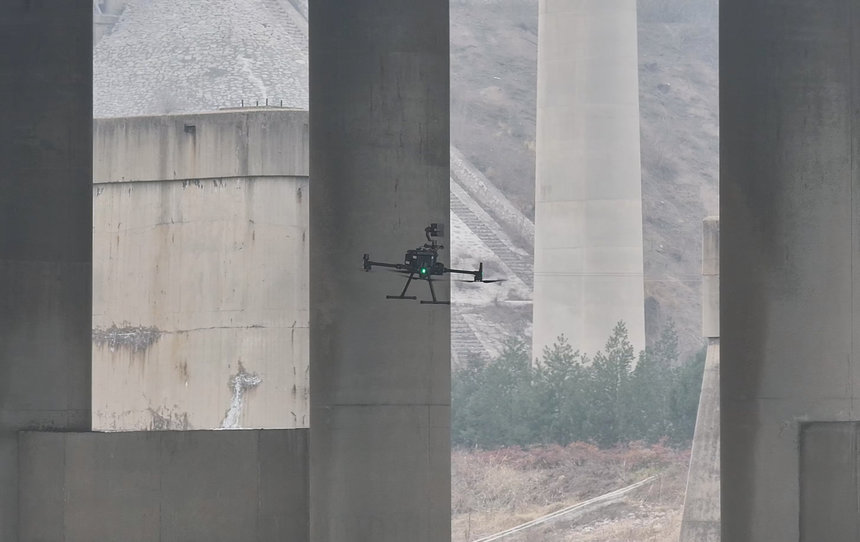
I. A Bridge That Shook the Nation
In early May 2020, videos of the Humen Bridge in Guangdong, China, swaying visibly in the wind went viral. Vehicles on the deck appeared to move along rolling waves, prompting authorities to close the bridge for inspection.
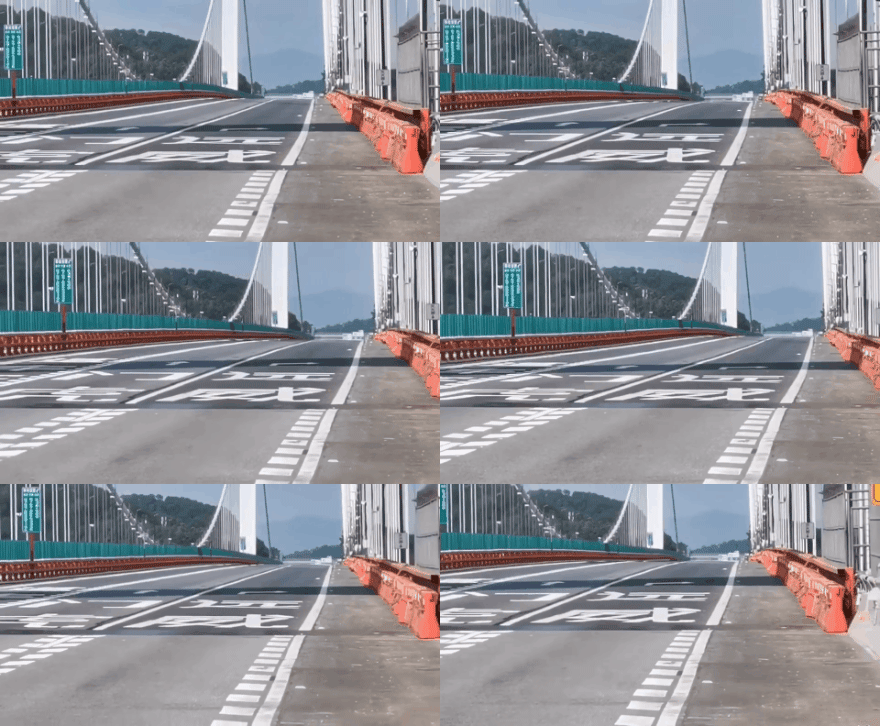
Public concern grew quickly—but experts later confirmed that the structure itself was undamaged. The phenomenon was caused by vortex-induced vibration, a wind-structure interaction where airflow generates rhythmic forces on the bridge deck.
Although no structural issues were found, this event served as a wake-up call for bridge engineers worldwide.
II. What Is “Wind-Induced Vibration”?
When wind flows past a bridge deck or cables, it separates and creates alternating vortices behind the structure. These vortices apply fluctuating aerodynamic forces, causing the bridge to vibrate.
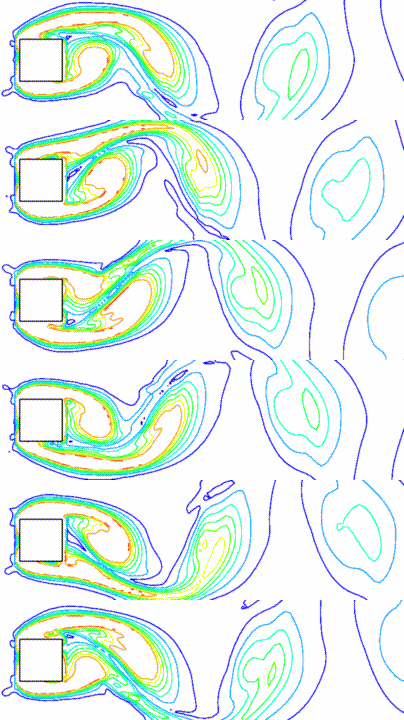
Suspension bridges—long, flexible, and lightweight—are particularly sensitive to such effects.
There are several common types of wind-induced vibration:
- Vortex-Induced Vibration (VIV): Periodic forces generated by alternating vortices, as seen in the Humen Bridge case.
- Buffeting: Random, turbulent vibration caused by gusty winds.
- Flutter: A dangerous self-excited vibration where aerodynamic and structural forces reinforce each other—potentially leading to collapse.
III. The Tacoma Narrows Bridge: A Historic Lesson in the Power of Wind
In 1940, the Tacoma Narrows Bridge in Washington State, USA, dramatically collapsed just months after opening. At the time, it was one of the longest and most elegant suspension bridges in the world.
However, its slender, streamlined deck had poor aerodynamic stability. Under moderate winds of around 19 m/s, the bridge began to twist and oscillate violently.
Eyewitnesses described the roadway rising and falling several meters, as if in slow motion. Within minutes, the central span broke apart and plunged into the water—a catastrophe immortalized on film and studied ever since.
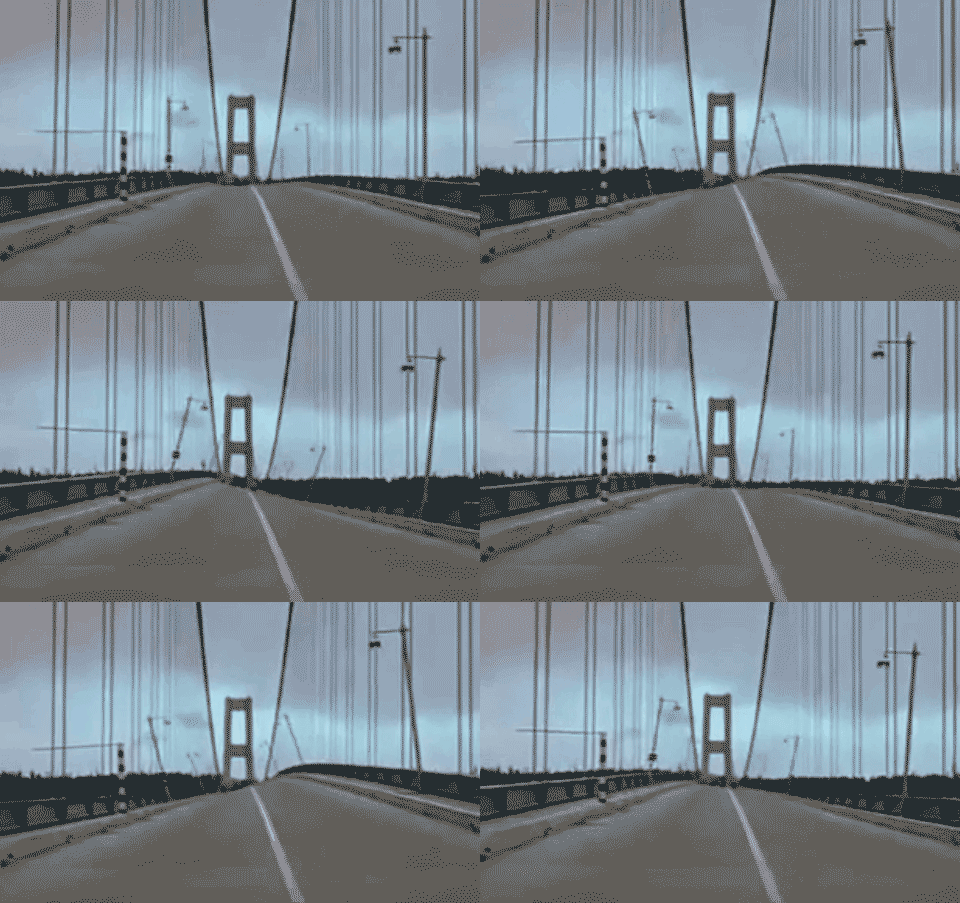
This tragedy taught engineers an unforgettable lesson:
“A bridge must not only withstand static loads—it must live with the wind.”
The Tacoma disaster revolutionized bridge aerodynamics, leading to modern practices such as wind tunnel testing, aerodynamic deck design, and vibration damping systems.
IV. What Really Happened to the Humen Bridge?
Unlike Tacoma, the Humen Bridge vibration was not a design flaw—it was triggered during maintenance operations that unintentionally altered the bridge’s aerodynamic shape.
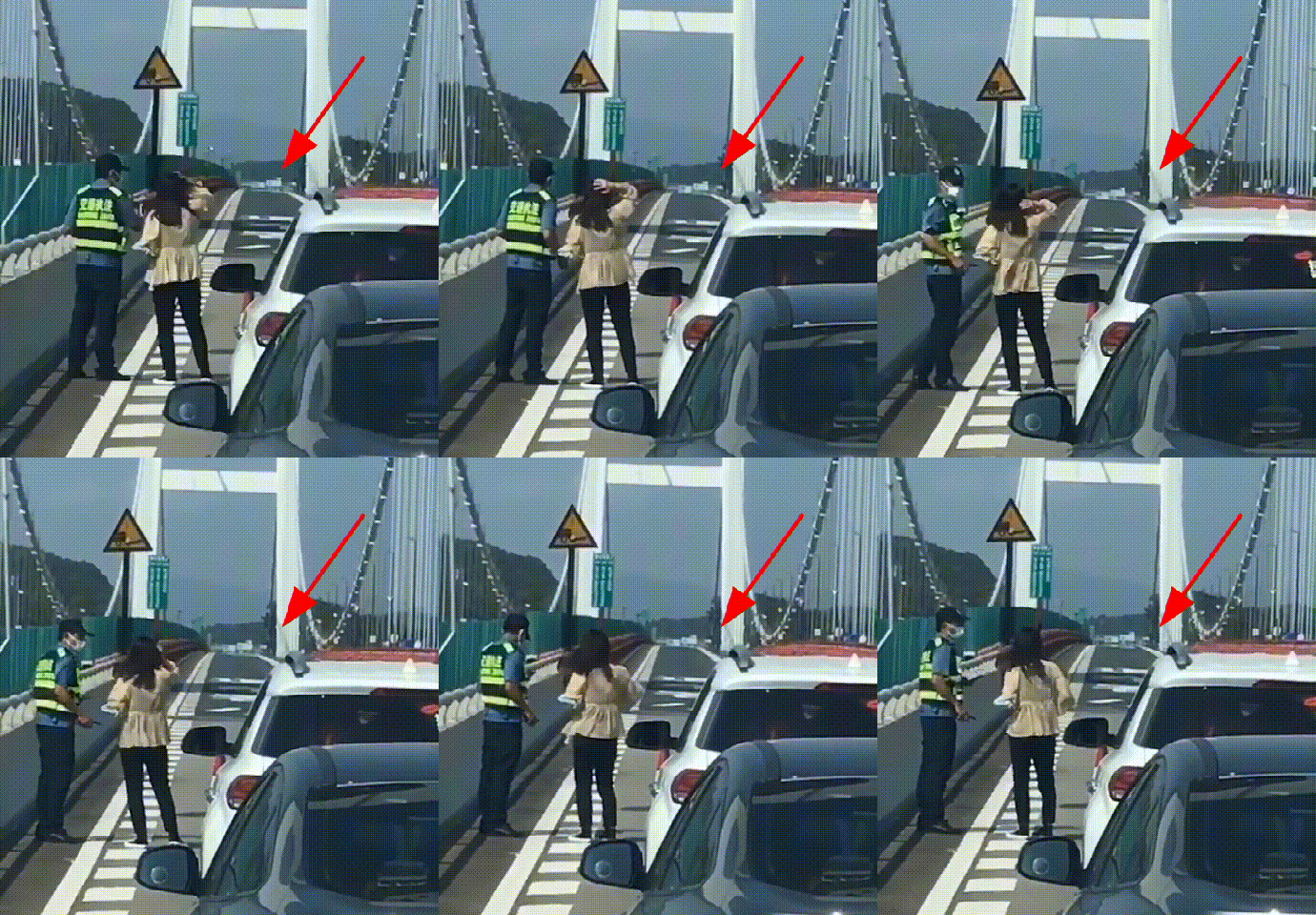
During maintenance, plastic water-filled barriers (known as “water horses”) were continuously installed along both sides of the bridge deck to separate traffic.

This modification disrupted the bridge’s original airflow pattern, changing the separation points and creating regular, alternating vortices under certain wind speeds.
When these vortex frequencies matched the bridge’s natural frequency, resonance occurred—amplifying the vibrations.
The phenomenon was significant but non-destructive, and it stopped once the barriers were removed.
Summary of causes:
- Continuous barriers changed the aerodynamic profile
- Specific wind speeds triggered vortex formation
- Vortex shedding frequency matched the bridge’s natural frequency → resonance
- Low damping allowed vibrations to persist
Although the event lasted only a short time, it highlighted how small aerodynamic changes can have major dynamic consequences.
V. Engineering Insights: Preventing Bridge Vibrations
The Humen Bridge incident offered valuable insights for both design and maintenance of long-span bridges. Modern suspension bridges should incorporate vibration prevention at every stage—from design to operation.
1. Aerodynamic Optimization
Use wind tunnel testing and Computational Fluid Dynamics (CFD) simulations to refine deck and tower shapes, minimizing vortex formation and wind turbulence.
2. Vibration Damping Systems
Install Tuned Mass Dampers (TMDs), viscous dampers, or liquid dampers to absorb excess vibration energy and enhance structural damping.
3. Real-Time Bridge Health Monitoring
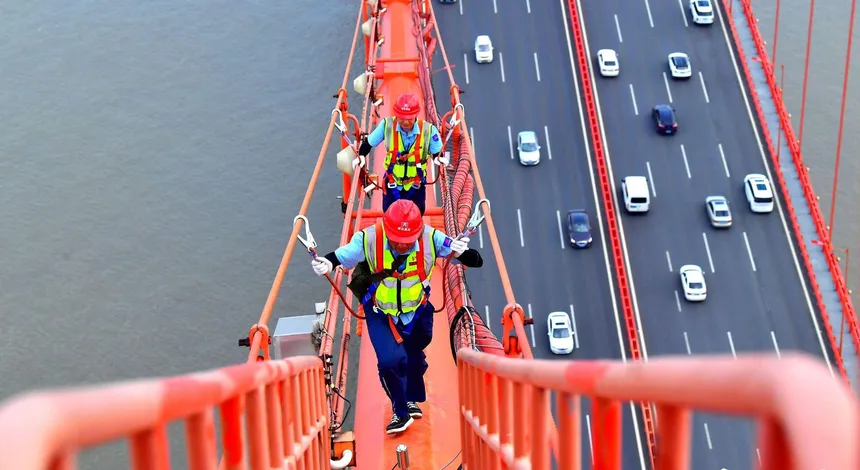
Equip bridges with sensors for wind speed, acceleration, and cable tension.
When abnormal vibration patterns are detected, automated alerts can trigger traffic control or temporary closure.
4. Risk Management During Maintenance
Temporary structures—such as scaffolding, barriers, or wind shields—should undergo aerodynamic evaluation before installation. Even small modifications can drastically alter airflow behavior.
VI. Conclusion: Bridges That Live in Harmony with the Wind
The Humen Bridge vibration incident reminds us that bridge safety depends not only on strength but also on aerodynamic understanding.
From the collapse of the Tacoma Narrows Bridge to the vibration of the Humen Bridge, engineers have continually learned how to balance flexibility with stability.
In the future, with digital twin models, AI-based monitoring, and adaptive damping systems, bridges will no longer merely endure the wind—they will respond intelligently to it.
When that day comes, suspension bridges will truly dance with the wind, not be swayed by it.