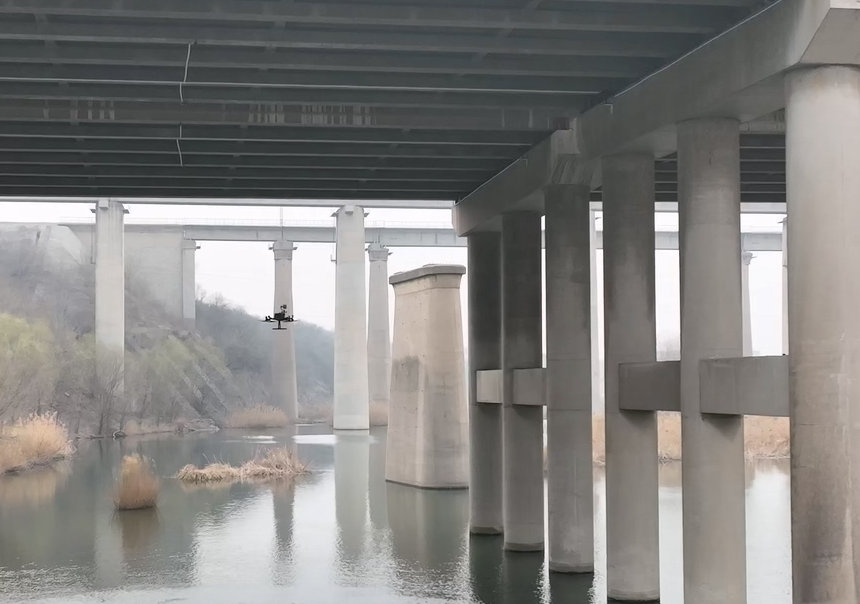
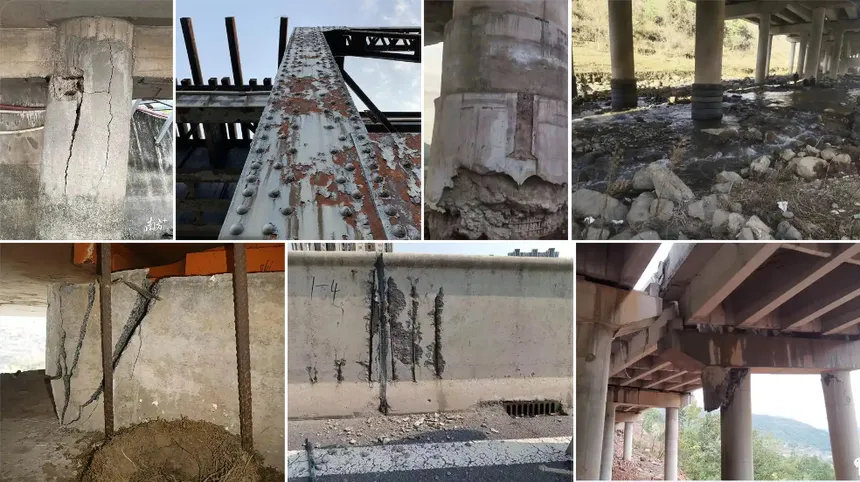
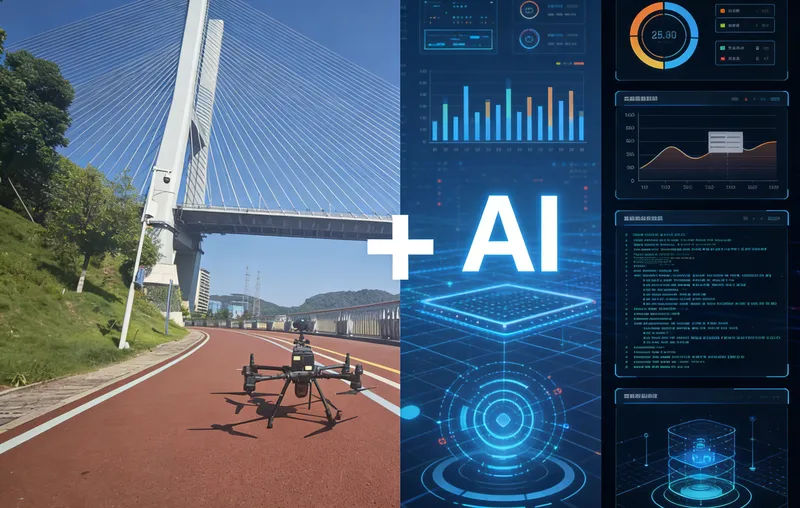
Drone-based bridge inspection is becoming an increasingly important method for monitoring infrastructure. Compared with traditional manual inspections, drones can quickly capture high-resolution images of bridge decks, piers, cables, and under-deck structures without requiring scaffolding or lane closures.
When combined with artificial intelligence, drone imagery can help engineers automatically detect structural defects such as cracks, corrosion, and spalling. However, identifying cracks from drone images is far more complex than it may seem.
Cracks are often extremely small, bridge surfaces are highly textured, and environmental conditions can significantly affect image quality. These factors make automated crack detection a challenging task for computer vision systems.
Understanding these challenges helps explain why advanced technologies—such as high-resolution imaging, AI algorithms, and intelligent flight planning—are essential for reliable drone bridge inspection.
1. Very Small Crack Size
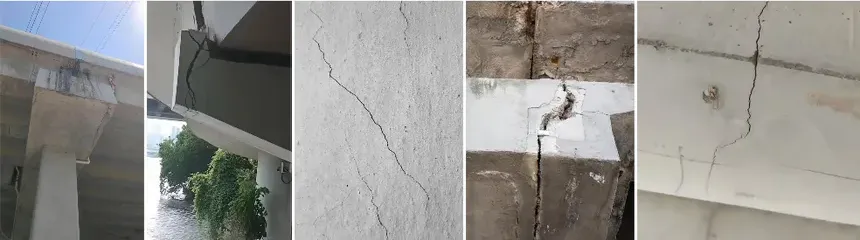
One of the biggest challenges in drone-based crack detection is the small size of structural cracks. Typical characteristics:
- crack width: 0.1–0.3 mm
- irregular shape
- very low contrast with surrounding concrete
When captured by drones, these cracks may occupy only a few pixels in an image. If the camera resolution or flight distance is not optimized, the crack may simply disappear in the image.
To address this problem, inspection systems typically use:
- high-resolution cameras (20–60 MP)
- close-range flight paths
- image enhancement algorithms
- AI models trained specifically for small object detection
Riebo’s drone bridge inspection practical experience has shown that images with a resolution of 0.05 millimeters can be captured at a safe distance of 2 meters.
2. Complex Surface Textures
Concrete surfaces often contain natural textures and irregular patterns that look similar to cracks.
Examples include:
- construction joints
- surface scratches
- formwork marks
- weathering patterns
- stains and dirt
These patterns can easily confuse AI models. In computer vision, this problem is called false positives—when the AI identifies a crack where none exists.
Reducing false positives requires:
- large and diverse training datasets
- careful annotation of real defects
- advanced models capable of distinguishing structural cracks from surface noise
3. Lighting and Shadows
Lighting conditions have a major impact on crack detection.
Bridges create complex lighting environments due to:
- shadows from girders and cables
- strong sunlight reflections
- dark areas under the deck
- uneven illumination along the structure
Shadows can easily resemble cracks in images. Conversely, excessive brightness may wash out small defects.
To mitigate this challenge, inspection systems may use:
- HDR imaging
- adaptive exposure cameras
- AI models trained with images from different lighting conditions
4. Drone Motion and Image Blur
Drones operate in dynamic environments where wind and vibration can affect image quality.
Even small movements may cause:
- motion blur
- focus errors
- image distortion
Blurred images significantly reduce the AI model’s ability to detect fine cracks.
Modern drone inspection workflows therefore rely on:
- stabilized gimbal cameras
- slow flight speeds
- automated waypoint missions
- image quality filtering before AI analysis
5. Difficult Inspection Locations
Some parts of a bridge are very difficult to inspect from the air.
Examples include:
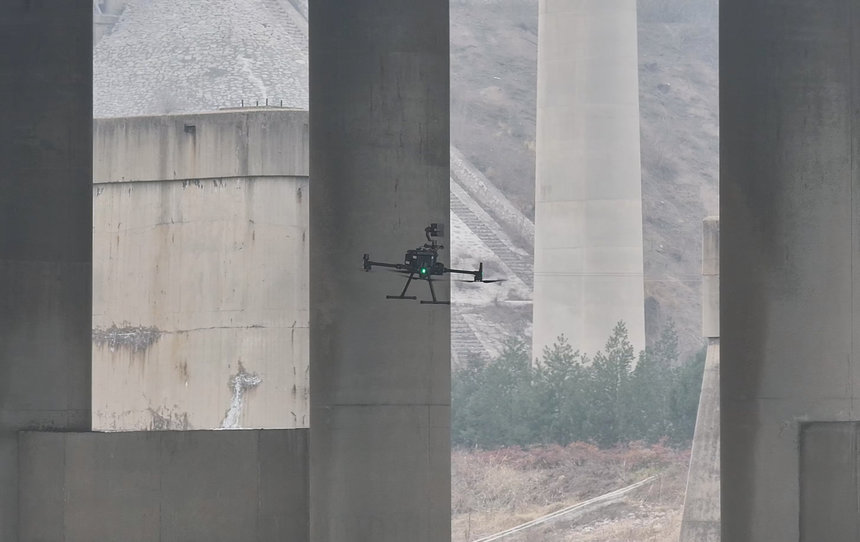
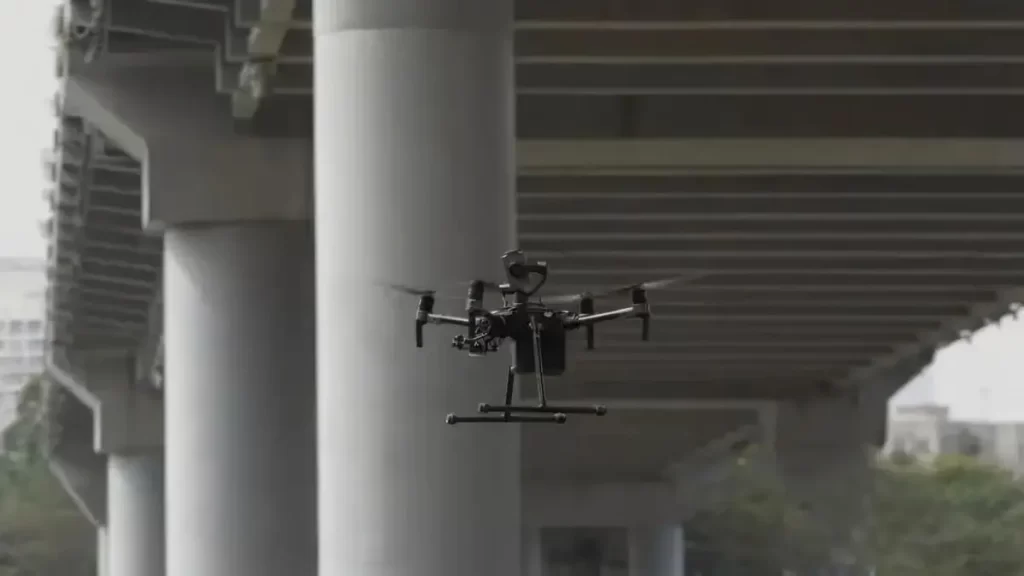
- the underside of bridge decks
- narrow spaces between girders
- areas with weak GNSS signals
- confined environments under the bridge
In these locations, drones may have difficulty maintaining precise positioning or stable imaging.
Advanced inspection solutions address this through:
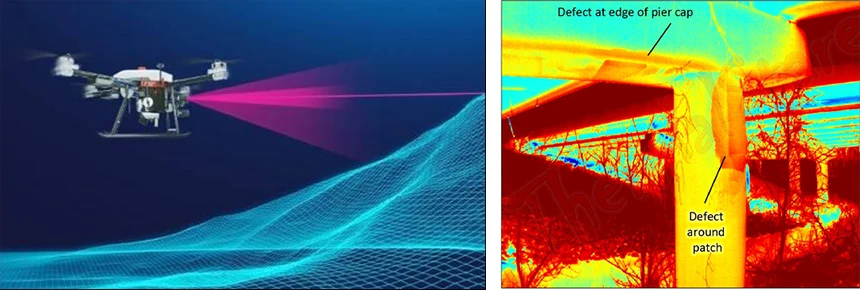
- visual positioning systems
- LiDAR-based navigation
- obstacle avoidance sensors
- autonomous inspection flight planning
Conclusion
Detecting bridge cracks from drone images is a complex task influenced by many technical factors, including crack size, surface textures, lighting conditions, drone stability, and inspection accessibility.
However, with the continued development of computer vision algorithms, high-resolution imaging, and intelligent drone navigation, automated defect detection is becoming increasingly reliable.
As infrastructure monitoring demands grow worldwide, drone-based bridge inspection supported by AI is expected to play a crucial role in improving inspection efficiency, safety, and data accuracy.