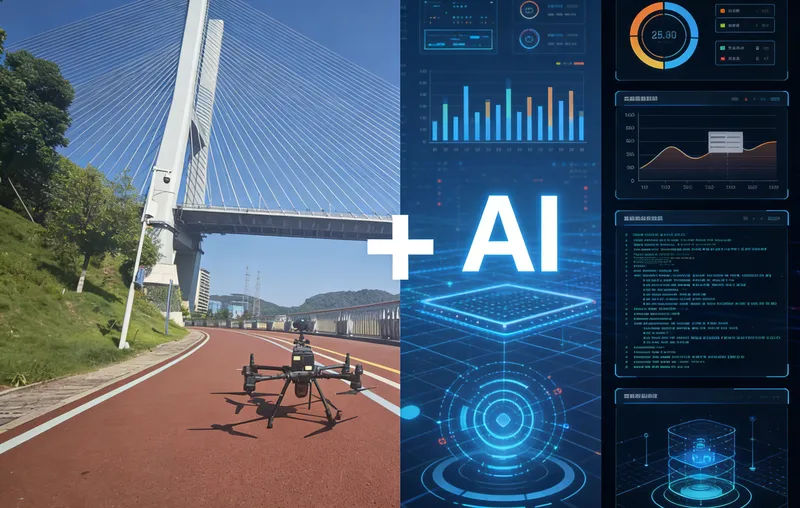
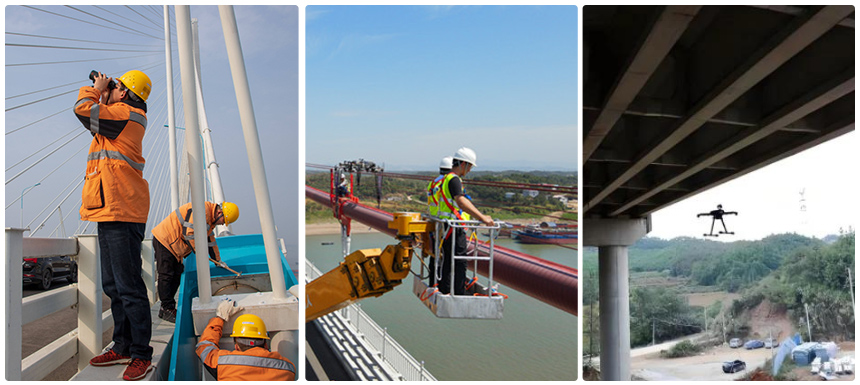
Bridges are critical components of transportation infrastructure, supporting economic activity and daily mobility. While most bridge inspections focus on visible superstructures, a significant portion of structural risks originates below the waterline.
Underwater bridge components are constantly exposed to harsh environmental conditions, including water flow, corrosion, sediment movement, and biological growth. These factors accelerate structural deterioration and make defects difficult to detect using traditional inspection methods.
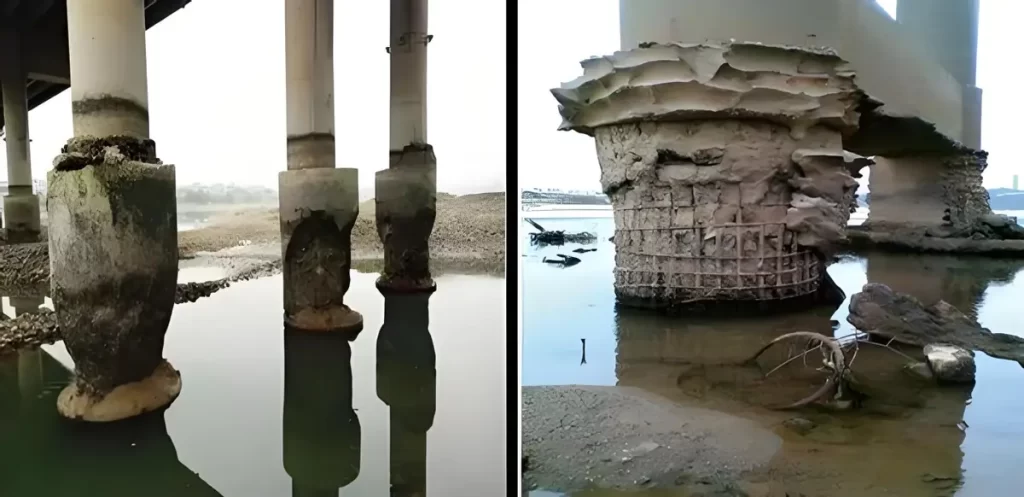
Studies and field inspection experience indicate that a large percentage of bridge defects originate in underwater components, making underwater bridge inspection an essential part of comprehensive bridge condition assessment.
With the growing adoption of drone and robotic technologies, underwater bridge inspection is becoming safer, more efficient, and more accurate.
Why Underwater Bridge Inspection Is Critical
Underwater bridge structures operate in one of the most aggressive environments for civil infrastructure. Unlike visible bridge components, underwater structures often deteriorate unnoticed until significant damage has already occurred.
Key environmental challenges include:
- Continuous water exposure
- Strong current and scour effects
- Chemical corrosion
- Sediment movement
- Biological attachment and growth
- Limited visibility
 Biological attachment and growth
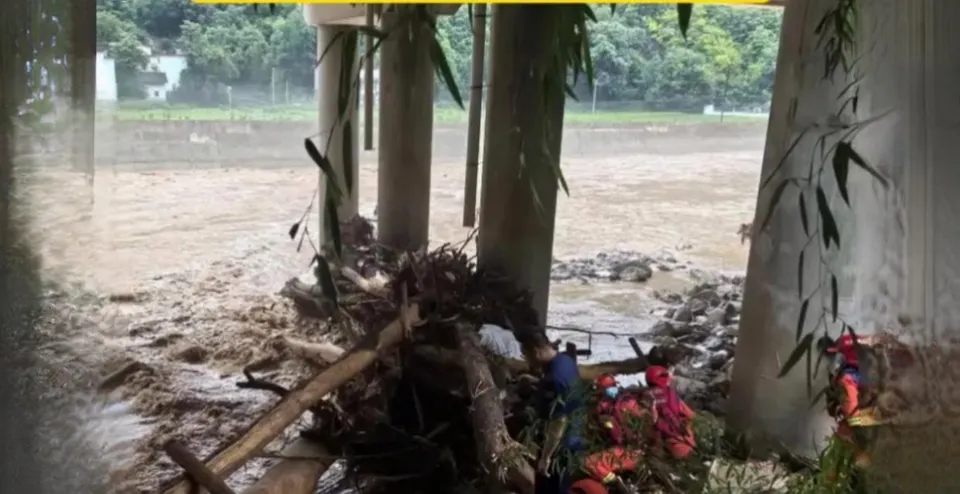 Water flow and floating objects impact
These conditions increase the likelihood of structural deterioration, especially in aging bridges.
In many regions, a large percentage of bridges have been in service for more than 20 years, increasing the risk of hidden underwater damage. Without regular underwater inspection, structural issues may remain undetected until they pose serious safety risks.
Key Underwater Bridge Components Requiring Inspection
Underwater bridge inspection typically focuses on structural elements that are partially or fully submerged.
These components include:
Bridge Piers
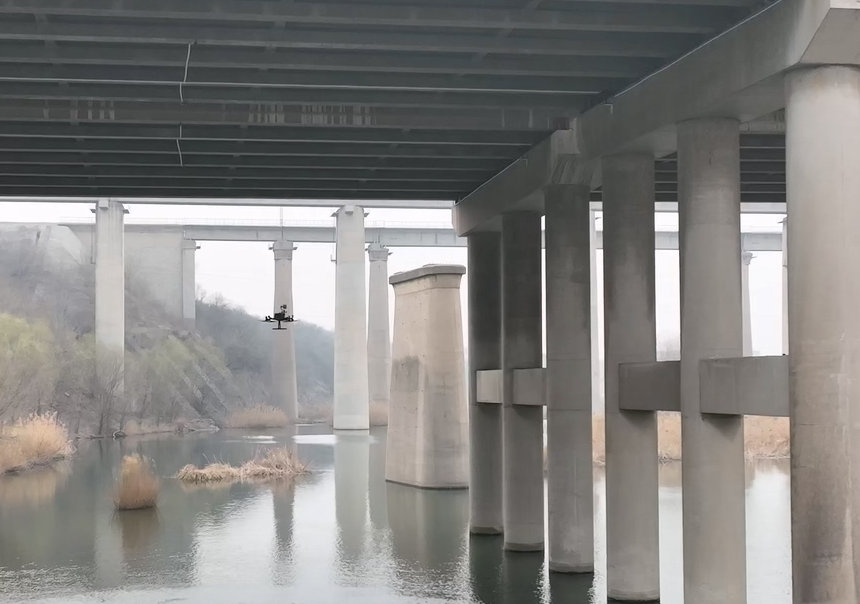
Bridge piers are directly exposed to water flow and are vulnerable to:
- Scour
- Concrete erosion
- Reinforcement corrosion
- Impact damage from floating debris
Bridge Abutments
Bridge abutments located near water bodies often experience:
- Soil erosion
- Foundation exposure
- Settlement
- Structural cracking
Bridge Foundations and Piles
Bridge foundations are critical load-bearing elements that are difficult to inspect manually.
Common issues include:
- Foundation scour
- Structural weakening
- Corrosion of reinforcement
- Sediment displacement
Pile Caps and Footings
Pile caps located underwater may suffer from:
- Concrete spalling
- Reinforcement exposure
- Material degradation
- Structural displacement
Protective and Anti-Collision Structures
Protective systems such as fenders and anti-collision structures may also experience:
- Impact damage
- Corrosion
- Structural loosening
Regular inspection of these elements is essential for maintaining bridge safety.
Common Underwater Bridge Defects
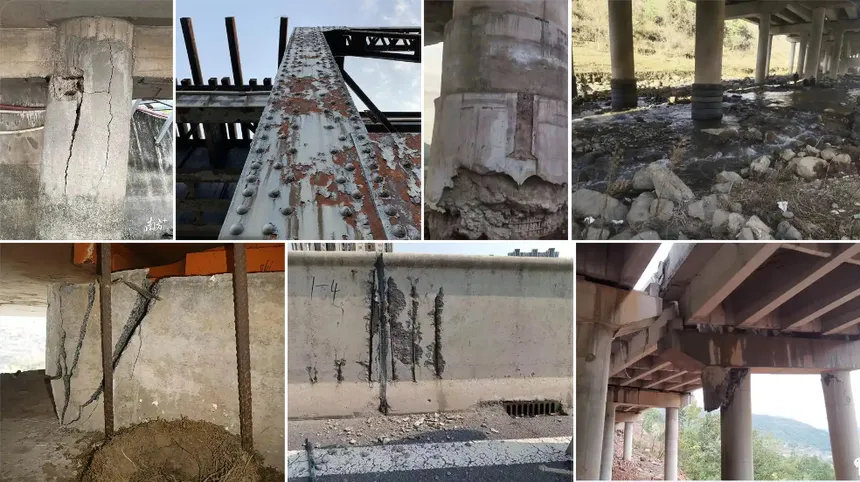
Underwater bridge inspection often reveals several recurring structural issues.
Scour Around Bridge Foundations
Scour is one of the most critical risks for bridge stability.
It occurs when water flow removes sediment around bridge foundations, leading to:
- Reduced foundation support
- Structural instability
- Increased risk of collapse
Scour is difficult to detect without underwater inspection technologies.
Concrete Spalling and Surface Deterioration
Long-term water exposure can lead to:
- Surface erosion
- Concrete spalling
- Material weakening
These defects may expose reinforcement and accelerate structural damage.
Reinforcement Corrosion
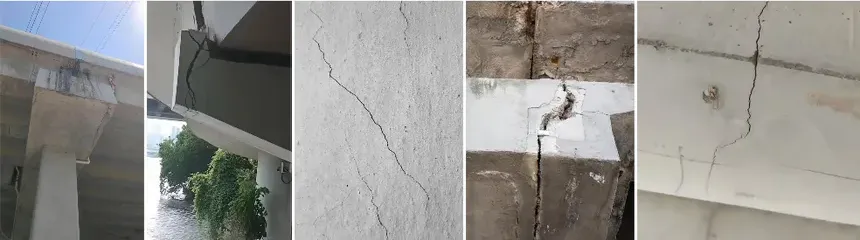
Water exposure accelerates steel reinforcement corrosion, which can cause:
- Cracking
- Structural weakening
- Reduced load capacity
Corrosion is often hidden beneath water surfaces and requires specialized inspection.
Biological Growth and Marine Fouling
Biological growth such as algae, shells, and aquatic organisms may:
- Accelerate corrosion
- Obscure structural defects
- Increase inspection difficulty
These factors further complicate underwater inspection.
Challenges of Traditional Underwater Bridge Inspection
Traditional underwater bridge inspection methods often involve:
- Diver-based inspections
- Manual measurement
- Limited visual assessment
- Safety risks in strong currents
- Limited inspection time
These challenges create several limitations:
Safety Risks
Diver-based inspections can be dangerous due to:
- Poor visibility
- Strong water currents
- Depth limitations
- Weather conditions
Limited Data Accuracy
Manual inspections may:
- Miss small defects
- Provide limited documentation
- Lack repeatable inspection data
Low Efficiency
Traditional methods often require:
- Traffic control
- Specialized equipment
- Extended inspection periods
These factors increase inspection costs and operational disruption.
How Drone and Robotic Technologies Improve Underwater Bridge Inspection
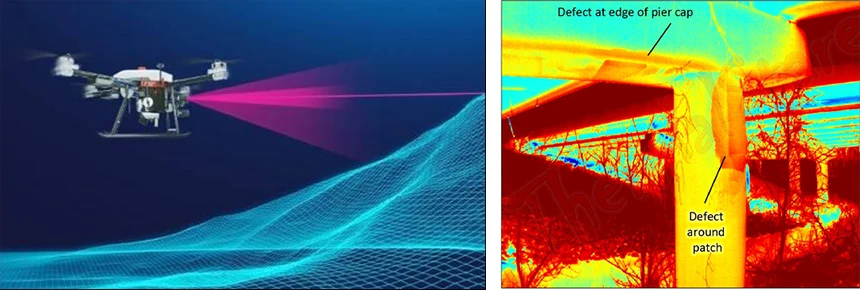
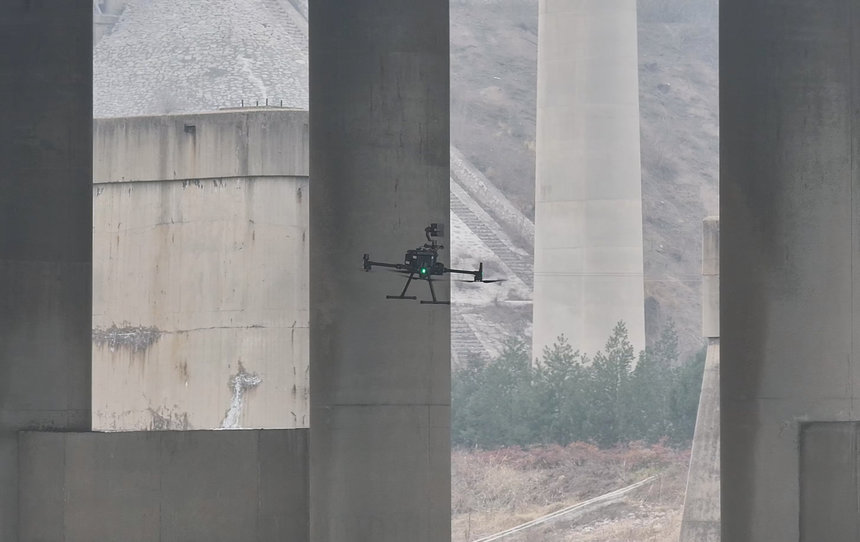
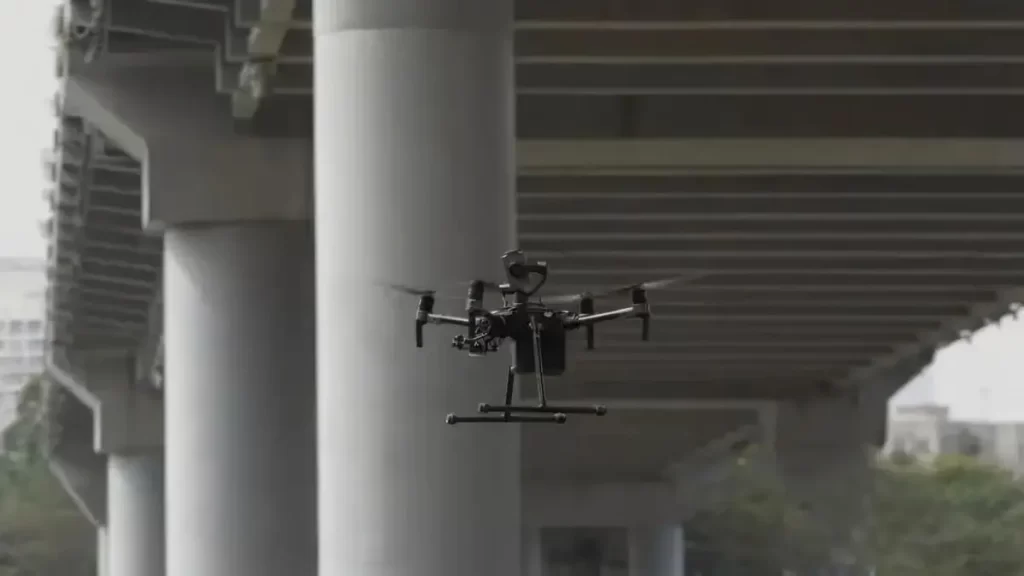
Modern bridge inspection solutions combine drones, underwater robots, and digital technologies to improve inspection performance.
Aerial Drones for Above-Water Structures
Drones are used to inspect:
- Bridge decks
- Superstructures
- Pier tops
- Bearings
Advantages include:
- Improved safety
- Faster inspection
- High-resolution imagery
- Reduced traffic disruption
Underwater Robots and Sonar Scanning
Underwater inspection technologies include:
- Remotely operated vehicles (ROVs)
- Sonar imaging
- 3D scanning systems
These technologies enable:
- Inspection in low visibility environments
- Accurate structural measurement
- Digital documentation
3D Modeling and Digital Twin Technology
Inspection data can be used to generate:
- 3D bridge models
- Digital twin environments
- Long-term condition monitoring
These capabilities support:
- Preventive maintenance
- Structural analysis
- Asset management planning
Conclusion
Underwater bridge components are among the most vulnerable parts of bridge infrastructure. Environmental exposure, corrosion, and scour make these structures prone to hidden defects that are difficult to detect through traditional inspection methods.
Modern inspection technologies, including drones, underwater robots, and digital twin modeling, are transforming underwater bridge inspection by improving safety, efficiency, and data accuracy.