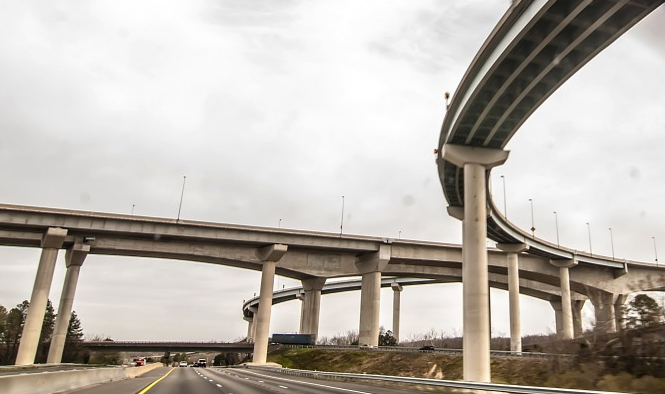
Bridge foundations are often hidden beneath water or underground, making them one of the most difficult parts of bridge structures to inspect. However, these submerged foundations are critical load-bearing components that directly determine the stability and safety of a bridge.
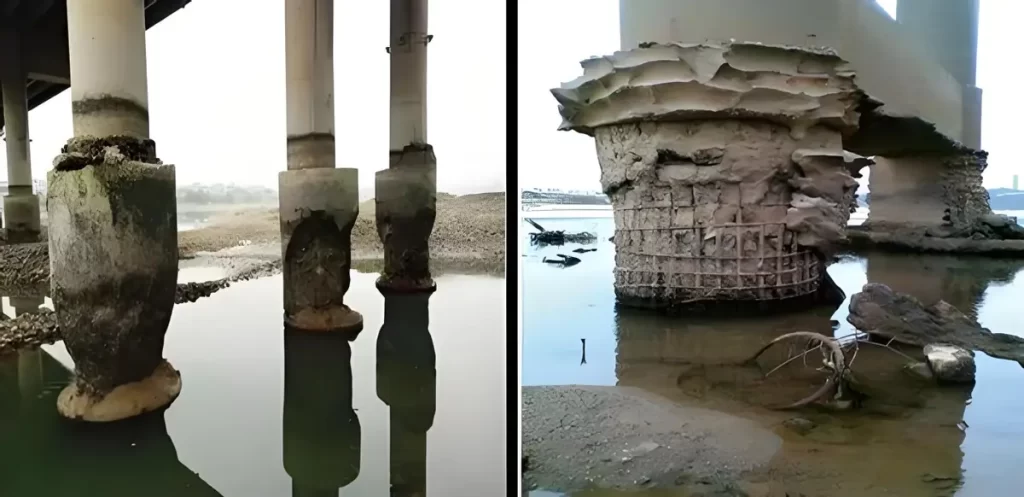
Due to complex underwater environments such as sediment movement, water currents, biological growth, and corrosion, bridge pile foundations are vulnerable to hidden defects. Without proper inspection, these issues may remain undetected until structural risks become severe.
As bridge infrastructure ages worldwide, underwater bridge foundation inspection has become an increasingly important part of bridge maintenance and asset management.
This article explores traditional underwater inspection methods, their limitations, and how modern drone and robotic technologies are transforming bridge foundation inspection.
Why Underwater Bridge Foundation Inspection Is Critical
Bridge pile foundations operate in environments that are significantly more aggressive than above-water structures. Water currents, sediment movement, and chemical exposure can gradually weaken structural components over time. These risks are particularly significant in river crossings, coastal bridges, and flood-prone regions where environmental forces are constantly changing.
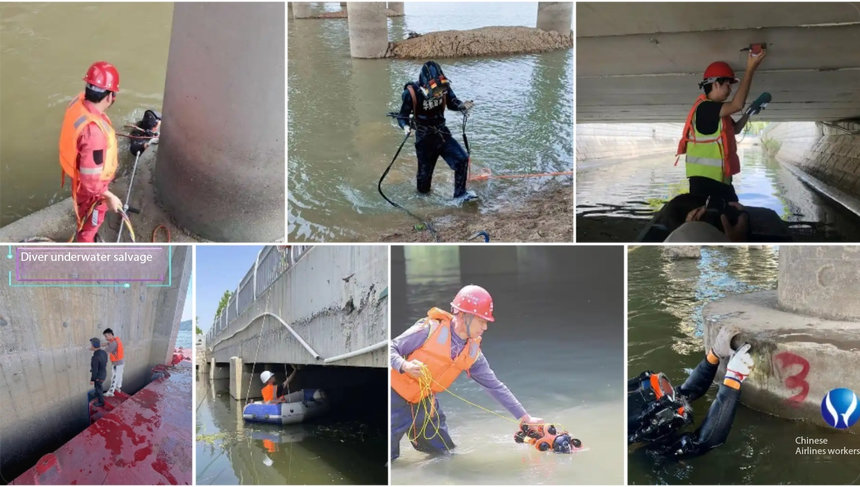
In addition, underwater structures are difficult to visually inspect during routine maintenance. As a result, structural damage such as foundation scour, concrete deterioration, and reinforcement corrosion may develop unnoticed. If these issues are not detected early, they may lead to structural instability, increased maintenance costs, and potential safety hazards.
Regular underwater inspection helps infrastructure owners detect early-stage damage, assess structural condition, and plan preventive maintenance more effectively.
Basic Underwater Bridge Foundation Inspection Methods
1. Diver-Based Touch Inspection
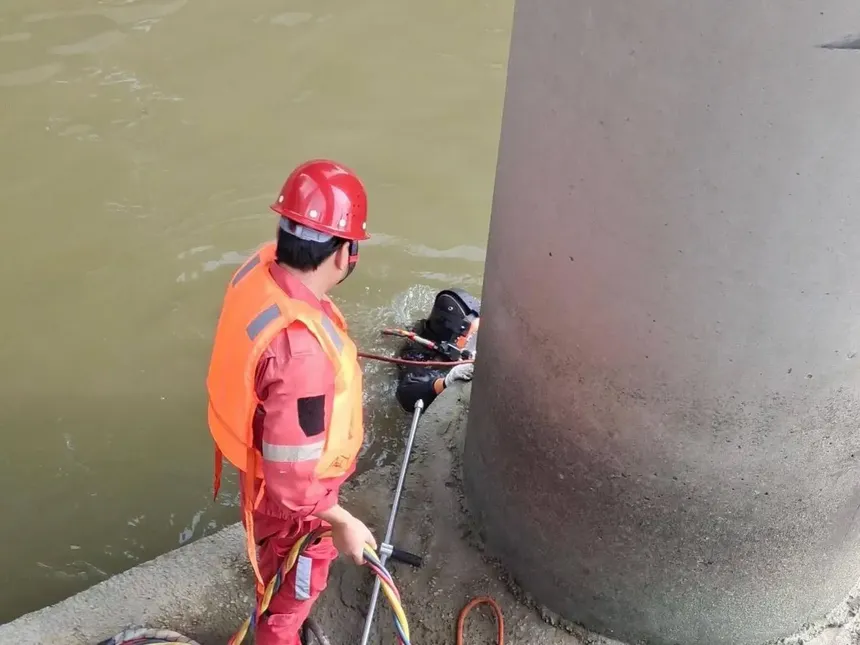
When underwater visibility is poor or water conditions are complex, diver-based touch inspection is commonly used. Experienced divers manually inspect structural surfaces by touch, identifying cracks, deformation, and structural damage. This method is particularly useful in turbid water environments where visual inspection is difficult.
However, this method also presents safety challenges. Divers operate in environments with strong currents, limited visibility, and restricted working time. In addition, inspection results depend heavily on diver experience, and documentation may be limited.
2. Underwater Photography Inspection
Underwater photography is another widely used method for inspecting bridge foundations. Divers equipped with waterproof cameras capture images of submerged structures, allowing engineers to analyze structural defects such as cracks, corrosion, and concrete deterioration.
Although underwater photography provides visual documentation, its effectiveness depends on water clarity and lighting conditions. This method also requires trained diving teams and specialized equipment, which increases operational complexity and cost.
3. Underwater Robot Inspection
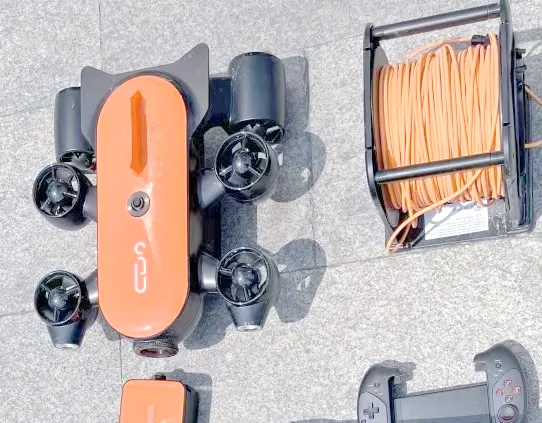
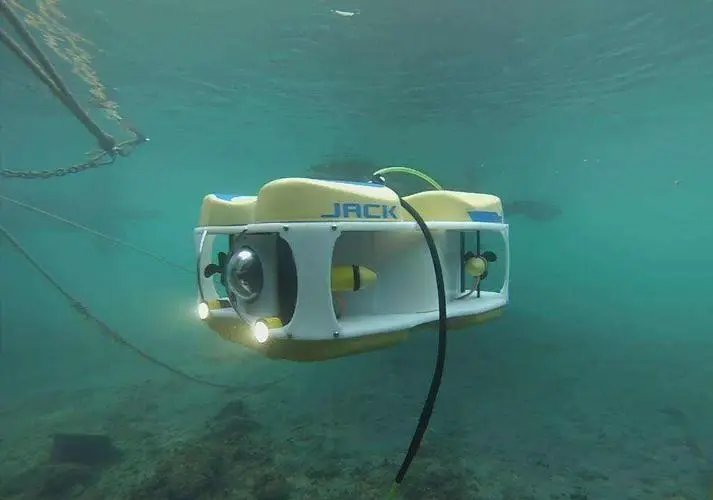
With the advancement of robotics technology, underwater robots are increasingly used for bridge inspection. Remotely operated vehicles equipped with cameras and sensors allow engineers to inspect submerged structures without sending divers underwater.
This method improves safety and enables longer inspection durations. However, underwater robots may still face limitations in low-visibility environments and require experienced operators.
4. Sonar-Based Underwater Inspection
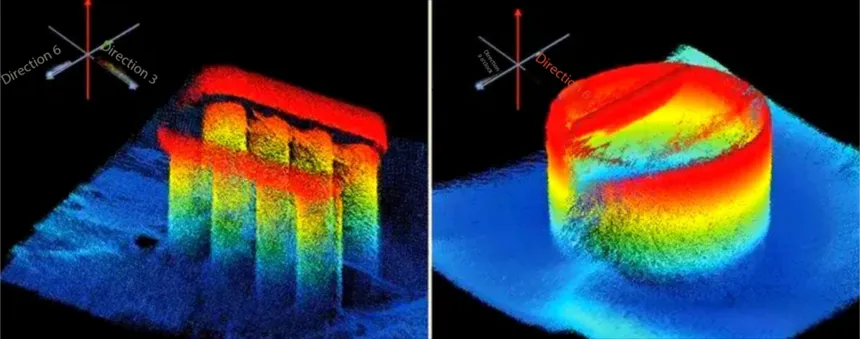
Sonar inspection uses sound waves to detect underwater structures and identify riverbed changes, foundation scour, and sediment movement. This technology is particularly useful in turbid water conditions where visual inspection is difficult.
While sonar provides broader structural assessment, it may not detect small surface defects. Therefore, sonar inspection is often combined with other inspection technologies for comprehensive assessment.
Key Inspection Items for Underwater Bridge Foundations
Underwater bridge foundation inspection focuses on evaluating structural integrity, environmental impact, and long-term stability. Because these components are submerged and difficult to access, inspections must be systematic and cover multiple aspects of structural performance. Engineers typically assess structural condition, biological influence, and riverbed stability to obtain a comprehensive understanding of foundation health.
Structural Damage Assessment
Structural damage inspection is one of the most critical aspects of underwater bridge foundation evaluation. Over time, submerged concrete and steel components are exposed to continuous water flow, sediment abrasion, and chemical corrosion, all of which can gradually weaken structural performance.
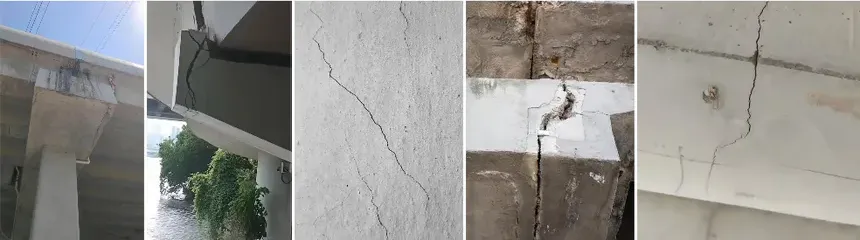
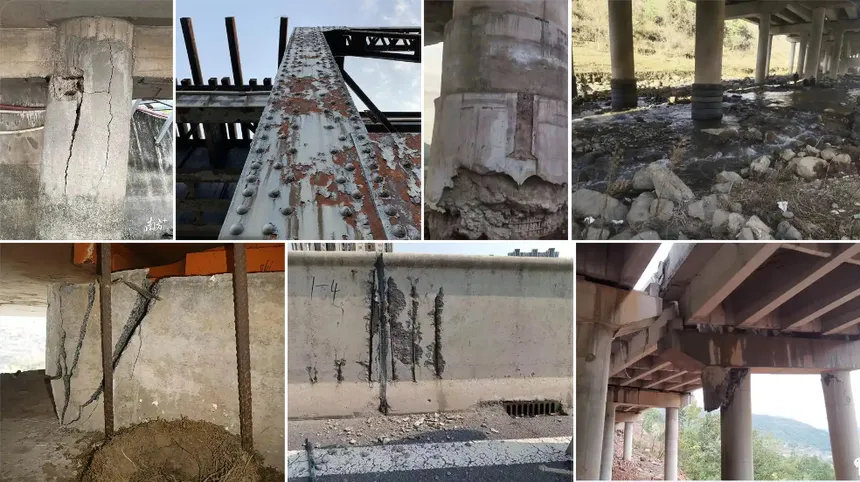
During inspection, engineers typically evaluate the presence of cracks, surface deterioration, exposed reinforcement, and structural deformation. Special attention is given to areas where concrete spalling or reinforcement corrosion may reduce load-bearing capacity. Measuring crack width, damage depth, and defect location helps determine whether the damage is superficial or structurally significant.
In addition, inspectors examine whether structural displacement or misalignment has occurred. Any movement in bridge foundations may indicate instability or ongoing scour, which can pose long-term safety risks if not addressed early.
Biological Growth and Marine Fouling

Biological growth is another important factor affecting underwater bridge foundations. Submerged structures often attract algae, shells, and other aquatic organisms that attach to structural surfaces. Over time, this biological accumulation can accelerate material deterioration and obscure critical defects.
Inspectors typically assess the extent and thickness of biological growth and evaluate whether it is affecting structural surfaces. Excessive biological buildup may trap moisture, promote corrosion, and make defect detection more difficult. In some cases, heavy marine growth may also increase hydrodynamic forces acting on bridge piers and foundations.
Understanding biological growth patterns helps engineers determine whether cleaning, maintenance, or further inspection is required.
Riverbed Scour and Sediment Movement
Riverbed scour is one of the most serious risks to bridge foundation stability. Water flow can gradually remove sediment surrounding bridge foundations, reducing support and increasing the likelihood of structural instability.
During inspection, engineers measure riverbed elevation around bridge piers and foundations and compare current conditions with historical data. Identifying scour depth and sediment displacement helps determine whether the foundation is exposed or weakened.
Monitoring riverbed changes over time is particularly important for bridges located in rivers with seasonal flooding, strong currents, or heavy sediment transport. Early detection of scour allows engineers to implement preventive measures before structural safety is compromised.
Foundation Exposure and Structural Stability
Another key inspection item involves evaluating whether bridge foundations or piles are partially exposed due to sediment erosion. Foundation exposure can increase stress concentration and accelerate deterioration.
Inspectors assess whether piles, pile caps, or footings are visible above the riverbed and evaluate potential stability risks. Any abnormal exposure or uneven support conditions may indicate structural imbalance or foundation settlement.
By combining these inspection items, engineers can develop a comprehensive understanding of underwater bridge foundation conditions and identify potential risks before they develop into major structural issues.
Challenges of Underwater Bridge Inspection
Traditional underwater inspection methods face several operational challenges. Safety risks remain one of the primary concerns, especially in strong currents, deep water, or poor visibility environments. Diver-based inspections also have limited working time and depth constraints.
Data accuracy is another limitation. Manual inspections often produce limited documentation, making it difficult to compare results over time. This lack of consistent data reduces the effectiveness of long-term bridge maintenance planning.
In addition, traditional inspection methods often involve high operational costs. Professional diving teams, specialized equipment, and extended inspection durations increase project complexity and expense.
How Drone and AI Technologies Improve Bridge Foundation Inspection
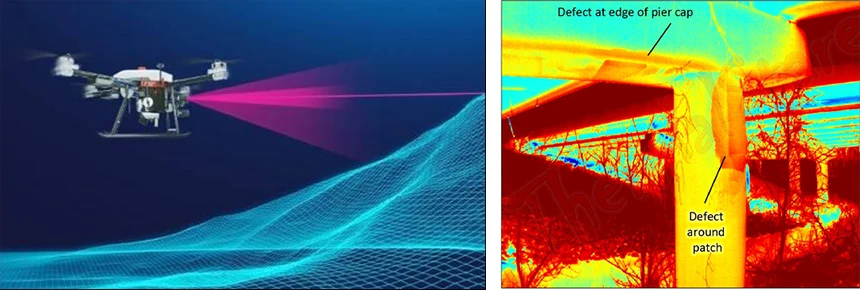
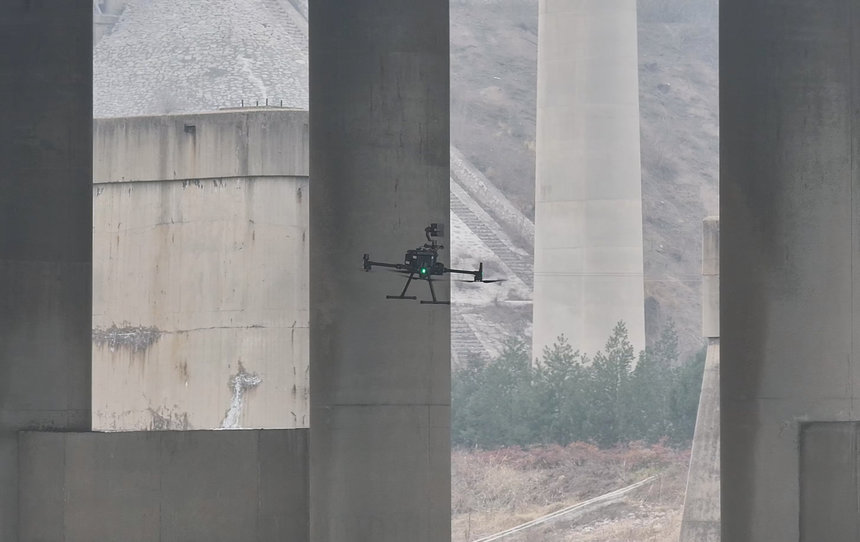
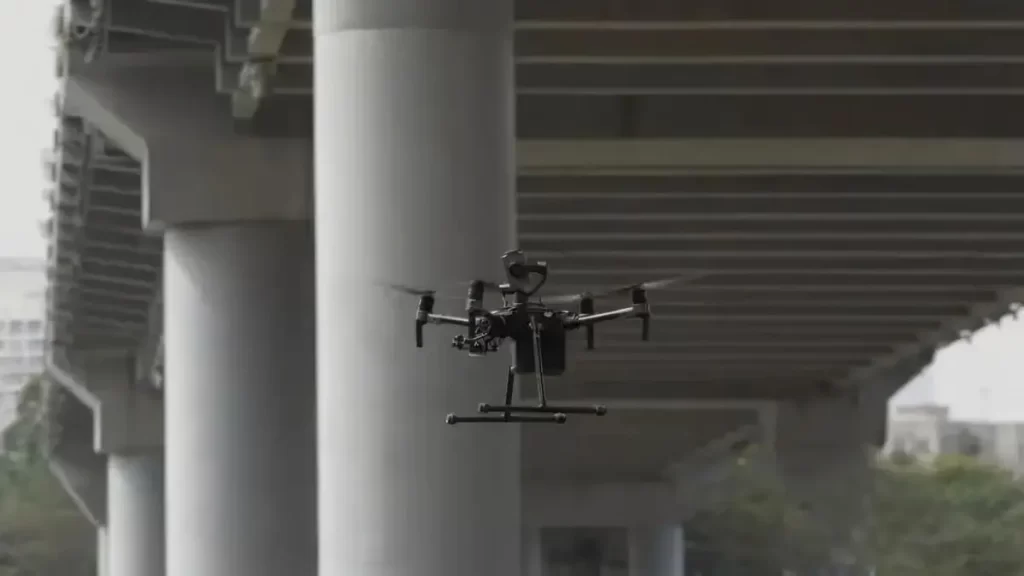
Modern bridge inspection solutions integrate drones, underwater robotics, and digital technologies to improve inspection efficiency and accuracy. Aerial drones are typically used to inspect above-water structures such as bridge decks, piers, and bearings. These systems allow engineers to capture high-resolution imagery and access hard-to-reach areas safely.
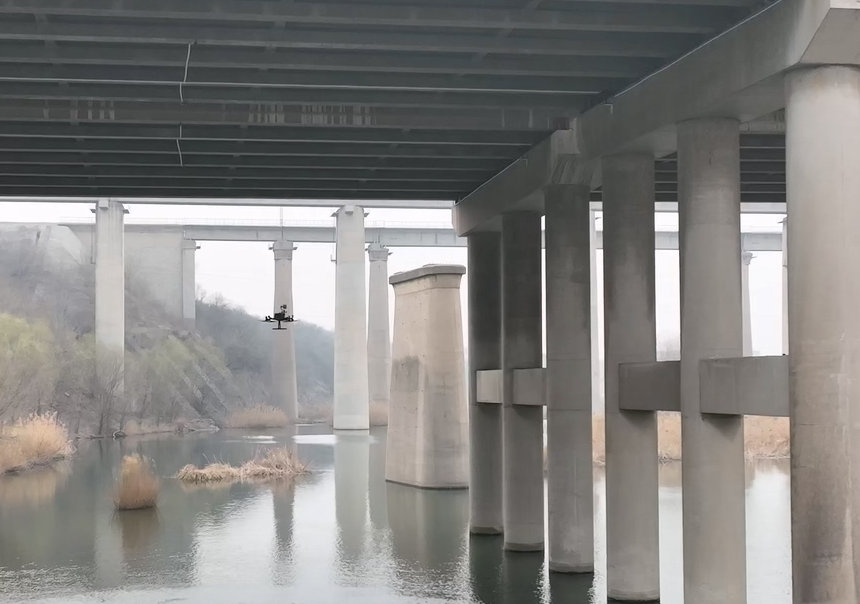
When combined with underwater robots and sonar systems, drones form part of a comprehensive inspection workflow. Above-water and underwater data can be integrated to provide a complete view of bridge conditions.
Digital twin technology further enhances inspection capabilities. By generating 3D models from collected data, engineers can visualize structural conditions, monitor changes over time, and support predictive maintenance planning.
How Riebo’s Drone Bridge Inspection Solution Supports Foundation Inspection
Riebo’s Drone Bridge Inspection Solution integrates high-resolution drone imaging, AI-based defect detection, and digital twin modeling to support comprehensive bridge assessment. The solution enables engineers to inspect hard-to-reach structures more safely and efficiently while improving defect detection accuracy.
AI-powered analysis helps identify cracks, corrosion, and structural damage from captured imagery. Digital twin models provide a visual representation of bridge conditions and support long-term monitoring. Intelligent inspection planning further improves efficiency by ensuring full coverage of bridge structures.
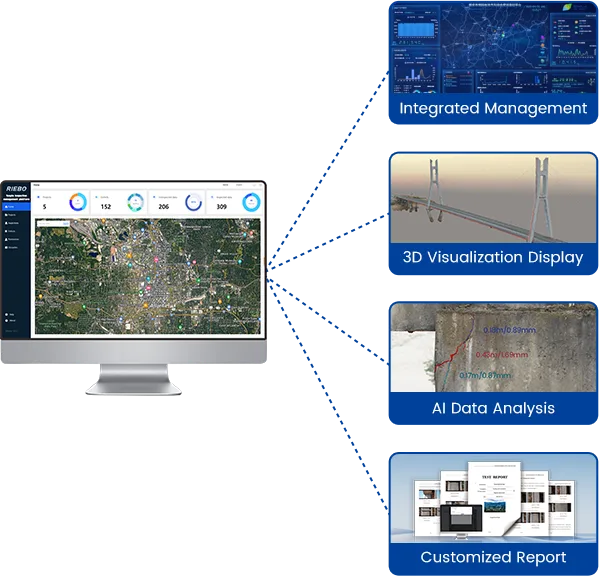
By combining these technologies, Riebo’s solution supports safer inspections, reduces operational costs, and improves maintenance decision-making.
Conclusion
Underwater bridge foundations play a critical role in structural safety but are often difficult to inspect using traditional methods. Environmental exposure, corrosion, and foundation scour increase the risk of hidden structural defects.
Modern technologies, including drones, underwater robots, and digital twin modeling, are transforming underwater bridge inspection by improving safety, efficiency, and data accuracy. With Riebo’s Drone Bridge Inspection Solution, infrastructure owners can better detect foundation risks, reduce inspection costs, and extend bridge service life through intelligent bridge inspection.