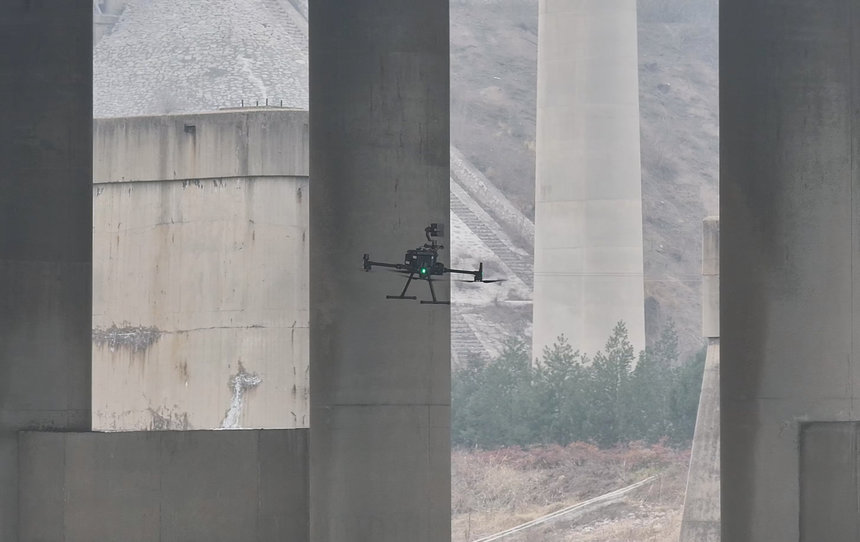
On November 11, 2025, at around 4 p.m., a section of the Hongqi Bridge in Ma’erkang City, Aba Prefecture, Sichuan Province, suddenly collapsed. The failure occurred near the right bank approach of the bridge, part of the infrastructure connected to the Shuangjiangkou Hydropower Station project.
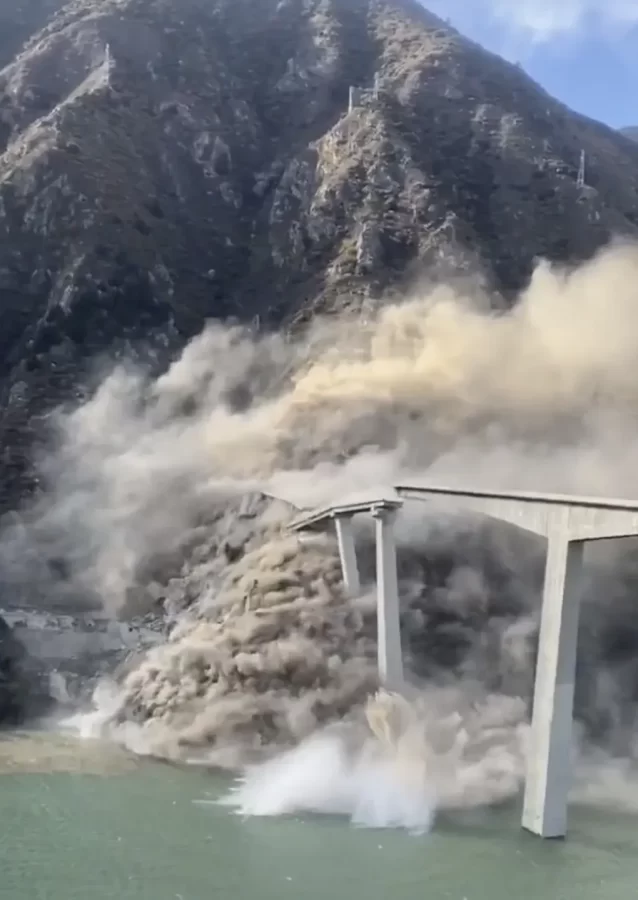
Fortunately, no casualties were reported — but the cause of this rare bridge collapse has drawn widespread public attention and professional debate.
According to reports, the day before the accident, inspection personnel discovered a 10-centimeter-wide crack near the bridge’s right abutment, approximately 30 meters away from National Highway 317. Local authorities immediately initiated emergency response measures and restricted traffic. Despite these efforts, a major slope failure and bridge collapse occurred the following afternoon.
The Collapse of Hongqi Bridge: What Happened?
Hongqi Bridge is a 758-meter-long structure that spans the upper reaches of the Dadu River in Ma’erkang. With a main span of 220 meters and piers up to 172 meters high, it was hailed as a “bridge in the clouds” upon completion. The bridge’s central span was joined in January 2025, and trial operation began in April of the same year.
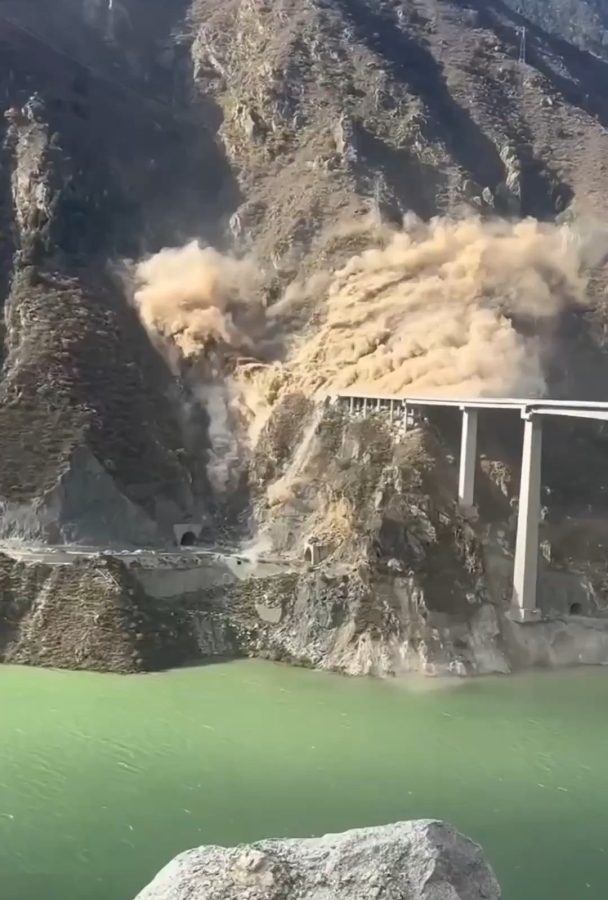
During the collapse, video footage captured powerful jets of dust and gas erupting from the slope near the bridgehead — a phenomenon that quickly became the focus of geological experts. Some specialists suggested that the slope failure might have been triggered by the eruption of underground high-pressure gas rather than traditional causes such as rain-induced landslides or foundation settlement.
Expert Insights: The Underground Gas Hypothesis
Professor Yue Zhongqi, a geotechnical scientist from Harbin Institute of Technology (Shenzhen), analyzed footage of the incident and proposed that underground high-pressure gas — primarily methane — may have erupted through fractured rock, causing slope instability and subsequent bridge collapse.
“In the video, you can clearly see jets of gas bursting from the slope with great speed, dispersing dust like a volcanic eruption,” Yue explained in an interview. “This indicates that it’s not ordinary air release — but rather high-pressure underground gas, likely methane.”
Methane gas naturally accumulates in fault zones and folded rock layers. The Sichuan Basin — where the bridge is located — is known for its abundant natural gas reserves. According to recent reports, Sinopec’s Deep Earth Project (Chuan-Yu Gas Base) has confirmed more than 7.5 trillion cubic meters of proven gas reserves in the region, with significant ongoing exploration.
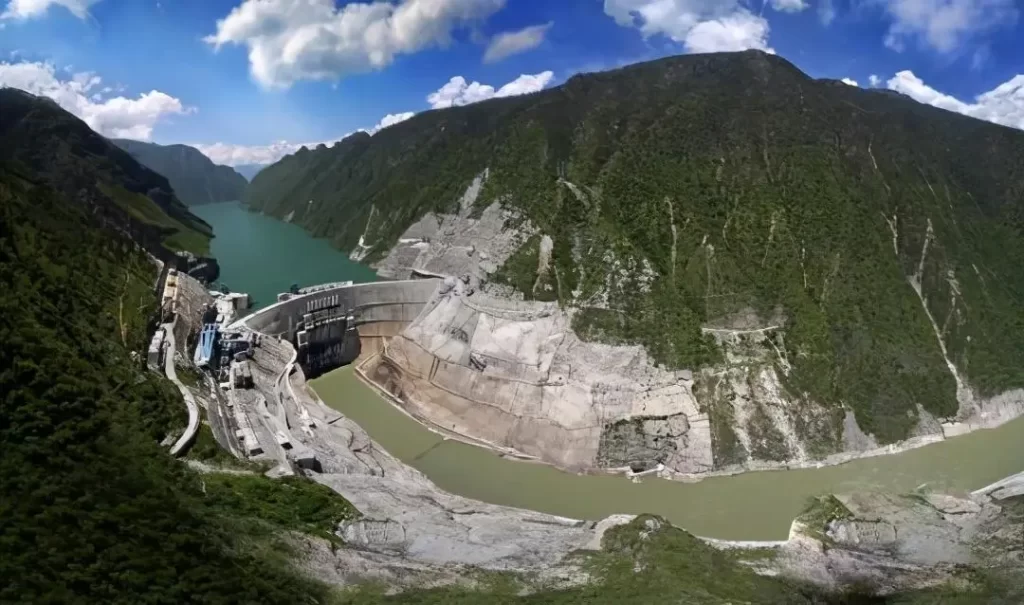
Yue theorized that the reservoir impoundment at Shuangjiangkou might have changed subsurface gas migration paths. As reservoir water infiltrated deep rock fissures, it could have blocked previous gas escape channels, forcing methane to accumulate beneath adjacent mountain slopes. Over time, this buildup of pressure may have fractured the slope rock, leading to explosive gas release and the large-scale collapse seen on video.
Why Underground Gas Pressure Matters
For over a century, geologists worldwide have studied the mechanisms of large-scale landslides, proposing numerous theories involving rainfall, erosion, and seismic activity. However, gas-induced landslides remain a largely unexplored field — and this case in Sichuan may provide critical new evidence.
Unlike water infiltration or earthquakes, high-pressure gas intrusion can deform rock masses internally without external triggers. Once gas pressure exceeds rock strength, it can cause sudden uplift, cracking, and slope failure — sometimes without warning signs visible on the surface.
Such mechanisms could pose hidden risks to hydropower facilities, bridge foundations, and tunnels built in mountainous regions rich in natural gas, not only in China but also in countries like Nepal, Switzerland, and Chile.
Mitigation and Engineering Lessons
The Hongqi Bridge collapse highlights the urgent need to rethink geotechnical investigation methods for major infrastructure projects, especially in gas-rich basins and deep valleys. Professor Yue emphasizes several preventive measures:
- Integrate gas pressure surveys into early-stage site investigations.
- Monitor methane seepage near reservoirs and slopes during water impoundment.
- Design gas relief channels or boreholes in areas with known gas accumulation risks.
- Include underground gas risk modeling in bridge and slope stability analysis.
- Strengthen interdisciplinary collaboration between geologists, hydrologists, and structural engineers.
“When designing large reservoirs or bridge foundations in mountain valleys,” Yue said, “we should anticipate the possible presence of underground high-pressure gas, which can alter subsurface stress conditions and trigger unforeseen slope failures.”
A Rare Bridge Collapse with Global Implications
The 2025 Hongqi Bridge incident stands out as one of the few known cases worldwide where underground gas eruption is suspected to have contributed to a bridge collapse.
It challenges conventional understanding of slope stability and invites new international research into the hidden power of underground gas pressure as a geological hazard.
As infrastructure projects push deeper into complex terrains and gas-rich basins, engineers and geologists alike may need to confront this new frontier in disaster prevention — one where invisible forces beneath the earth can decide the fate of structures above it.