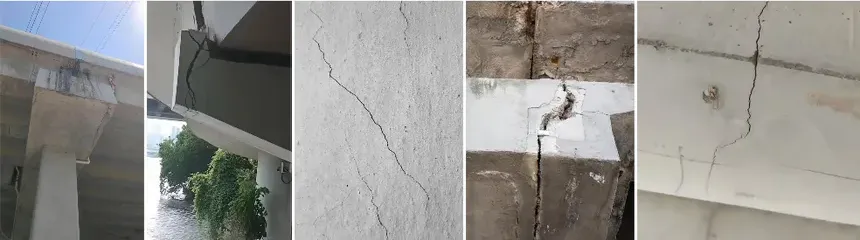
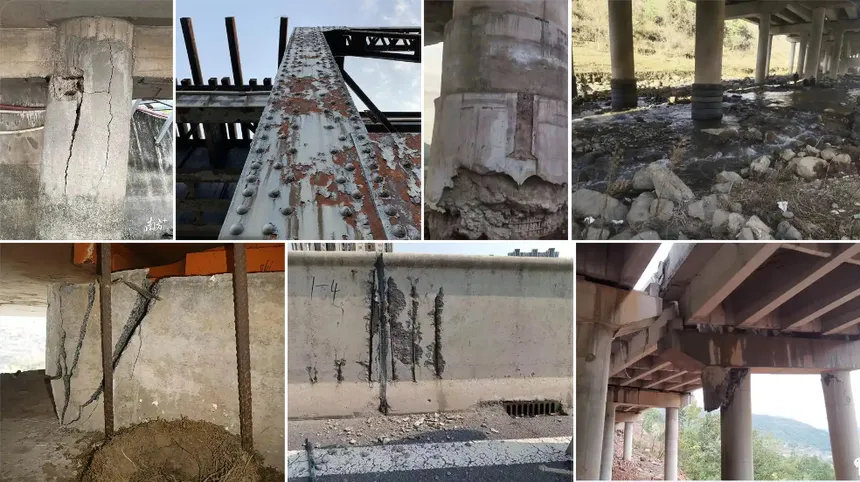
Bridge expansion joints are essential components that allow bridges to accommodate thermal movement, traffic loads, and structural deformation. In urban bridges, expansion joints are subjected to frequent vehicle loading, environmental exposure, and long-term wear, making them one of the most vulnerable components in bridge infrastructure.
Field inspection experience shows that a significant portion of bridge maintenance issues are related to expansion joint deterioration. Common problems such as rubber seal damage, steel component corrosion, and surrounding concrete cracking not only affect driving comfort but can also lead to structural damage if left untreated. Over time, expansion joint failures may cause water infiltration, accelerate corrosion, and increase maintenance costs.
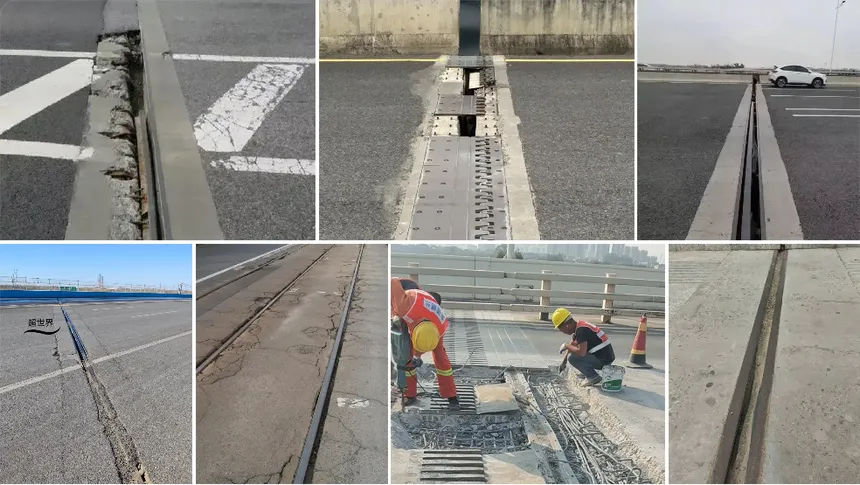
With increasing traffic loads and aging infrastructure worldwide, identifying expansion joint defects early has become a critical part of bridge inspection and maintenance strategies.
Why Bridge Expansion Joints Are Critical to Bridge Safety
Expansion joints serve as flexible interfaces between bridge segments, allowing structures to expand and contract under temperature variations and traffic loads. When expansion joints fail, the resulting stress is transferred directly to bridge decks and supporting structures.
This can lead to several long-term risks, including:
- Increased structural stress
- Accelerated deck deterioration
- Water infiltration into substructures
- Reduced bridge service life
Because expansion joints are exposed to continuous traffic impact and environmental conditions, they typically deteriorate faster than other bridge components. Regular inspection is therefore essential for early detection and preventive maintenance.
Common Bridge Expansion Joint Defects
Expansion Joint Component Damage
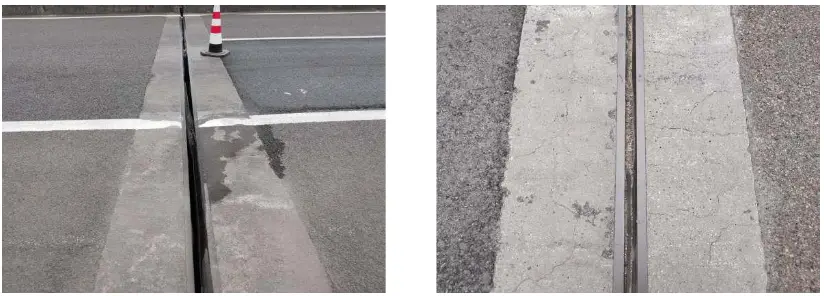
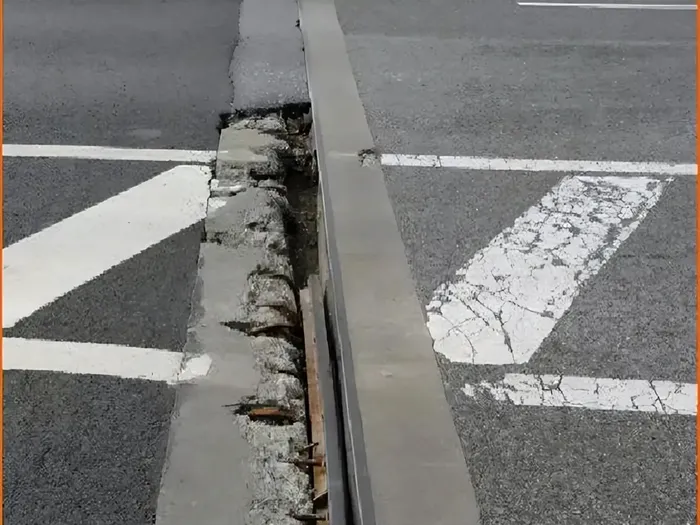
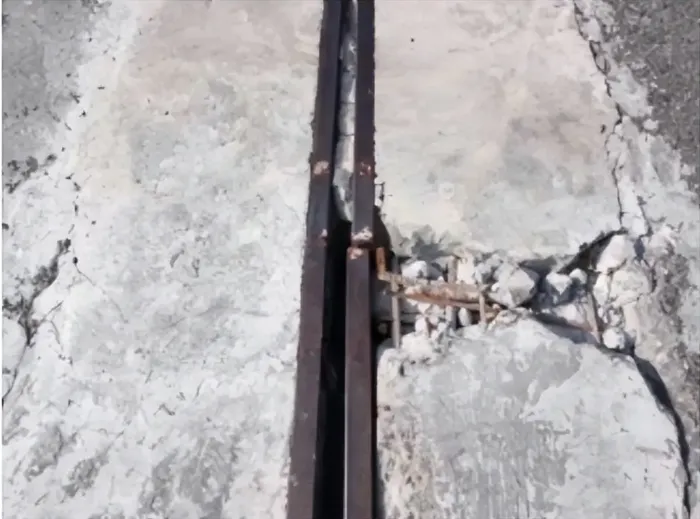
Expansion joint damage often involves deterioration of rubber seals, steel components, and connecting elements. Over time, rubber seals may crack, detach, or lose elasticity, reducing their ability to prevent water and debris from entering the joint system.
Steel components may also experience fatigue or fracture under repeated traffic loading. When steel elements fail, the load distribution within the expansion joint becomes uneven, which can lead to deformation or detachment of joint components.
Once these issues develop, water and debris can accumulate inside the expansion joint, accelerating structural deterioration and increasing maintenance difficulty.
Expansion Joint Deformation
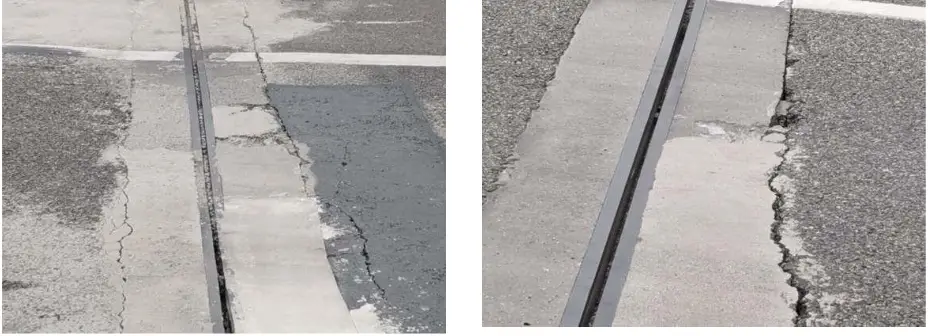
Long-term vehicle loading and temperature variations can cause expansion joints to deform. Deformed expansion joints may create uneven surfaces, resulting in vehicle impact and vibration during crossing.
This phenomenon, often referred to as "bridge bump" or "vehicle jumping," reduces driving comfort and increases dynamic loads on bridge structures. Over time, repeated impact forces may accelerate fatigue damage in surrounding bridge components and shorten the service life of the bridge.
Water Leakage and Drainage Failure
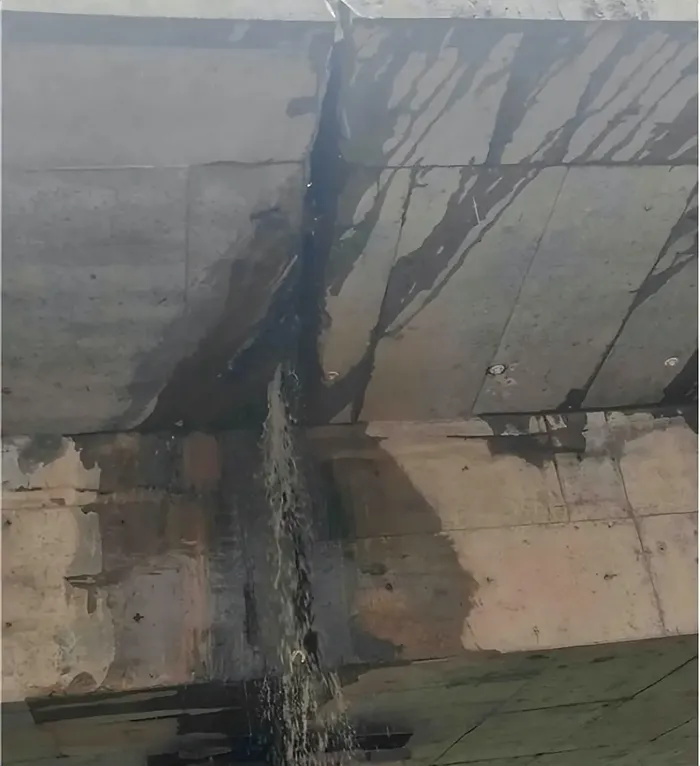
Water leakage is one of the most critical expansion joint issues. When sealing systems fail, rainwater can infiltrate bridge decks and substructures. Continuous water infiltration may lead to reinforcement corrosion, concrete deterioration, and structural weakening.
In addition, water leakage can affect bridge foundations by saturating soil or substructure components. This may cause uneven settlement and long-term structural instability.
Debris Accumulation in Expansion Joints
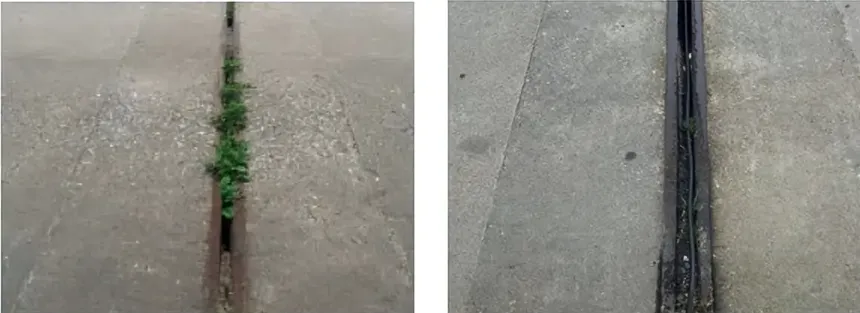
Poor sealing performance often allows debris such as sand, dust, and gravel to accumulate inside expansion joints. Over time, accumulated debris restricts joint movement and increases resistance during thermal expansion and contraction.
This restricted movement can lead to mechanical damage, corrosion, and eventual failure of expansion joint components. In addition, debris accumulation may block drainage systems and accelerate deterioration.
Causes of Bridge Expansion Joint Defects
Material Quality Issues
The quality of rubber seals and steel components directly affects expansion joint performance. Poor-quality rubber materials may degrade quickly under environmental exposure, leading to cracking and loss of elasticity.
Similarly, low-quality steel components may deform or fracture under repeated traffic loads, reducing structural reliability.
Construction Quality Issues
Installation accuracy plays a critical role in expansion joint performance. Improper alignment, insufficient leveling, or weak connections may cause excessive stress and premature deterioration.
Welding quality is another important factor. Poor welds may crack under repeated loading, resulting in structural failure of expansion joint systems.
Traffic Load and Operational Factors
Increasing heavy vehicle traffic significantly impacts expansion joint durability. High axle loads generate strong impact forces, accelerating fatigue damage.
Vehicle speed also influences expansion joint performance. Faster vehicle speeds increase dynamic loads and shorten expansion joint service life.

Environmental Factors
Temperature variations cause bridges to expand and contract. If expansion joints cannot accommodate this movement, structural damage may occur.
Rainwater and moisture further accelerate corrosion of steel components and aging of rubber materials, reducing durability.
Challenges of Traditional Expansion Joint Inspection
Traditional inspection methods rely primarily on manual visual inspection and limited access equipment. These approaches face several challenges:
Inspectors may find it difficult to access expansion joints located under traffic lanes or at elevated heights. In addition, traffic control is often required, increasing operational complexity and safety risks.
Manual inspection also makes it difficult to document minor defects accurately or track deterioration over time.
How Drone Bridge Inspection Improves Expansion Joint Detection
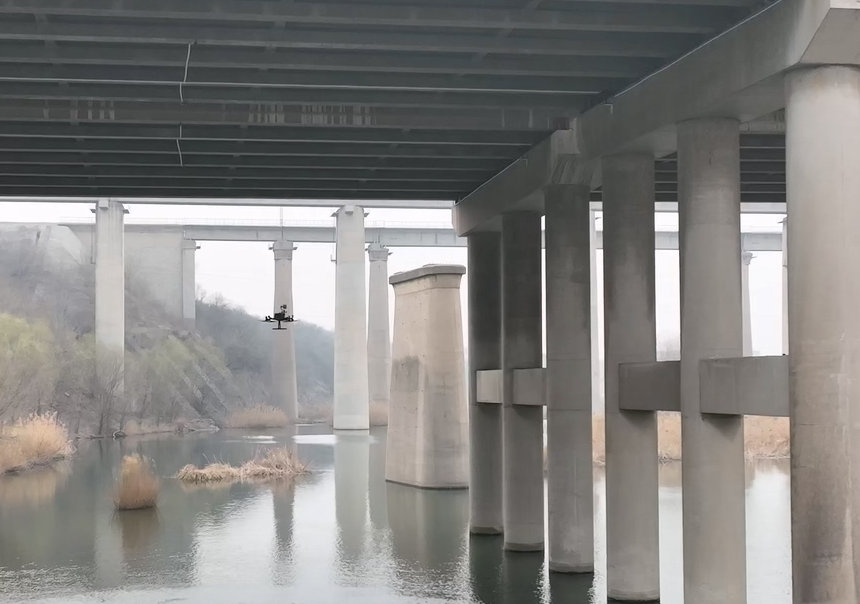
Drone-based bridge inspection significantly improves expansion joint inspection efficiency and safety. High-resolution cameras allow inspectors to capture detailed images of expansion joints without disrupting traffic.
Drone inspection enables:
- High-resolution defect detection
- Safer inspection operations
- Faster data collection
- Reduced traffic disruption
When combined with AI-based defect detection, drones can automatically identify cracks, corrosion, and structural damage in expansion joints.
How Riebo’s Drone Bridge Inspection Solution Supports Expansion Joint Inspection
Riebo’s Drone Bridge Inspection Solution integrates high-resolution imaging, AI defect detection, and digital twin modeling to improve expansion joint inspection.
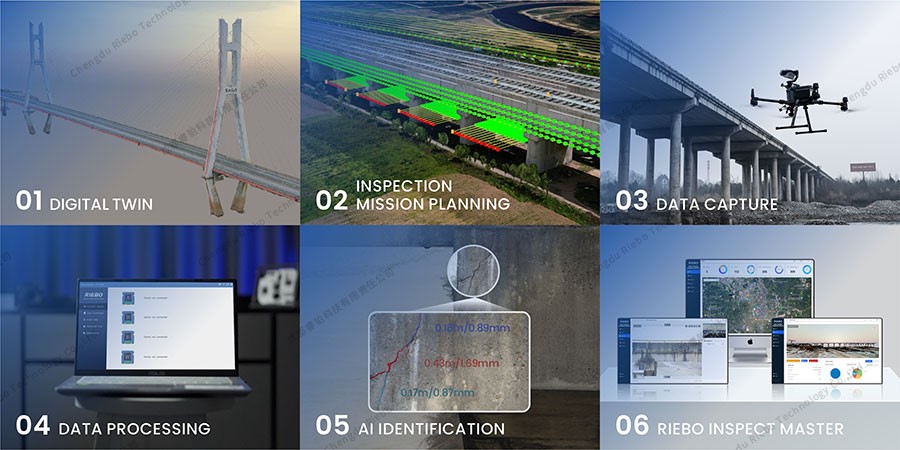
Engineers can generate detailed inspection reports and compare structural conditions over time. Digital twin models allow long-term monitoring and predictive maintenance planning.
This intelligent inspection approach helps infrastructure owners:
- Detect defects earlier
- Reduce inspection risks
- Lower maintenance costs
- Extend bridge service life
Conclusion
Bridge expansion joints are critical components that often deteriorate faster than other bridge structures. Common defects such as deformation, leakage, and component damage can significantly affect bridge safety and durability.
Traditional inspection methods face limitations in safety, efficiency, and data accuracy. Drone-based bridge inspection provides a modern solution by improving inspection coverage, accuracy, and safety.
With Riebo’s Drone Bridge Inspection Solution, infrastructure owners can better manage expansion joint maintenance, reduce operational risks, and ensure long-term bridge performance.