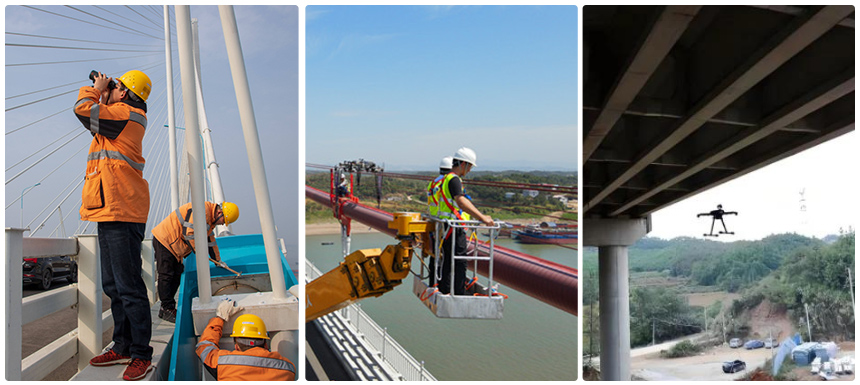
Simply supported beam bridges are one of the most widely used bridge types in highway and municipal engineering. Known for their simple structure, clear force transmission, and ease of construction, they are particularly suitable for small to medium spans.
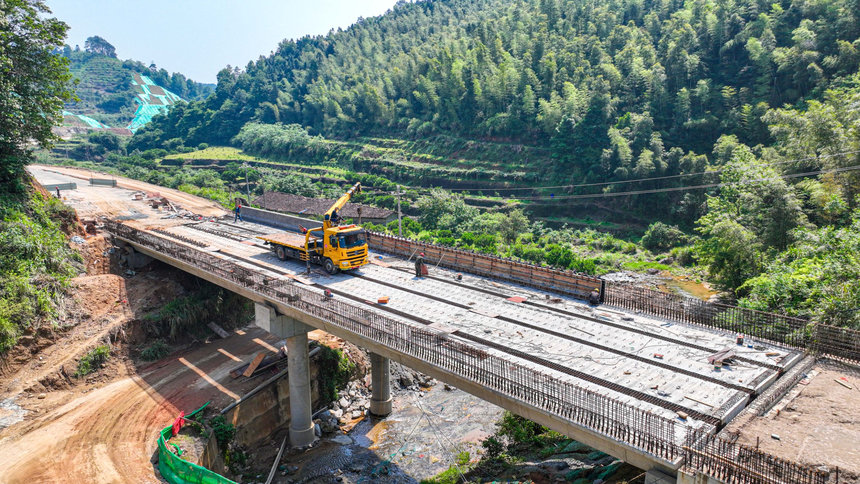
This article provides an overview of the main structural components of simply supported beam bridges, their functions, and the benefits of standardized, modular design. It also highlights how modern drone bridge inspection can assist in maintaining these structures safely and efficiently.
1. Overview of Simply Supported Beam Bridges
A simply supported beam bridge is a statically determinate structure—each span rests on supports at both ends, allowing forces to be easily analyzed and managed. Its straightforward design makes it economical and adaptable for prefabrication and mass production.
Precast beam elements can be fabricated in controlled environments and transported to the site, where they are quickly assembled using cranes or launching girders. This greatly reduces on-site labor, shortens construction time, and improves overall quality control.
2. Main Structural Components
2.1 Concrete Beams
Concrete beams are the primary load-bearing elements of simply supported bridges. They come in several common forms:
- Slab Beams: Solid or hollow slabs that are easy to construct but relatively heavy, suitable for small-span bridges.
- Ribbed Beams (T-, Π-, or I-shaped): Used for medium spans and prefabricated bridges; they provide efficient material use and structural strength.
- Box Girders: With single- or multi-cell cross sections, they offer excellent torsional resistance and overall stiffness, ideal for longer spans or continuous bridges. However, their complex formwork increases construction difficulty.
2.2 Bridge Deck and Waterproofing Layer

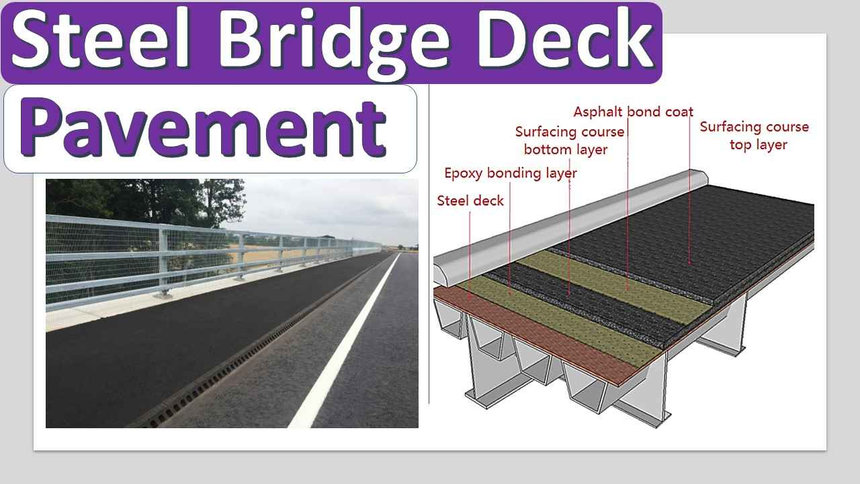
The bridge deck provides the roadway surface and distributes vehicle loads to the beams. A proper deck pavement protects the main structure from abrasion and water penetration while ensuring skid resistance and driving comfort.
Below the pavement lies the waterproofing layer, which prevents rainwater infiltration and channels it toward the drainage system. This layer must be watertight, elastic, corrosion-resistant, and continuous—especially across expansion joints and near abutments—to protect the bridge’s structural integrity.
2.3 Safety Barriers (Guardrails)
Bridge guardrails ensure vehicle and pedestrian safety.
- Concrete Barriers (Wall Type): Rigid structures that absorb collision energy through vehicle deformation and friction, providing high safety but potentially causing more vehicle damage.
- W-Beam Steel Guardrails: Flexible systems made of corrugated steel panels fixed between posts. They have strong impact resistance and energy absorption, effectively protecting occupants while being easy to dismantle for maintenance or emergency lane openings.
2.4 Expansion Joints
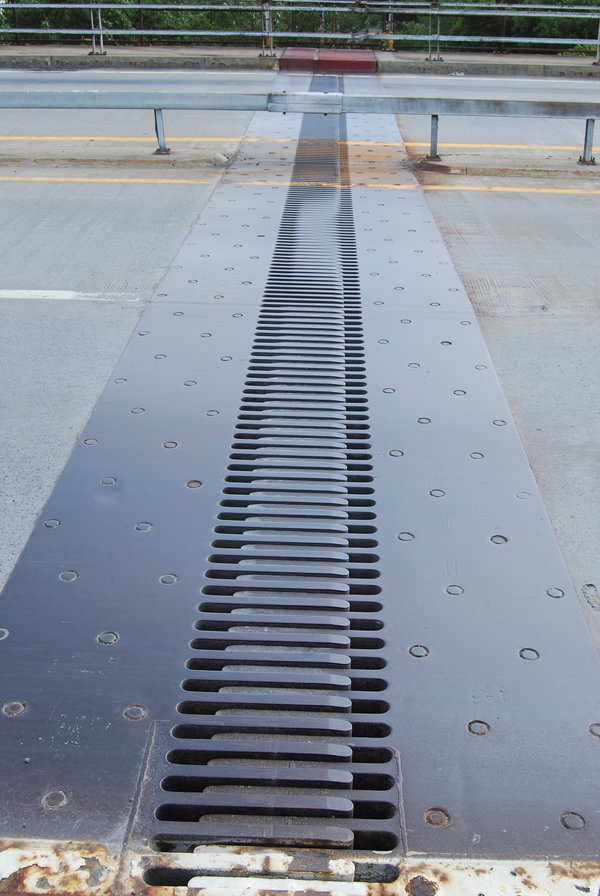
Expansion joints accommodate structural movements caused by temperature changes, shrinkage, creep, and live loads, ensuring that the bridge can deform freely without stress concentration.
They are typically located between adjacent spans or between girders and abutments. Because expansion joints endure heavy dynamic loads from vehicles, they must be well-anchored, watertight, and properly maintained to ensure smooth and safe traffic flow.
2.5 Foundation and Substructure
The foundation is the part of the bridge that directly transfers loads to the ground. It must have adequate strength, stability, and limited deformation under loading. Depending on soil conditions and structural requirements, foundations can be shallow (spread footing), deep (pile or caisson), or combined types.
The pile cap connects multiple piles at the top, distributing the loads from the piers or columns.
Bridge piers and abutments support the superstructure: piers carry intermediate spans, while abutments connect the bridge to the roadway embankment and retain soil at the ends.
2.6 Cap Beam
Located at the top of the pier, the cap beam serves to distribute and transfer loads from the girders evenly to the pier shaft or columns. It also provides a stable seat for bearings and helps maintain alignment between the superstructure and substructure.
3. Advantages of Simply Supported Beam Bridges
Simply supported beam bridges offer multiple practical benefits:
- Simple design and clear force transmission
- Easy prefabrication and standardized production
- Shorter construction periods and lower labor intensity
- Reliable performance for small to medium spans
Their modular and repetitive nature makes them especially suitable for mass highway construction, where efficiency and consistency are crucial.
4. Inspection and Maintenance of Simply Supported Bridges
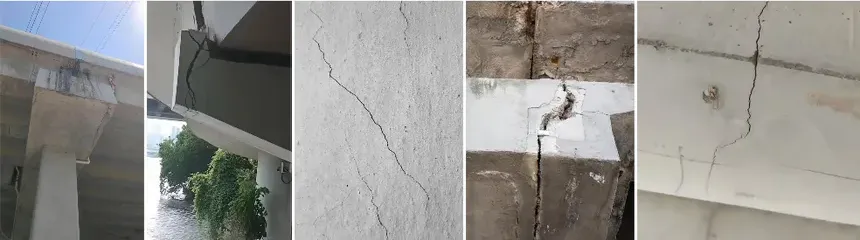
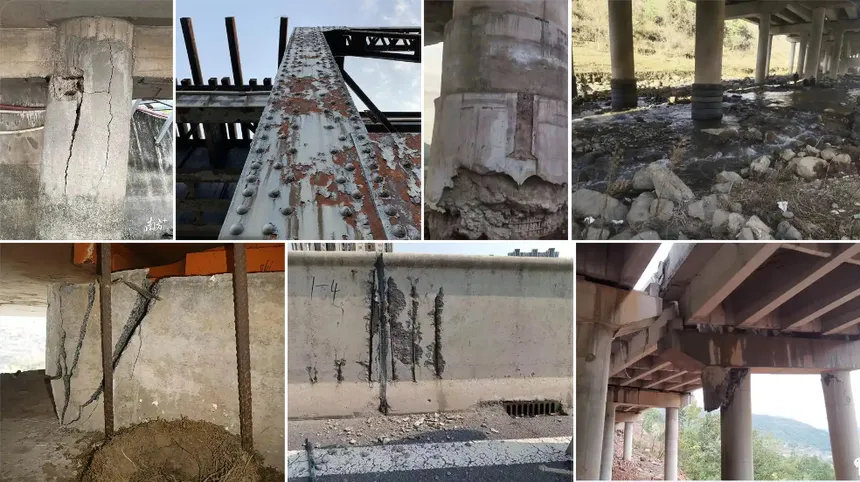
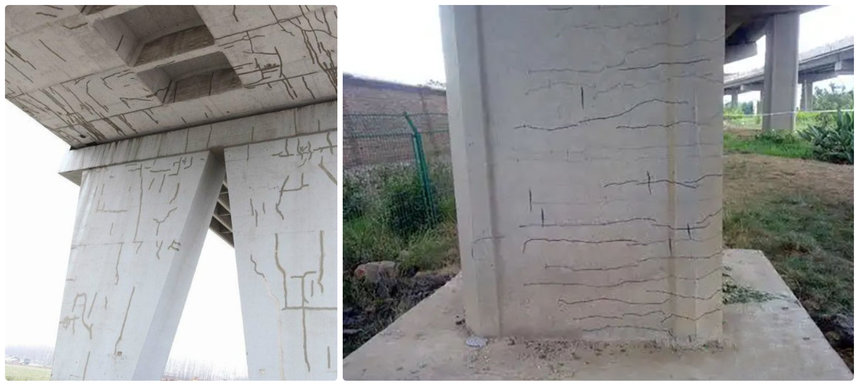
Despite their simple structure, simply supported bridges require regular inspection to detect issues such as cracks, corrosion, or waterproofing damage.
Traditional inspection methods—such as scaffolding or under-bridge vehicles—are often time-consuming and disruptive to traffic.
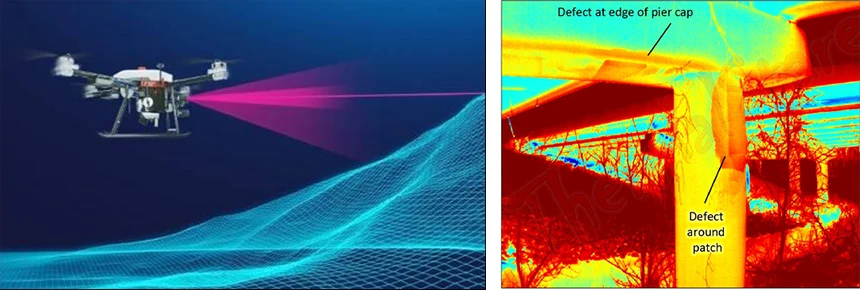
Using Riebo’s Drone Bridge Inspection, engineers can:
- Capture high-resolution images of beams, decks, and joints
- Detect surface deterioration and corrosion early
- Generate 3D models for deformation analysis
- Monitor crack development and waterproofing integrity over time
Drone-based inspections not only improve safety and efficiency but also provide precise visual data for maintenance planning and lifecycle assessment.
5. Conclusion
Simply supported beam bridges play a vital role in modern highway networks thanks to their simplicity, reliability, and adaptability.
Understanding their components and functions is essential for effective design, construction, and long-term maintenance.
With technologies like drone bridge inspection, engineers can monitor these structures more safely and accurately—ensuring durability, safety, and sustainability across their entire service life.