Suspension bridges are among the greatest achievements of modern civil engineering. They are designed to cross wide rivers, deep canyons, and even straits where no intermediate supports are possible.
Using main cables, towers, suspenders, and stiffening girders, a suspension bridge distributes loads efficiently across long spans—sometimes exceeding 1,000 meters. This structure allows engineers to maximize material strength while minimizing cost.
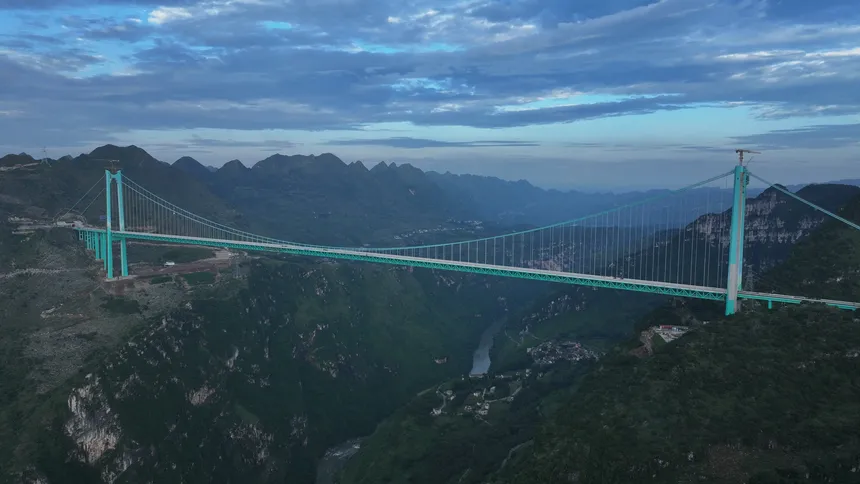
A remarkable example is the Huajiang Canyon Bridge in China, with a total length of 2,890 meters and a main span of 1,420 meters — currently the world’s largest span steel-truss suspension bridge in mountainous terrain. But how do engineers make such a massive structure “connect two mountains”?
Step-by-Step Construction Process
Building a suspension bridge is a complex, multi-phase process that can take years to complete. The construction is typically divided into four main stages:
- Foundation and Tower Construction – Building solid anchorages and tall towers on both sides of the canyon or river.
- Preparation Work – Installing cable saddles, anchor blocks, and preparing for upper structure installation.
- Cable System Installation – Setting up the main cable system, including pilot line stretching, catwalk construction, main cable spinning, and suspender installation.
- Deck and Finishing Works – Lifting and connecting stiffening girder segments, deck paving, and installing electrical and auxiliary systems.
At the heart of this process lies one crucial challenge — how to stretch the first pilot cable across a wide natural barrier.
How Engineers Connect Two Mountains
To connect the two sides of a canyon or a wide river, engineers must first install a pilot cable (also called a pioneer line). This cable serves as the foundation for building the main suspension system. The process of pulling the pilot cable across the gap is one of the most fascinating steps in suspension bridge construction.
Here are the five major methods engineers use today:
1. Rocket Launch Method
In this method, a specially designed rocket carries a lightweight pilot cable across the canyon. The rocket’s tail is modified to hold the line, which unrolls during flight.
It is extremely fast — taking only a few seconds — but can be less accurate, with landing deviations of up to 80 meters. Because of the high exhaust temperature (over 1,000°C), the section of cable near the rocket must be made from heat-resistant material.
This method is especially suitable for mountainous areas. The Siduhe Bridge in Hubei, China, famously used this approach to launch its pilot line.
2. Helicopter Towing Method
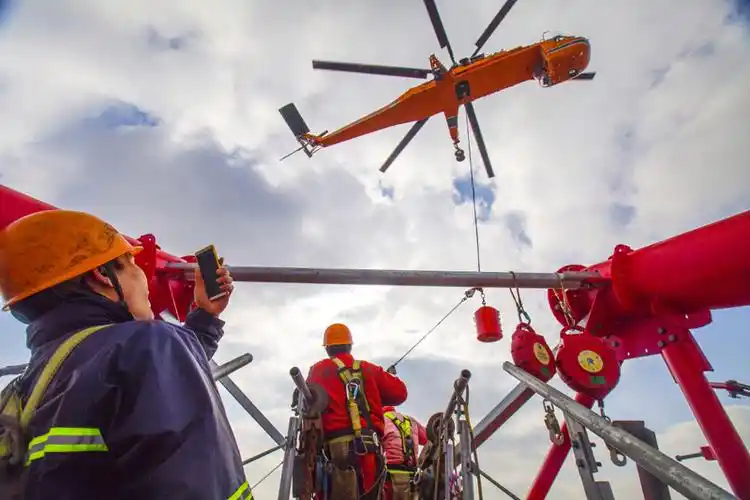
Helicopters offer greater control and precision. The pilot cable is attached to the aircraft, which flies across the span, maintaining stable altitude and speed. The helicopter can adjust its position midair, allowing safe and accurate cable placement even in windy or rugged environments.
This method requires skilled coordination and high-strength winches on the ground. It was used in projects such as the Xihoumen Bridge in Zhejiang, one of China’s largest sea-crossing bridges.
3. Drone Towing Method
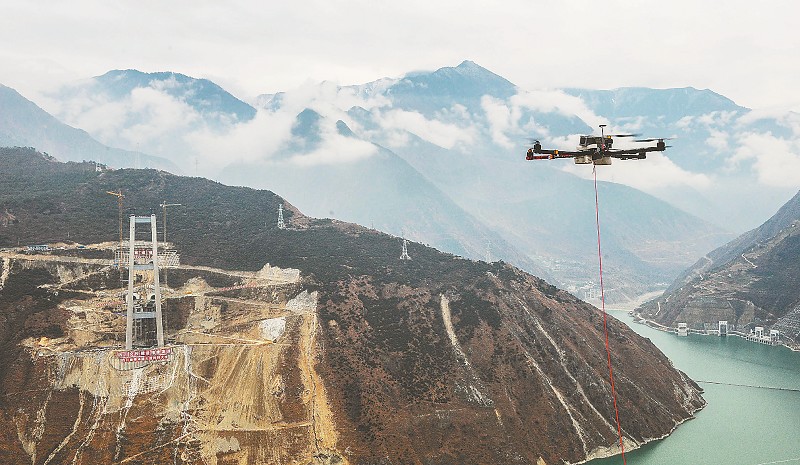
With the rapid development of UAV technology, drones have become an increasingly popular option for installing pilot lines. Drones are flexible, cost-effective, and easy to deploy compared with helicopters.
China’s Longjiang Bridge was among the first in the world to use drone-assisted pilot cable installation. This innovation has since been adopted in many other suspension bridge projects, offering safer and more efficient solutions for crossing deep valleys.
4. Manual and Mechanical Pulling Method
In certain remote or cost-sensitive regions, engineers combine human power and mechanical winches to pull the pilot cable.
While more traditional, this approach can be surprisingly efficient when optimized with modern force analysis and tension control. For example, during the Qingshuihe Bridge project, teams used a combination of manual labor and winches — even employing pack animals for short-distance towing — to achieve fast and stable setup under challenging terrain.
5. Ship Towing Method (for River or Sea Crossings)
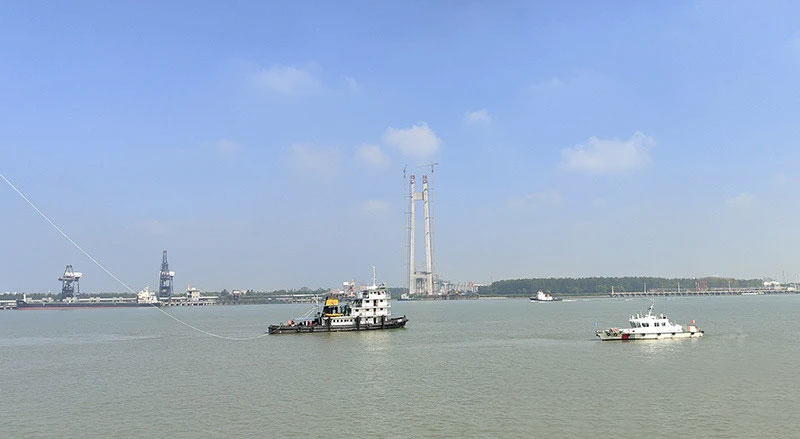
When building suspension bridges over wide rivers or coastal waters, ships can be used to tow the pilot cable from one bank to the other.
The cable is secured to a vessel, which sails along a pre-defined route, ensuring the line remains above the water surface. This method provides excellent control, minimizes wind interference, and is ideal for large-scale river-crossing projects where helicopters or rockets are less practical.
In some cases, ship towing is combined with drone assistance for enhanced precision and safety — especially when connecting to offshore anchor points or towers.
Innovation in Modern Bridge Construction
Modern suspension bridge construction is rapidly evolving. The use of drones, AI-based monitoring, and digital twin modeling has made the process more accurate and efficient.
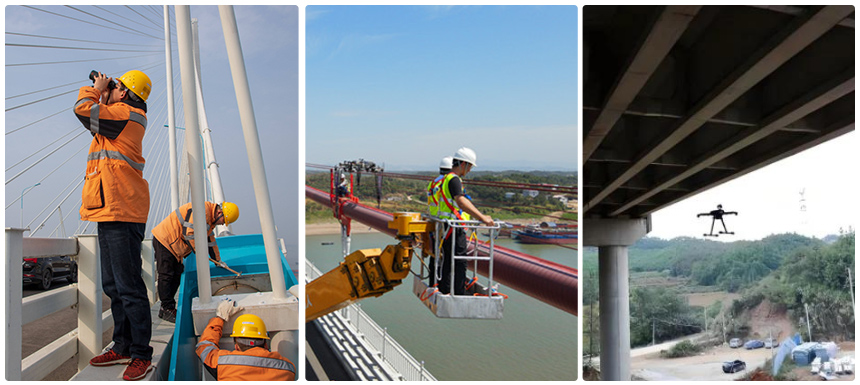
Advanced surveying drones can now assist in both cable installation and inspection, reducing risks for workers and improving overall safety. These innovations continue to redefine how engineers overcome natural barriers to create record-breaking bridges.
Conclusion
Suspension bridges are more than just engineering marvels — they are symbols of human ingenuity and perseverance. From rockets and helicopters to drones and ships, each method reflects a creative solution to one of the toughest challenges in construction: connecting two distant points over nature’s most formidable obstacles.
As technology continues to evolve, future bridges will not only span greater distances but also be built faster, safer, and smarter than ever before.