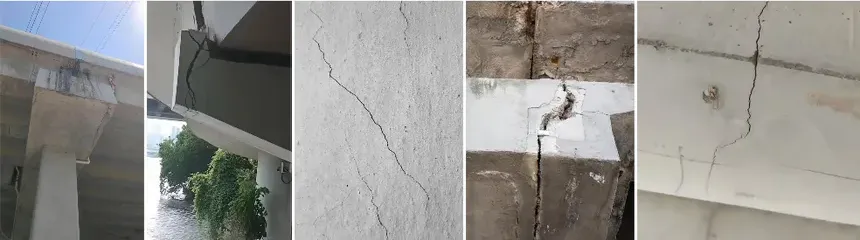
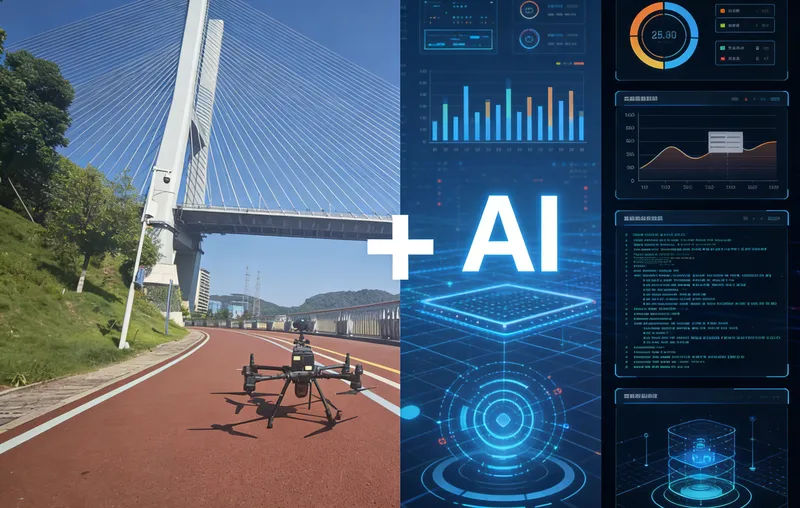
AI systems used in bridge inspection do not inherently “understand” cracks. Instead, they learn to recognize patterns from large amounts of labeled data. The training process usually follows several technical steps.
1. Collecting a Large Dataset of Bridge Images
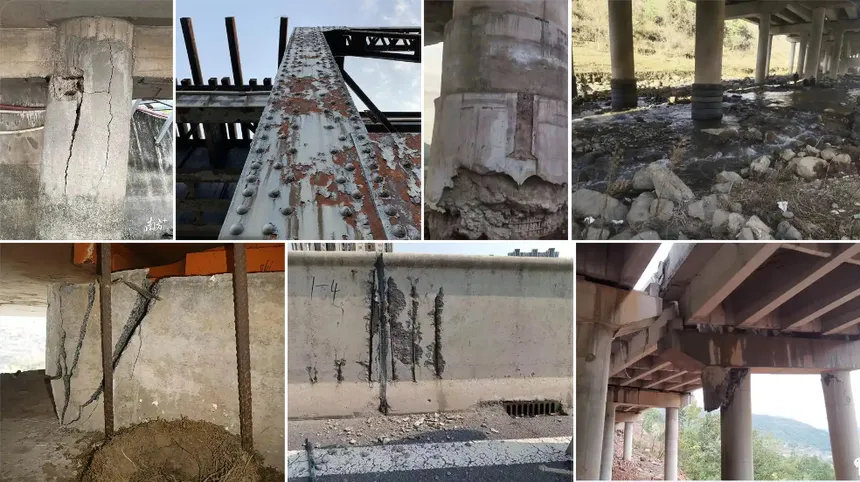
The first step is building a training dataset.
Engineers gather thousands—or sometimes hundreds of thousands—of images showing:
- concrete cracks
- steel corrosion
- spalling concrete
- exposed reinforcement
- normal (undamaged) surfaces
These images may come from:
- drone inspections
- handheld inspection cameras
- public infrastructure datasets
- previous inspection archives
Including both damaged and non-damaged images is important so the AI learns the difference between defects and normal structural features.
Typical dataset size:
- Research projects: 5,000–20,000 images
- Commercial inspection systems: 50,000+ images
More diverse data generally leads to better detection accuracy.
2. Image Annotation (Labeling Defects)
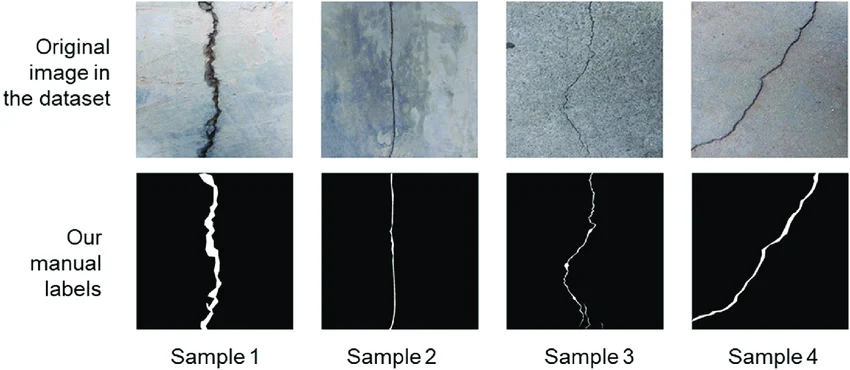
After collecting images, engineers must label the defects manually.
This step is called annotation.
Specialized tools are used to mark defects in different ways:
Bounding boxes
A rectangle is drawn around a crack or defect.
Segmentation masks
Each pixel belonging to the crack is labeled.
This method is more precise and allows accurate measurement.
Typical labels include:
- crack
- corrosion
- spalling
- exposed rebar
- water leakage
For crack analysis, segmentation is often preferred because it allows the system to calculate crack width, length, and area.
Annotation is usually the most time-consuming part of the training process.
3. Training Deep Learning Models
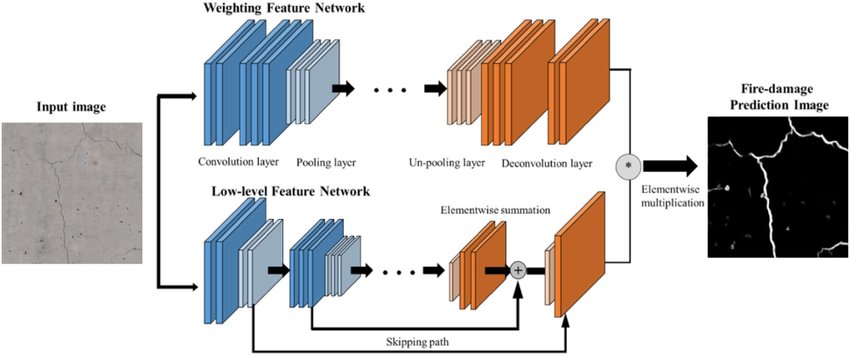
Once labeled data is ready, engineers train deep learning models.
Common model types used in infrastructure inspection include:
Convolutional Neural Networks (CNNs)
Used for recognizing visual patterns such as cracks and corrosion.
Object detection models
Examples include:
- YOLO (You Only Look Once)
- Faster R-CNN
- SSD
These models locate defects and draw bounding boxes.
Segmentation models
Examples include:
- U-Net
- Mask R-CNN
- DeepLab
These models identify the exact shape of cracks pixel by pixel.
Training usually requires GPUs and may take hours or days depending on the dataset size.
During training, the model repeatedly:
- Looks at a labeled image
- Makes a prediction
- Compares the prediction with the labeled result
- Adjusts its internal parameters to reduce error
This process may repeat millions of times.
4. Model Validation and Accuracy Testing
After training, the model must be tested using new images it has never seen before.
Engineers evaluate performance using metrics such as:
- Precision – how many detected cracks are correct
- Recall – how many real cracks are detected
- F1 score – balance between precision and recall
- IoU (Intersection over Union) – accuracy of defect location
Typical commercial system performance:
- crack detection accuracy: 85–95%
- depending on lighting conditions, surface texture, and camera resolution
5. Deploying the AI in Drone Inspection Workflows
Once trained, the AI model is integrated into an inspection platform.
The typical workflow looks like this:
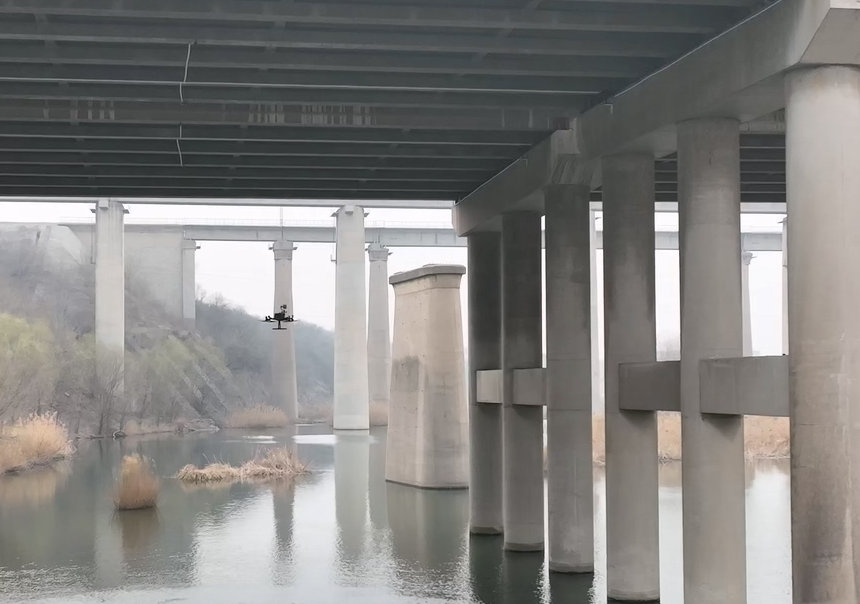
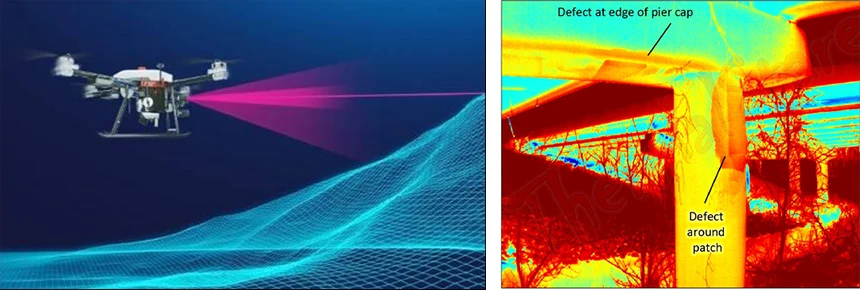
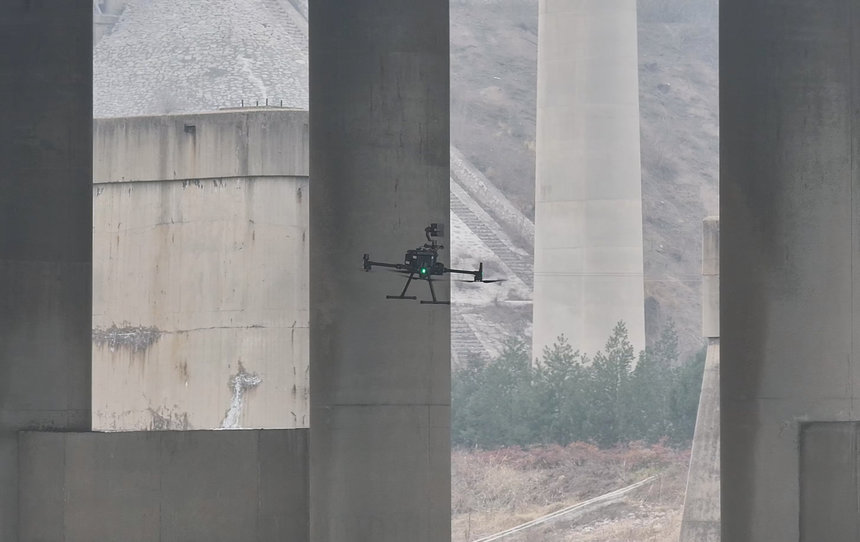
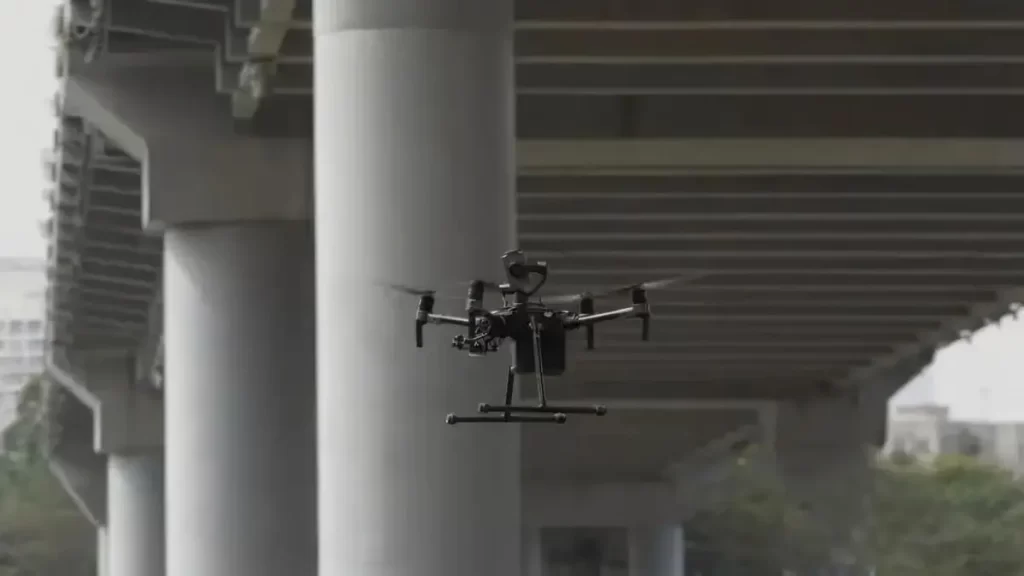
- Drone captures high-resolution bridge images
- Images are uploaded to inspection software
- AI automatically detects and labels defects
- Engineers review and confirm results
- The system generates an inspection report
Many modern systems also connect the detected defects to:
- 3D bridge models
- digital twins
- asset management platforms
This allows engineers to track defect development over time. Example Riebo’s Drone Bridge Inspection Solution combines AI analytics with drone-based data collection to detect bridge defects precisely.
Conclusion
AI does not automatically know what a crack is. It learns through:
- Large datasets of bridge images
- Manual defect labeling
- Deep learning model training
- Validation using new inspection data
- Integration with drone inspection systems
This combination of drone data collection + AI computer vision is what enables modern automated bridge defect detection.