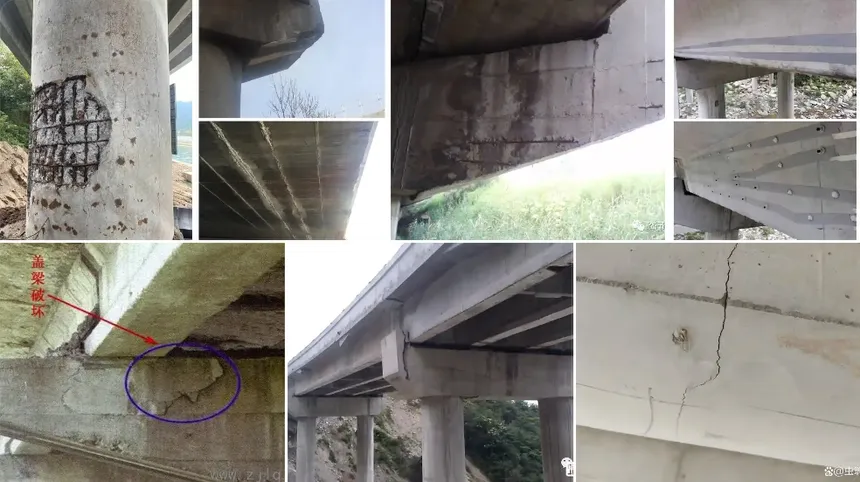
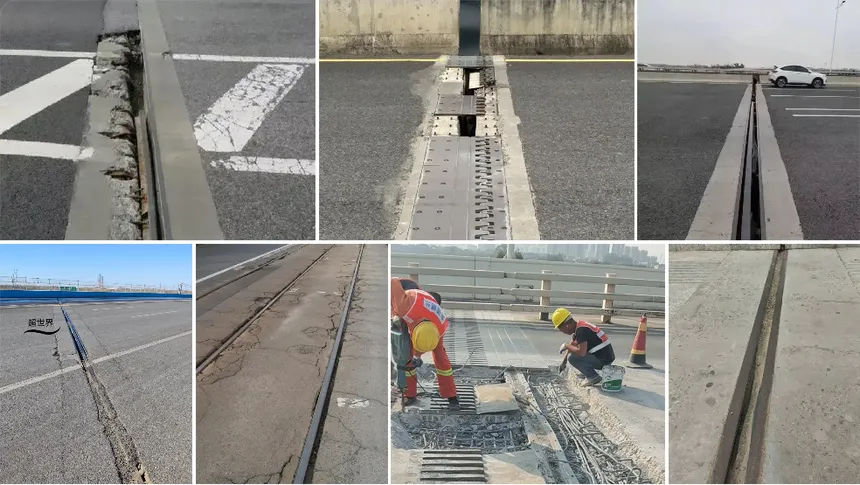
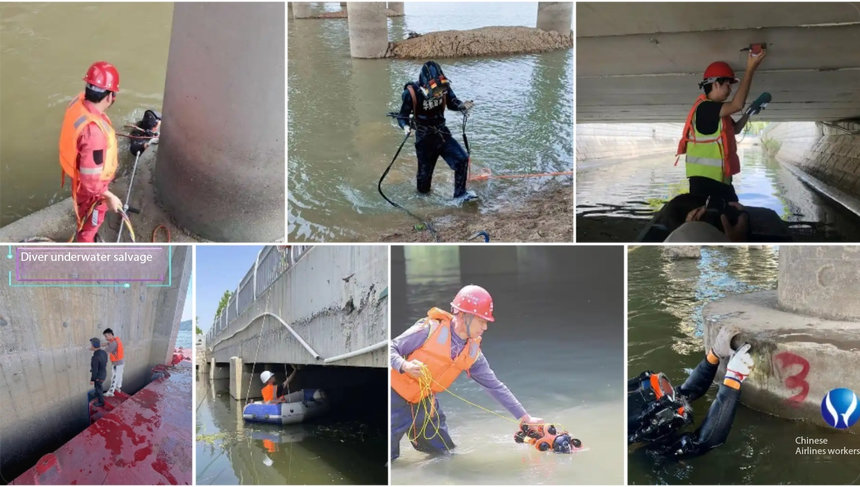
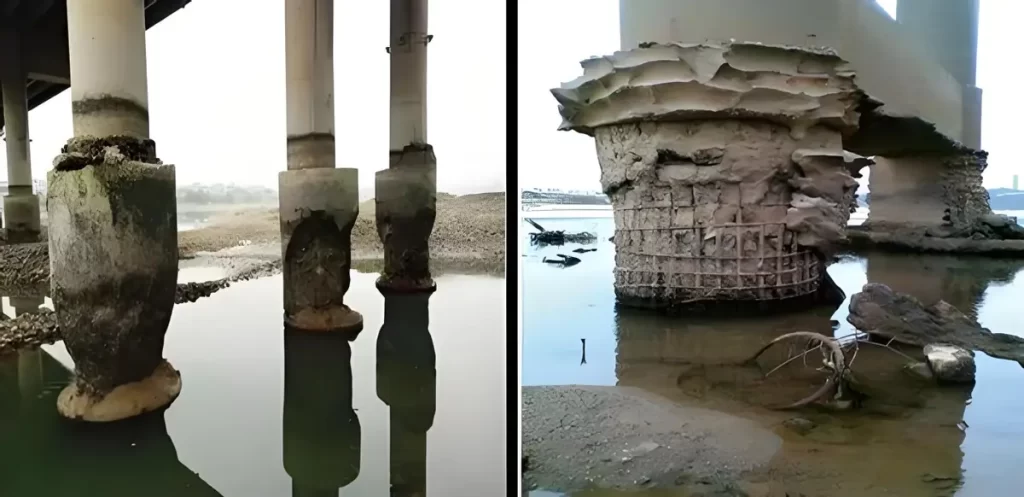
Deterioration Effects of Concrete Bridge Cracks
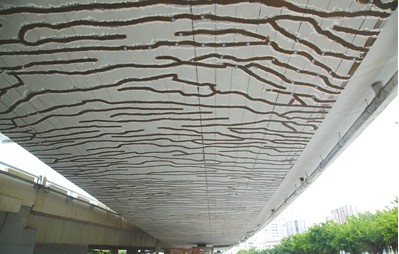
Cracks in concrete bridges allow carbon dioxide (CO₂) from the air to easily penetrate into the concrete. In humid environments, CO₂ reacts with calcium hydroxide, tricalcium silicate, and dicalcium silicate in the cement, forming carbonates. This reaction neutralizes the cement’s natural alkalinity, lowering the pH level of the concrete. As a result, the protective film around steel reinforcement bars (rebar) deteriorates, making them vulnerable to corrosion. Furthermore, carbonation accelerates shrinkage and cracking, which can lead to severe structural damage.
1. Reduced Corrosion Resistance of Concrete
(1) Dissolution-Type Corrosion
When water seeps through cracks into the concrete or interacts with soft water, it dissolves and carries away some of the cement’s hydration products (such as calcium hydroxide). This process weakens the structure and is especially visible in bridge piers, where long-term exposure to water is common.
(2) Acidic and Magnesium Salt Corrosion
Acidic liquids (such as hydrochloric acid) and magnesium salts can create non-cementitious, soft materials inside the concrete. These materials dissolve easily in water, further damaging the cement matrix and leading to progressive structural deterioration through cracks or pores.
(3) Crystallization and Expansion Corrosion
When sulfates enter the concrete, low-solubility crystals form in cracks and pores. Over time, these crystals expand and generate internal pressure, eventually causing the concrete to crack and break apart.
2. Impact on Structural Strength and Stability
Cracks directly affect the strength, integrity, and stability of concrete bridge structures. Minor cracks may only affect appearance and durability, but deep or penetrating cracks can compromise the bridge’s load-bearing capacity — in severe cases, even leading to structural failure.
Non-Destructive Testing and Monitoring Methods for Bridge Cracks
To assess and monitor cracks without damaging the structure, several non-destructive testing (NDT) technologies are commonly used.
(1) Ultrasonic Testing
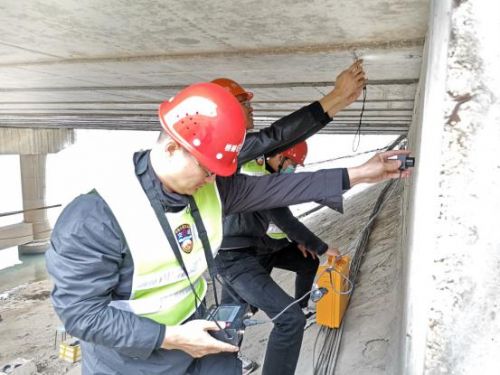
Ultrasonic testing uses high-frequency sound waves to detect internal defects. By placing the transmitting and receiving probes on the same side of the crack, engineers can analyze the wave’s velocity and frequency to determine crack depth and position. Different wave types — longitudinal, transverse, or surface waves — are used depending on the concrete condition and desired accuracy.
(2) Impact Elastic Wave Method
This method also relies on elastic wave propagation, generated by a small mechanical impact on the concrete surface. Compared with ultrasonic testing, it can detect deeper cracks, though it is mainly suitable for vertical, non-branching cracks that extend perpendicularly into the concrete.
(3) Acoustic Emission Testing
Acoustic emission testing detects real-time crack activity within the concrete. Unlike other methods, it only identifies cracks that are currently forming or growing, not pre-existing ones. It can locate the crack source, estimate its size and growth rate, and classify the type of crack. This method is useful for monitoring active structural stress and fatigue.
(4) Photographic and Visual Inspection
This method involves photographing the bridge surface using standard cameras, video recorders, X-ray, or infrared imaging. It helps engineers visually analyze surface cracks, measure their width and distribution, and create a historical record of deterioration over time.
(5) Sensor-Based Crack Monitoring
Traditional sensor systems, such as Carlson or vibrating-wire crack gauges, can be embedded into concrete to track small deformations (typically 0.12–1 mm). However, because cracks appear randomly and unpredictably, this point-based detection often misses localized damage. For comprehensive monitoring, large-scale, continuous, distributed systems are required to capture all crack activity.
(6) Fiber Optic Sensor Networks
Fiber optic sensors, introduced in the 1990s, are now widely used in bridge, aerospace, and structural monitoring. They can detect temperature, vibration, and strain changes associated with crack formation.
When a crack intersects an optical fiber, the light intensity drops suddenly, allowing accurate localization through optical time-domain reflectometry (OTDR). This distributed monitoring technology enables precise crack width, position, and orientation detection across the entire bridge structure.
Integrating Drones into Bridge Crack Inspection
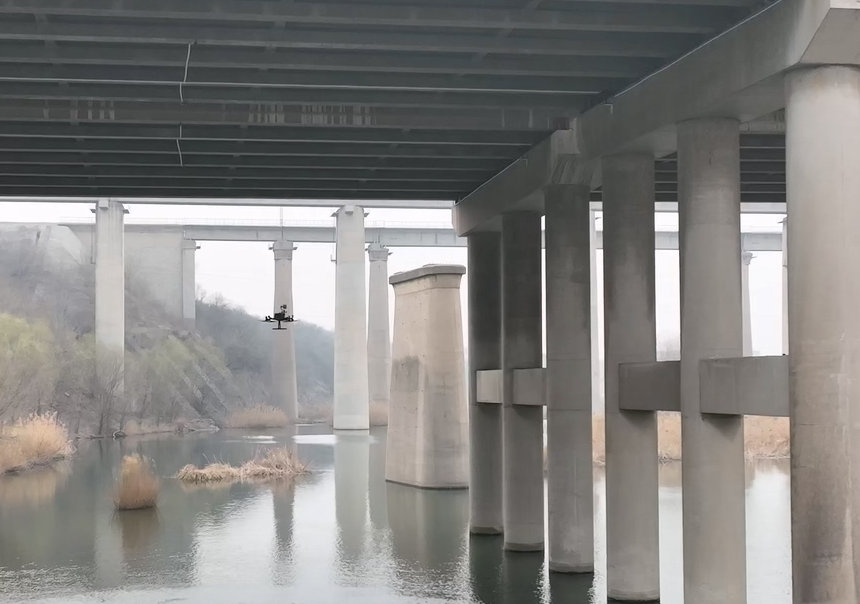
While traditional NDT methods require ground-based instruments and manual inspection, modern drone technology provides a safer and more efficient alternative.

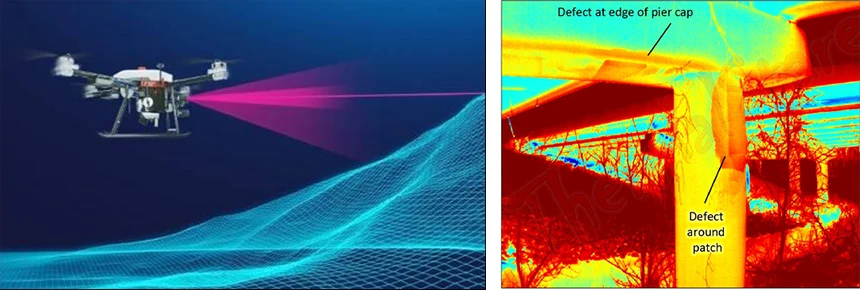
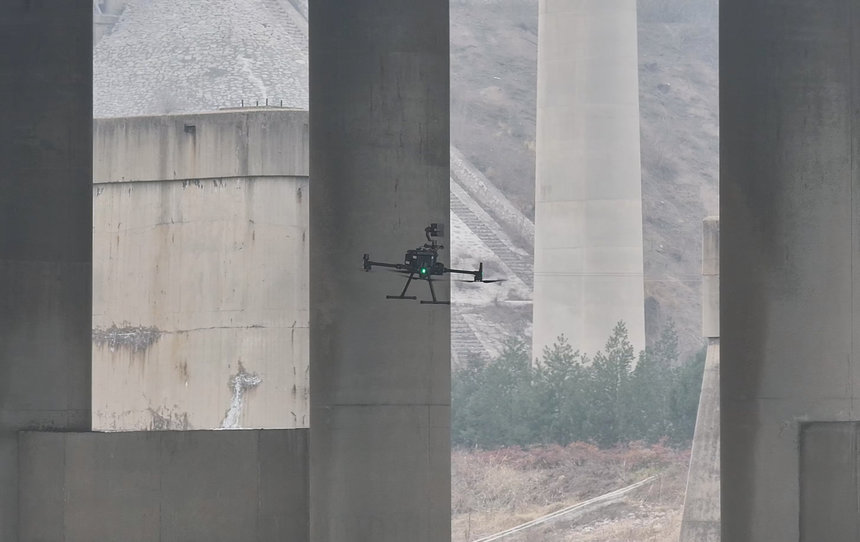
Riebo’s Drone Bridge Inspection Solution integrates high-resolution imaging, AI-based defect recognition, and data analytics to support bridge surface crack detection and monitoring. Drones can quickly scan bridge surfaces and hard-to-reach areas, capture images of microcracks, and work in coordination with NDT systems for comprehensive condition assessment. By combining aerial inspection with advanced sensing technologies, Riebo helps engineers ensure long-term safety and reliability of concrete bridges.