Curved continuous beam bridges are widely used in modern highway interchanges, urban viaducts, and complex transportation networks. Their ability to adapt to constrained terrain and optimize road alignment makes them a preferred structural form in many infrastructure projects.
However, due to their curved geometry and complex load distribution, curved continuous beam bridges are more susceptible to structural defects compared with straight bridges. Over time, these issues may compromise structural safety, increase maintenance costs, and shorten service life.
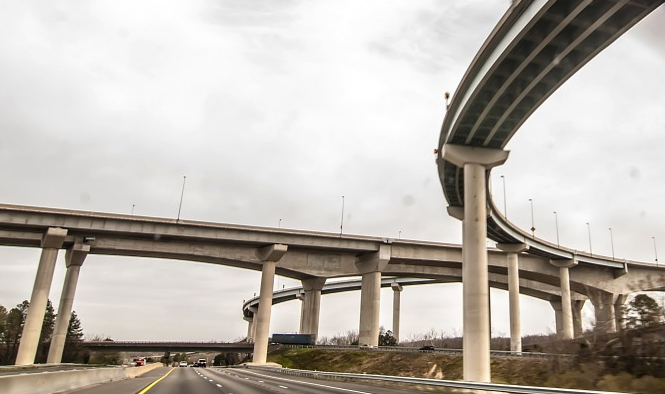
Accurate and efficient bridge inspection is therefore essential for early detection and preventive maintenance.
This article explores the most common defects found in curved continuous beam bridges, their causes, and how drone-based bridge inspection improves detection efficiency and safety.
Why Curved Continuous Beam Bridges Are More Vulnerable
Curved bridges experience additional structural effects that are not present in straight bridges:
- Torsional forces caused by curvature
- Uneven load distribution
- Temperature-induced deformation
- Construction alignment challenges
These factors increase the likelihood of structural distress, particularly at:
- Bearings
- Beam bodies
- Piers
- Expansion joints
As a result, curved continuous beam bridges require more frequent and more precise inspections.
Common Defects in Curved Continuous Beam Bridges
1. Bearing Void or Bearing Failure
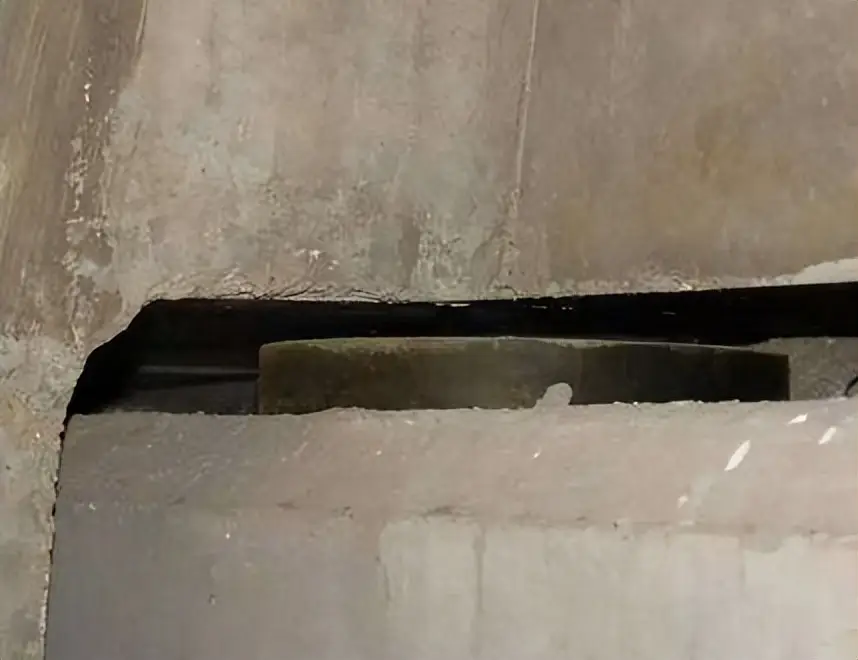
Typical Problems
Bearing defects are among the most common issues in curved continuous beam bridges, including:
- Bearing voids
- Uneven bearing stress
- Bearing displacement
- Bearing damage
These problems can lead to abnormal load transfer and excessive deformation.
Causes
Common causes include:
- Construction elevation control errors
- Premature installation before grout curing
- Precast beam deformation
- Temperature variation effects
Risks
If not addressed, bearing problems may lead to:
- Beam cracking
- Structural misalignment
- Increased maintenance costs
- Reduced bridge lifespan
2. Beam Cracking
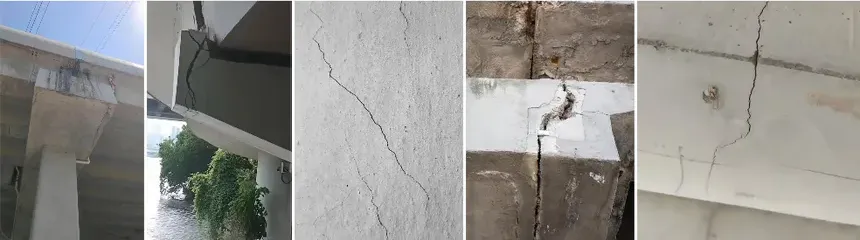
Beam cracking is one of the most frequently observed defects during bridge inspections.
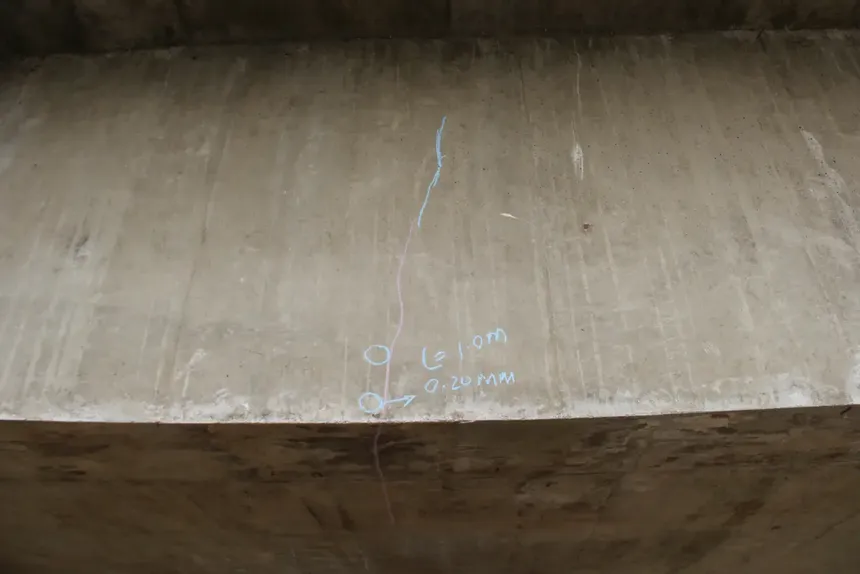
Common Crack Locations
- Bottom slab cracks
- Top slab cracks
- Web cracks
- Anchorage zone cracks
Causes
Cracking may result from:
- Insufficient reinforcement design
- Construction quality issues
- Long-term heavy traffic loads
- Shrinkage and creep of concrete
Inspection Challenges
Some cracks are difficult to detect using traditional manual inspection due to:
- Limited accessibility
- Traffic interference
- Safety risks for inspectors
Drone-based inspection significantly improves crack detection accuracy.
3. Beam Deflection
Beam deflection is another common structural issue.
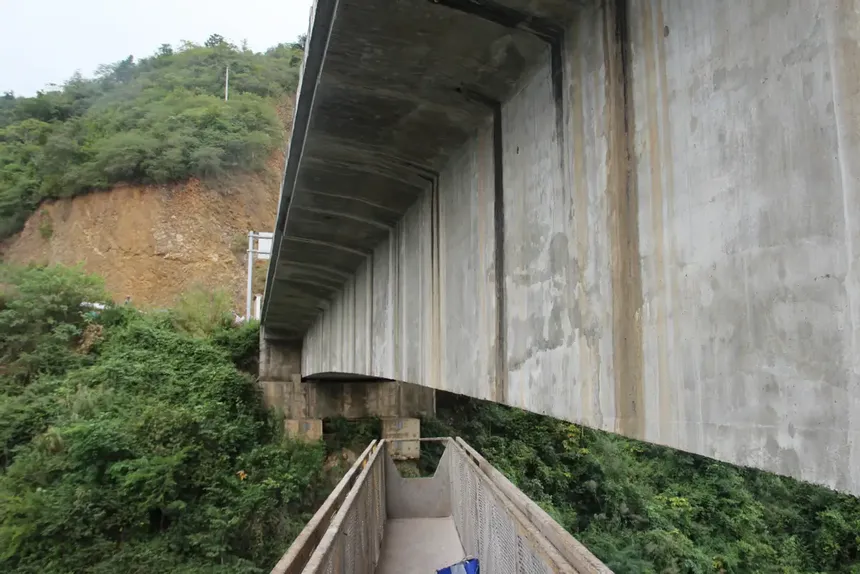
Causes
- Long-term concrete creep
- Excessive loads
- Construction deformation
- Insufficient stiffness
Potential Consequences
Excessive deflection may lead to:
- Cracking
- Bearing stress concentration
- Expansion joint damage
- Ride comfort reduction
Early detection is critical for preventing structural deterioration.
4. Lateral Displacement of Main Beam
Curved bridges are particularly sensitive to lateral movement.
Causes
- Temperature variation
- Shrinkage and creep
- Uneven traffic loading
- Insufficient lateral restraint
Risks
Lateral displacement can result in:
- Bearing damage
- Structural misalignment
- Increased torsional stress
- Long-term structural instability
Monitoring lateral displacement is therefore essential.
Real Bridge Inspection Case Findings
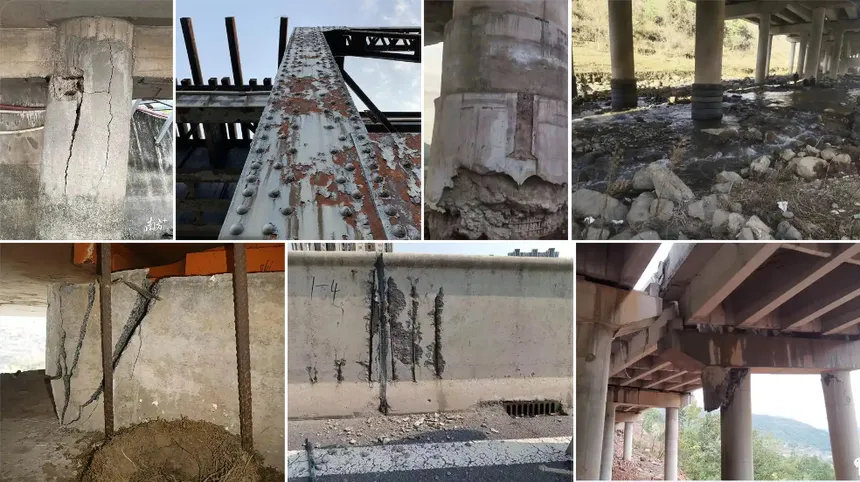
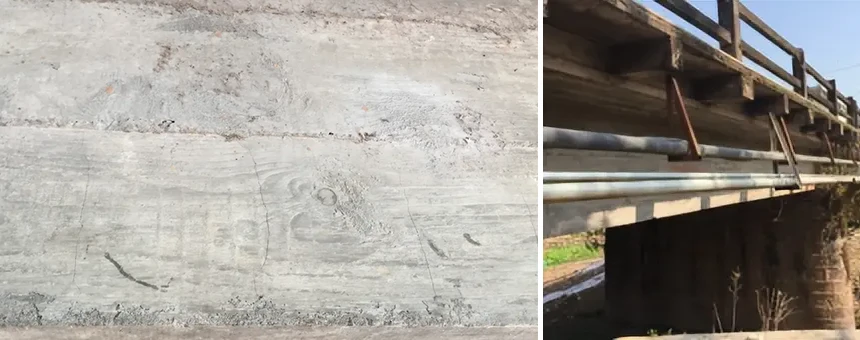
A field inspection of a curved continuous beam bridge identified multiple structural defects.
Superstructure Issues
- Multiple vertical cracks (up to 0.35 mm)
- Honeycombing in T-beams
- Exposed and corroded reinforcement
Substructure Issues
- Vegetation growth around piers
- Mortar peeling and deterioration
Deck System Issues
- Excessive pavement thickness
- Missing expansion joints
- Blocked drainage systems
These defects highlight the importance of comprehensive inspection coverage.
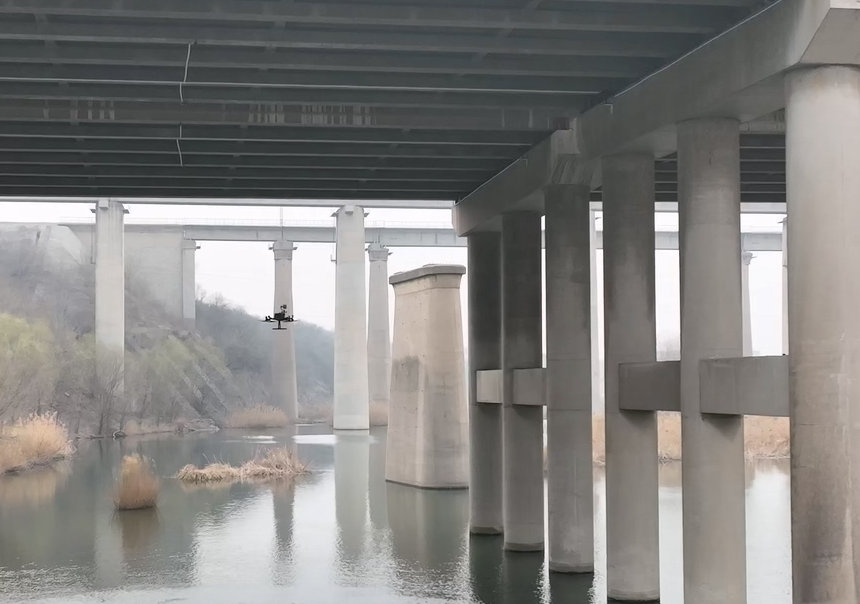
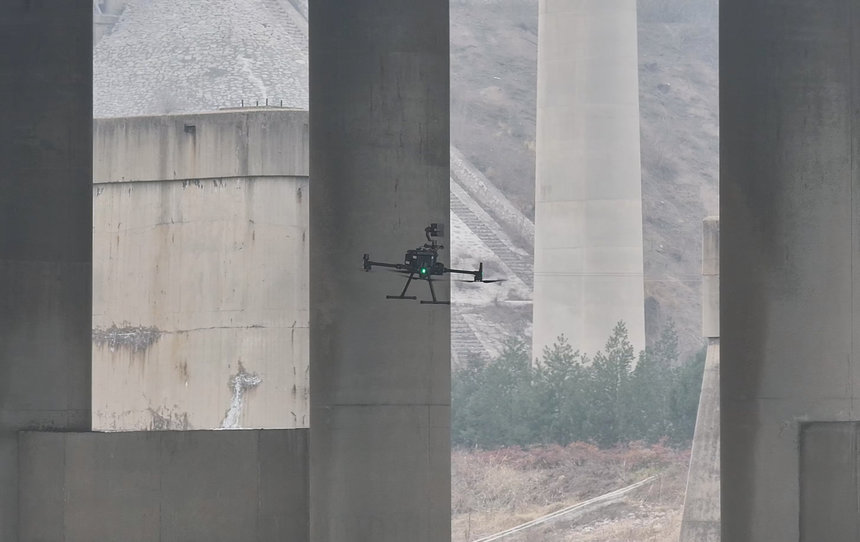
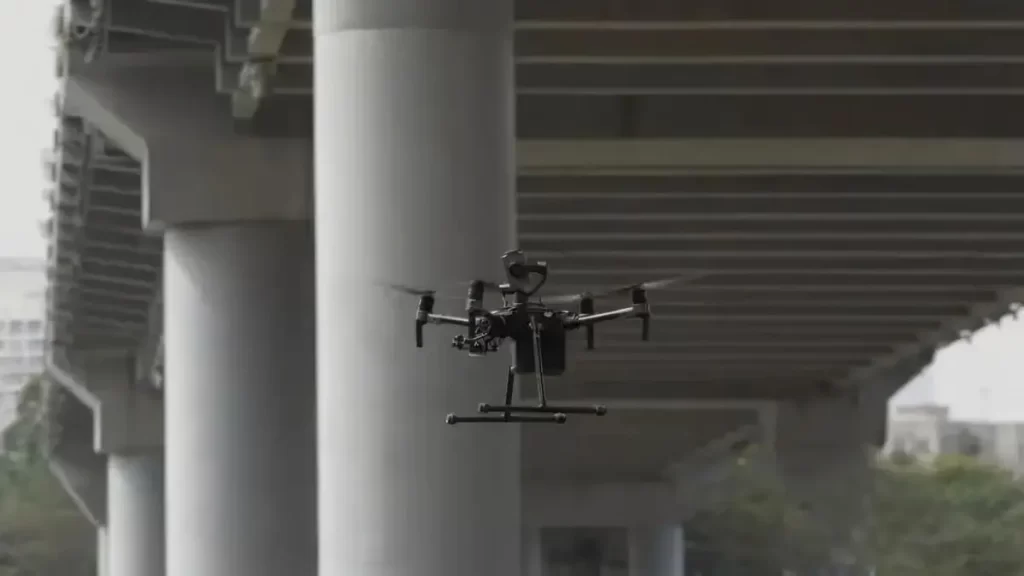
Why Drone Bridge Inspection Is More Effective
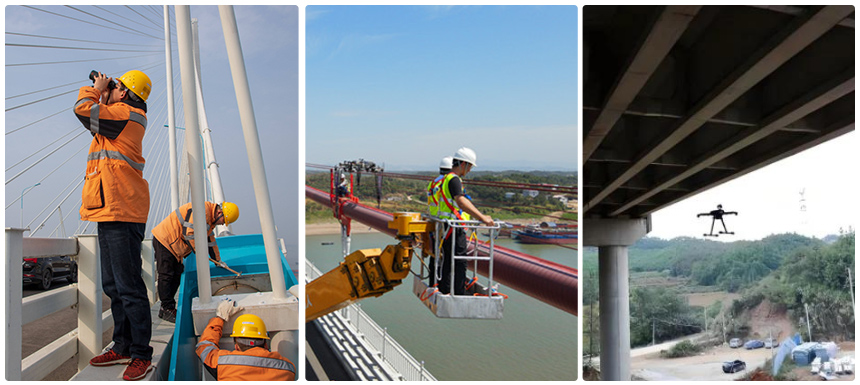
Traditional bridge inspection methods often involve:
- Manual climbing
- Under-bridge inspection vehicles
- Lane closures
- Safety risks
Drone bridge inspection provides significant advantages:
Improved Safety
Inspectors remain on the ground while drones access hard-to-reach areas.
Higher Efficiency
Large bridge areas can be inspected quickly with minimal disruption.
High-Resolution Data Collection
Drones capture:
- High-resolution images
- 3D models
- Structural condition data
Better Defect Detection
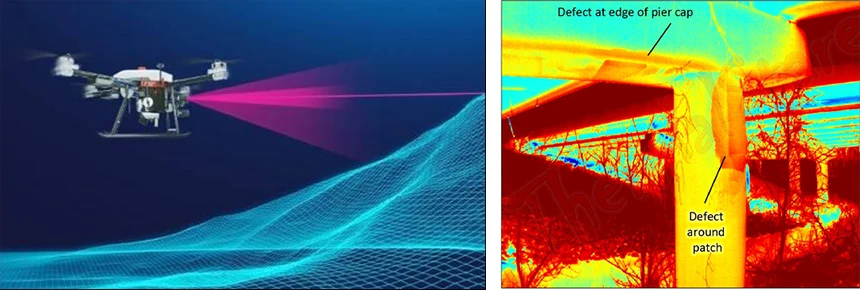
Drone imagery combined with AI enables:
- Crack detection
- Corrosion detection
- Spalling identification
- Structural deformation analysis
How Riebo's Drone Bridge Inspection Solution Supports Accurate Assessment
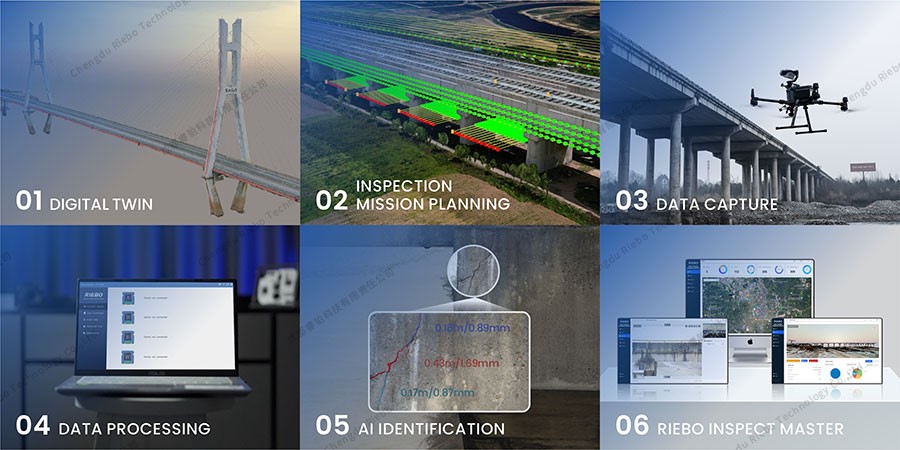
Riebo’s Drone Bridge Inspection Solution integrates:
- High-resolution drone imaging
- AI-based defect detection
- 3D digital twin modeling
- Intelligent inspection route planning
This solution enables:
- Safer inspections
- Faster data collection
- More accurate defect detection
- Reduced inspection costs
By combining AI and drone technologies, engineers can detect structural issues earlier and make more informed maintenance decisions.
Conclusion
Curved continuous beam bridges are structurally complex and prone to multiple types of defects, including bearing issues, cracking, deflection, and lateral displacement. Early detection is essential to ensure long-term safety and performance.
Drone-based bridge inspection is transforming how engineers assess these structures by improving safety, efficiency, and accuracy.
With intelligent inspection technologies such as Riebo’s Drone Bridge Inspection Solution, infrastructure owners can reduce inspection risks, lower maintenance costs, and extend bridge service life.