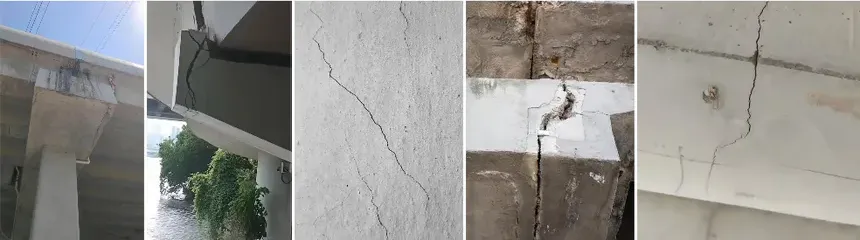
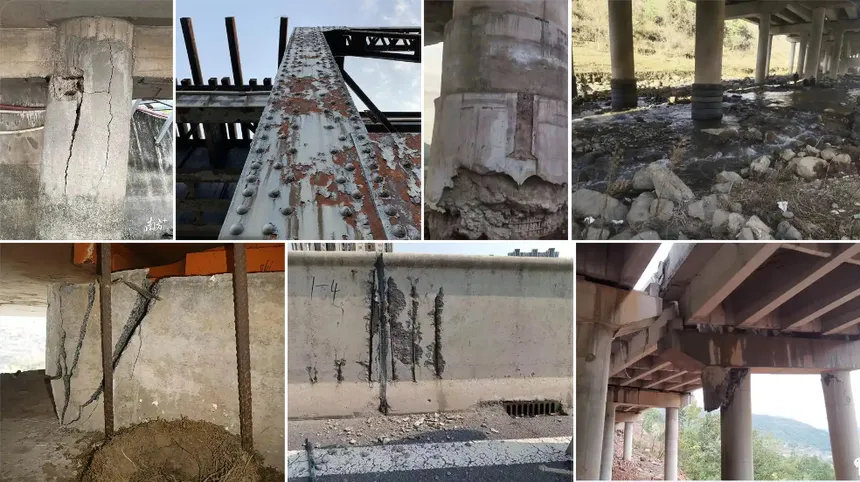
Bridges are critical components of transportation infrastructure, supporting heavy traffic loads and enduring long-term environmental exposure. Among various bridge structures, pile-column bridge piers with cap beams are widely used in highway bridges, overpasses, and river crossings.
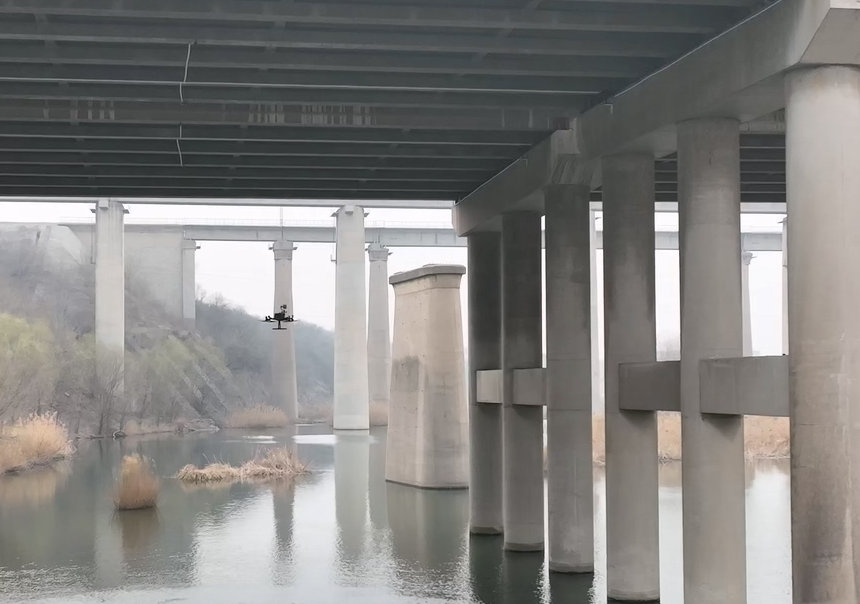
However, due to continuous load, environmental factors, and material aging, bridge pier cap beams and columns are prone to various structural defects, particularly cracks. Identifying these issues early is essential for maintaining structural safety and extending service life.
With the advancement of drone bridge inspection technology, engineers can now detect bridge pier defects more efficiently, safely, and accurately than traditional inspection methods.
This article explores common defects in pile-column bridge pier cap beams and explains how drone-based bridge inspection improves detection and maintenance.
What Is a Pile-Column Bridge Pier?
Pile-column bridge piers typically consist of:
- Piles (foundation)
- Columns (vertical support)
- Cap beam (horizontal beam connecting columns)
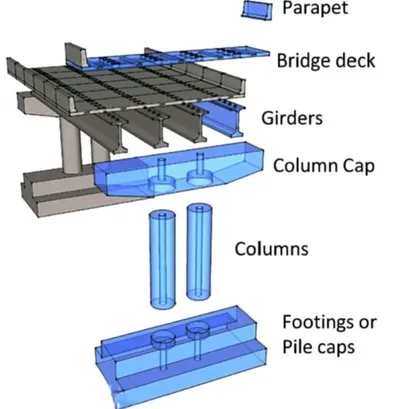
This structural form is widely used because it:
- Provides strong load-bearing capacity
- Reduces water resistance in river bridges
- Allows flexible structural design
- Simplifies construction
Depending on the bridge type and environmental conditions:
- Circular piers are commonly used in river bridges to reduce water resistance
- Rectangular piers are often used in overpasses and urban bridges
Despite their advantages, these structures are susceptible to cracking, deformation, and deterioration over time.
Common Bridge Pier Cap Defects
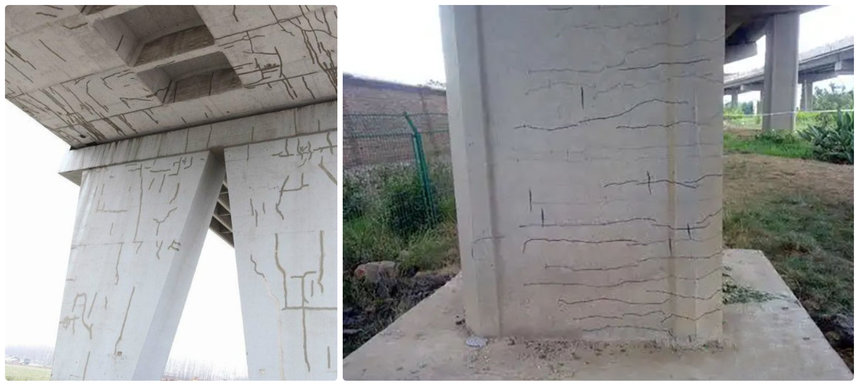
1. Vertical Cracks in Cap Beams
Vertical cracks are among the most common defects found in bridge pier cap beams.
Typical Characteristics
- Cracks extending downward from the top of the cap beam
- Cracks forming upward near mid-span
- Longitudinal shrinkage cracks along the beam
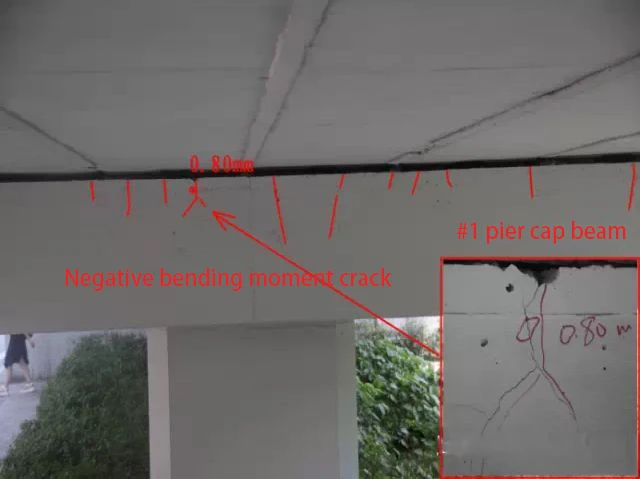
These cracks may appear during construction or develop over time due to operational loads.
Main Causes
Construction-Related Causes
- Premature removal of formwork
- Concrete shrinkage due to high temperature or dry conditions
- Improper curing
Design-Related Causes
- Insufficient reinforcement
- Inaccurate structural calculations
- Increased traffic loads or overloading
Repair Methods
Common repair and reinforcement methods include:
- Crack sealing or epoxy injection
- Steel plate bonding reinforcement
- Section enlargement
- External prestressing reinforcement
Early detection is essential to prevent cracks from expanding and affecting structural safety.
2. Diagonal Cracks in Cap Beams
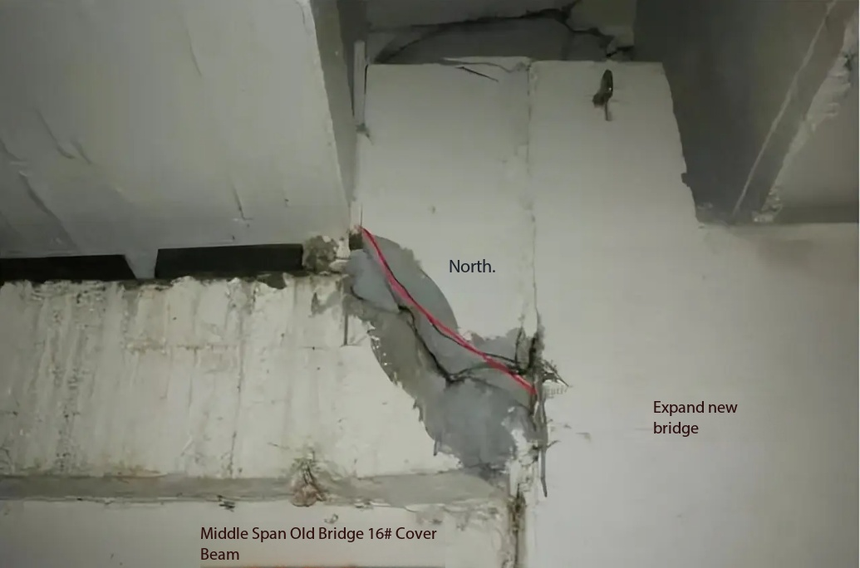
Diagonal cracks often indicate shear-related structural problems.
Typical Characteristics
- Cracks at 30°–60° angles
- Frequently appearing near column supports
- Rapid crack propagation under heavy load
Main Causes
- Insufficient shear reinforcement
- Excessive shear forces caused by heavy traffic
- Structural fatigue
Repair Methods
- Steel plate strengthening
- Section enlargement
- Shear capacity reassessment and reinforcement
These cracks can be critical, as they may signal structural weakness in load-bearing components.
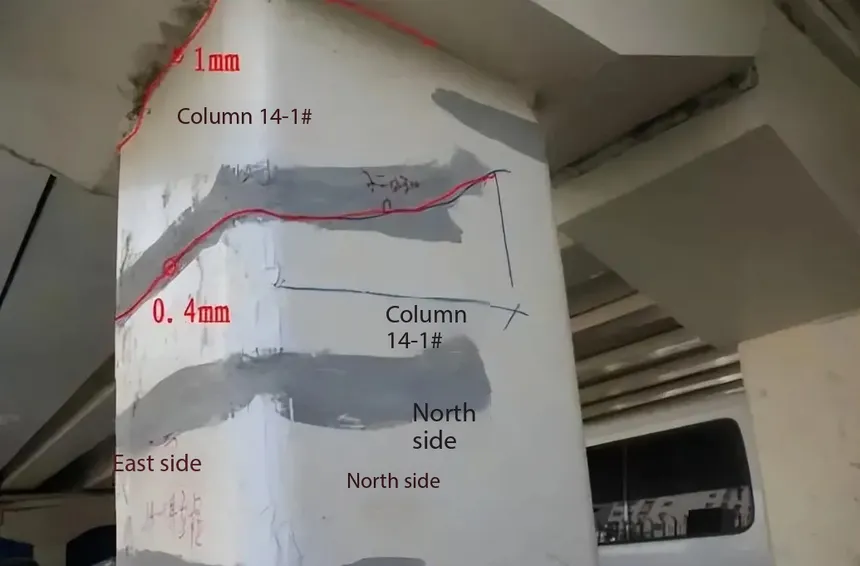
3. Horizontal Cracks in Bridge Columns
Horizontal cracks typically occur in the bridge columns rather than the cap beam.
Typical Characteristics
- Circumferential horizontal cracks
- Cracks forming at consistent elevations
Main Causes
- Uneven foundation settlement
- Lateral soil pressure
- Structural movement caused by adjacent construction
- Traffic load redistribution
Repair Methods
- Reducing lateral pressure
- Removing rigid pavement near columns
- Concrete jacketing or column strengthening
Horizontal cracks may indicate foundation movement, which requires prompt inspection.
Challenges of Traditional Bridge Pier Inspection
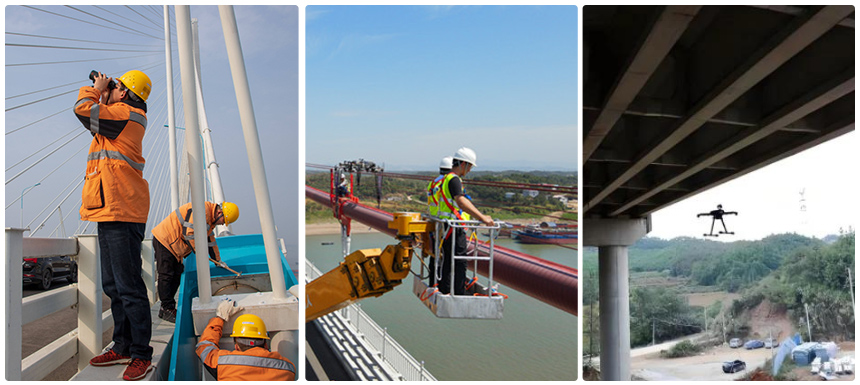
Traditional bridge inspection methods often involve:
- Manual visual inspection
- Climbing scaffolding
- Under-bridge inspection vehicles
- Rope access
These approaches present several challenges:
- Safety risks for inspectors
- Limited access to hard-to-reach areas
- High labor and equipment costs
- Inconsistent inspection quality
- Time-consuming operations
These limitations make it difficult to conduct frequent and detailed inspections.
How Drone Bridge Inspection Improves Defect Detection
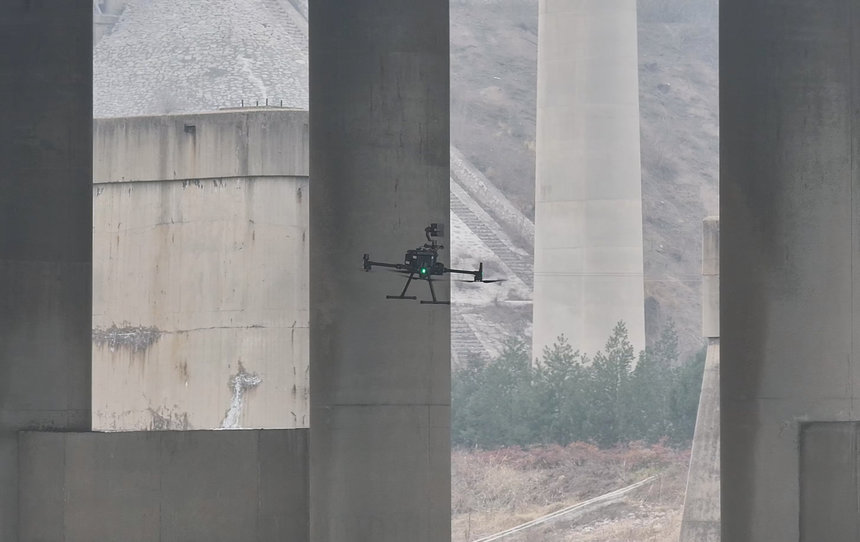
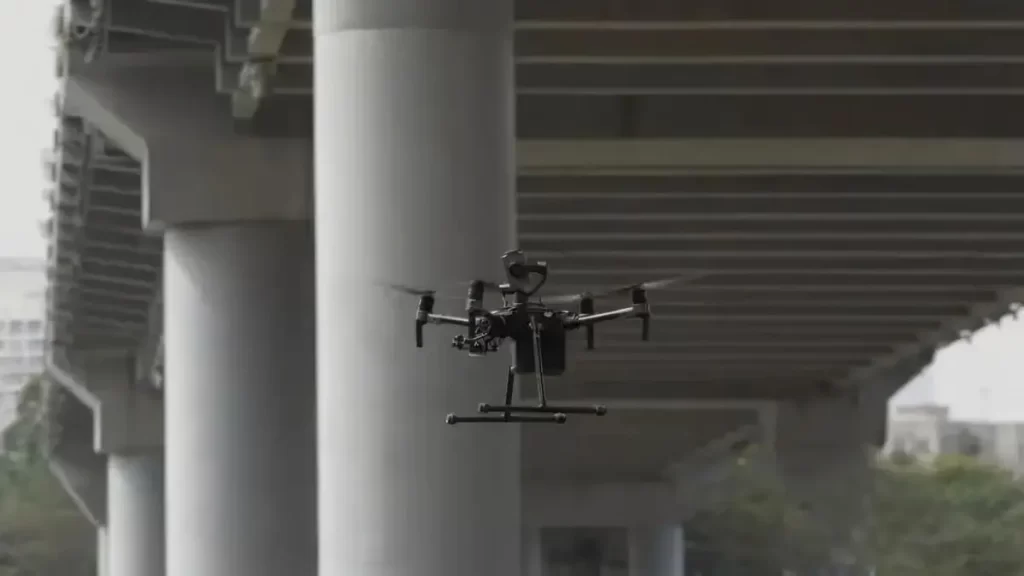
Drone bridge inspection technology offers a safer and more efficient alternative.
Access to Hard-to-Reach Areas
Drones can easily inspect:
- Bridge pier cap beams
- Column surfaces
- Underside structures
- High-altitude components
This improves inspection coverage and accuracy.
High-Resolution Crack Detection
Modern inspection drones are equipped with:
- High-resolution cameras
- Zoom lenses
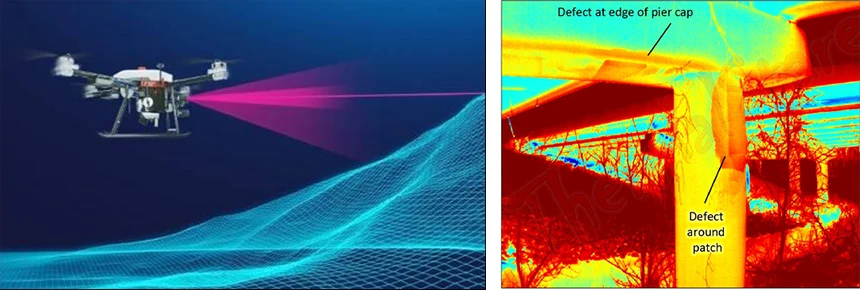
- Thermal cameras (optional)
- LiDAR sensors (optional)
These technologies allow detection of:
- Hairline cracks
- Concrete spalling
- Corrosion
- Surface deformation
AI-Powered Defect Identification
AI-based bridge inspection systems can automatically:
- Detect cracks
- Measure crack width
- Classify defect types
- Generate inspection reports
This improves inspection efficiency and reduces human error.
Improved Safety and Reduced Costs
Using drones eliminates:
- Scaffolding installation
- Rope access operations
- Traffic lane closures
This significantly reduces:
- Inspection risk
- Inspection time
- Operational costs
Applications of Drone Inspection for Bridge Pier Defects
Drone inspection is particularly effective for detecting:
- Cap beam vertical cracks
- Diagonal shear cracks
- Column horizontal cracks
- Concrete spalling
- Reinforcement exposure
- Surface corrosion
These capabilities make drones ideal for routine bridge maintenance and condition assessment.
Conclusion
Pile-column bridge pier cap beams are critical structural components that require regular inspection. Common defects such as vertical cracks, diagonal cracks, and horizontal column cracks can significantly impact bridge safety if not detected early.
Traditional inspection methods often struggle with safety risks and limited accessibility. Drone bridge inspection technology, combined with AI-based defect detection, provides a safer, faster, and more accurate solution.
Riebo’s Drone Bridge Inspection Solution
Riebo’s Drone Bridge Inspection Solution helps infrastructure owners and engineers:
- Conduct safe bridge pier inspections
- Detect cracks and structural defects
- Capture high-resolution inspection data
- Improve maintenance decision-making
- Reduce inspection costs and downtime
With advanced drone technology and intelligent inspection capabilities, Riebo’s Drone Bridge Inspection Solution supports efficient and reliable bridge condition assessment for modern infrastructure management.