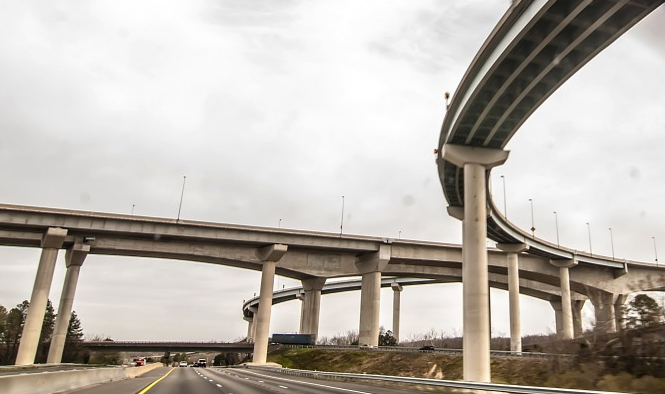
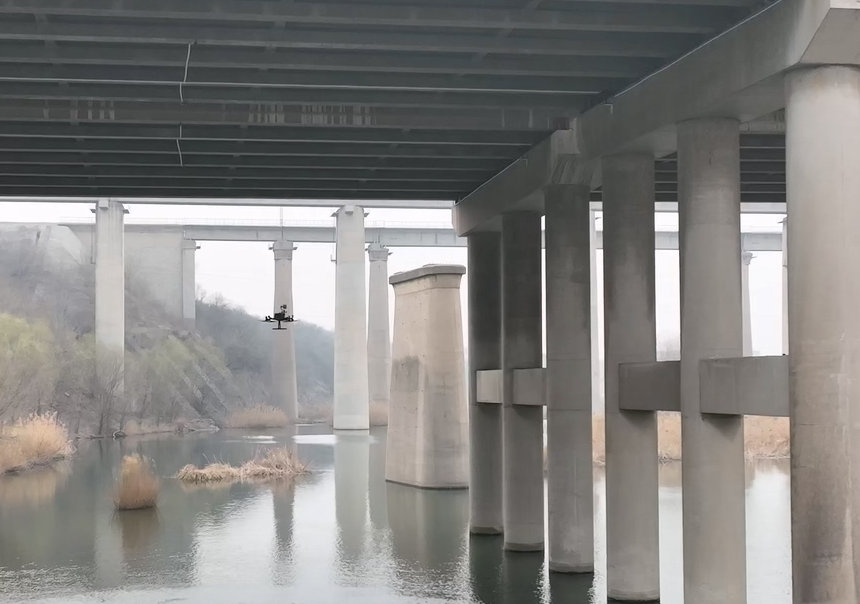
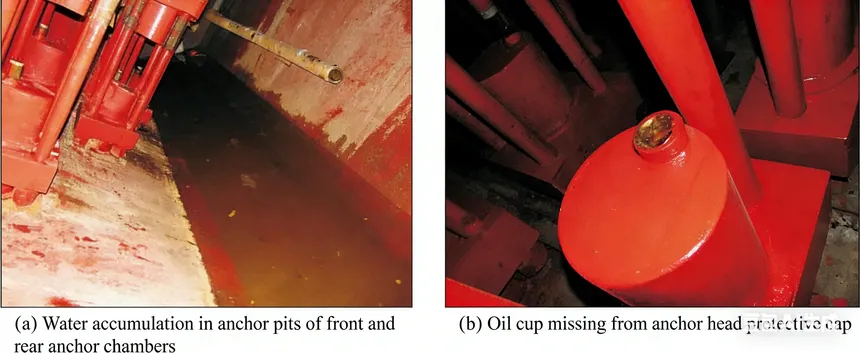
Bridge piers and foundations form the hidden backbone of a bridge. While they are rarely visible, any small defect—such as a crack, settlement, or tilt—can gradually threaten the entire bridge’s stability. That’s why regular inspection of bridge substructures is one of the most important parts of bridge maintenance and safety management.
This article explains how engineers inspect bridge piers, abutments, and foundations, what problems they look for, and why these inspections are critical for preventing future damage.
Why Bridge Pier and Abutment Inspection Matters
Piers and abutments are responsible for transferring the bridge’s load into the ground. Over time, heavy traffic, floods, temperature changes, and soil movement can cause cracks, tilting, or settlement in these structures.
Even small changes—like a few millimeters of displacement or a thin crack—can indicate a deeper problem such as foundation weakening or uneven soil settlement.
Regular inspection helps engineers detect these issues early, preventing severe deformation or costly repairs later on.
Inspection of Bridge Piers and Abutments
1. Checking for Cracks and Surface Damage
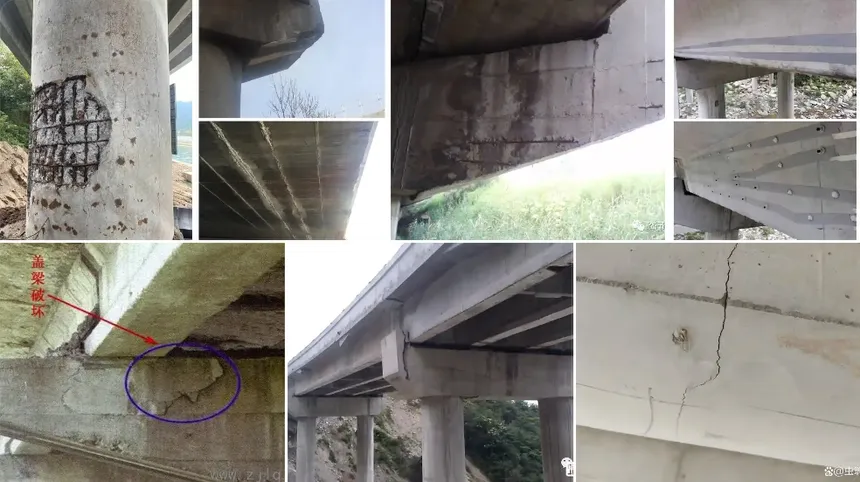
Cracks are among the most common and visible problems in bridge piers. They may result from repeated temperature changes, material shrinkage, or structural stress from heavy loads.
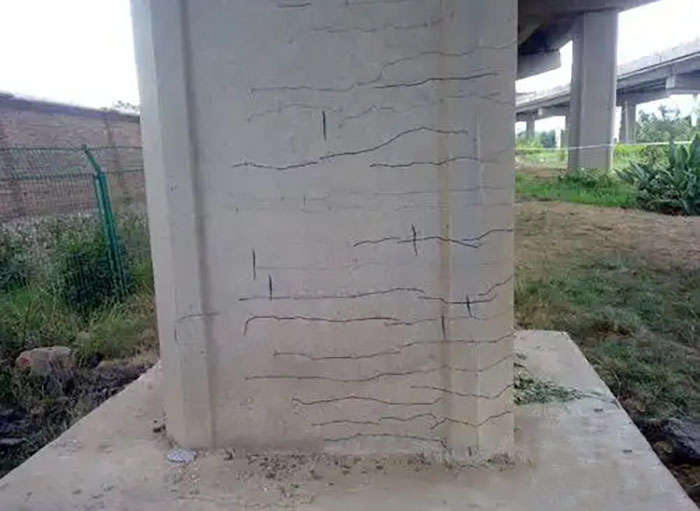
During inspection, engineers carefully observe:
- Vertical cracks caused by concrete shrinkage or load stress.
- Horizontal cracks near the pier cap or base, which may suggest shear or bending stress.
- Diagonal cracks extending from corners, often indicating uneven settlement.
Crack width and length are measured with crack gauges or monitoring sensors.
If cracks continue to grow or change direction, it’s a sign that the pier may be shifting or experiencing internal stress.
Continuous observation helps determine whether repairs or reinforcements are necessary.
2. Detecting Settlement, Tilt, and Displacement
Settlement and tilting occur when the foundation soil beneath a pier compresses unevenly.
These movements may seem small at first, but they can lead to serious alignment problems in the entire bridge.
Inspection involves measuring the vertical and horizontal movement of piers and abutments using:
- Precision leveling instruments to measure settlement or tilt.
- Laser alignment tools or total stations for horizontal displacement.
- Triangular survey methods to compare measurements with original construction data.
For instance, if a pier top shows a gradual tilt toward one side, engineers may suspect foundation subsidence or scouring around the base.
By regularly comparing measurements, changes can be tracked over time to evaluate long-term stability.
3. Monitoring Horizontal Movement
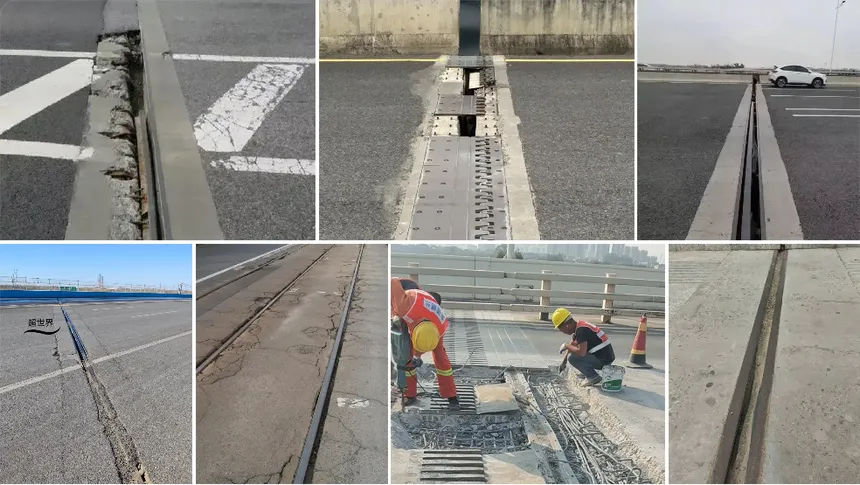
Horizontal movement of abutments or piers can cause expansion joints or bearings to malfunction.
To monitor this, survey markers or fixed reference points are installed on the bridge and measured periodically.
If the measured displacement exceeds design tolerances, maintenance teams can intervene early—realigning bearings, reinforcing joints, or strengthening the abutment to restore balance.
Inspection of Bridge Foundations
1. Scouring and Erosion Around Foundations
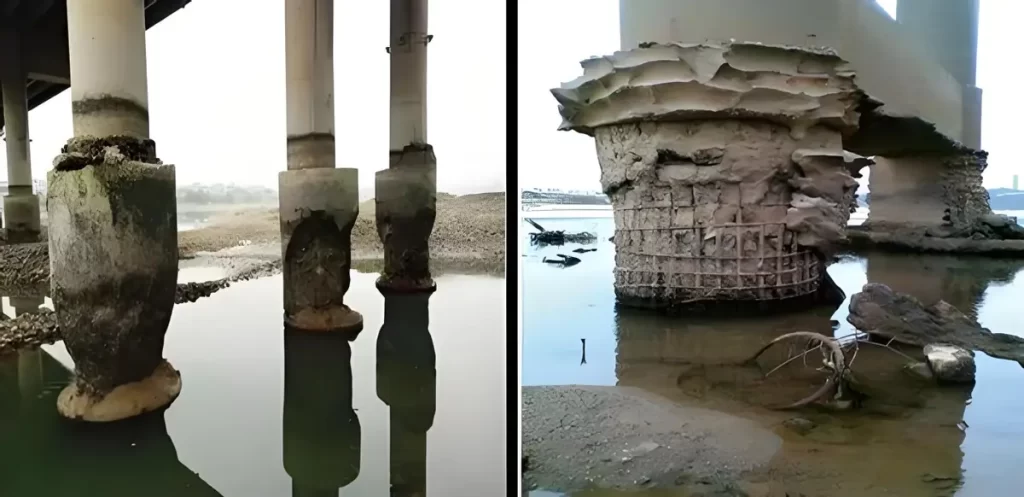
Foundation scouring happens when flowing water gradually washes away the soil or sediment surrounding the bridge base.
This is especially common after floods or during high-flow seasons.
When scouring occurs, the foundation may become partially exposed, leading to:
- Visible gaps or cavities around pile caps or piers.
- Exposed reinforcement or rebar corrosion.
- Reduction in load-bearing capacity.
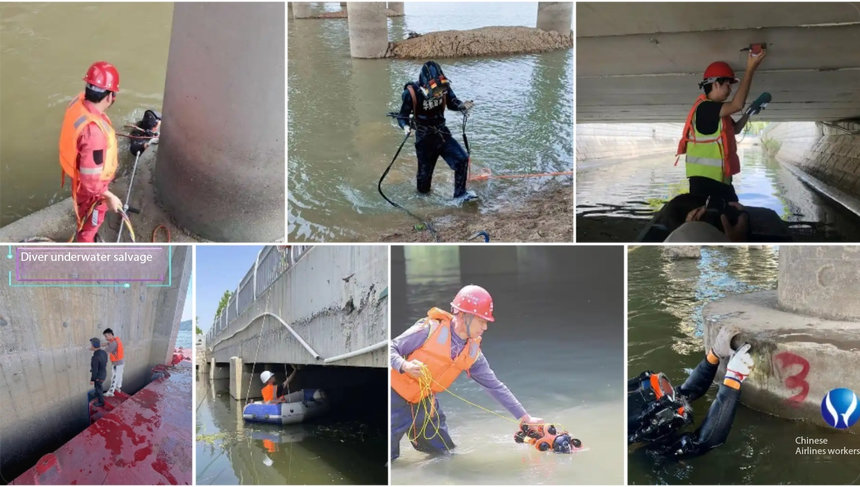
Inspection methods include diver-based visual inspection, underwater sonar scanning, and laser depth measurement.
If scouring is detected, engineers may install protective measures such as riprap, gabions, or reinforced concrete collars to prevent further erosion.
2. Detecting Cracks and Cavities in the Foundation
Concrete foundations can develop internal cracks or voids over time due to poor compaction, water infiltration, or freeze–thaw cycles.
These hidden defects weaken the structure and can accelerate settlement.
To locate them, inspectors use ultrasonic testing, vibration-based methods, or ground-penetrating radar (GPR).
The results help determine whether the foundation needs grouting reinforcement—a process where cement slurry is injected into voids to fill gaps and restore integrity.
3. Signs of Uneven Settlement or Weak Soil
If one side of a bridge abutment settles more than the other, the structure may begin to tilt or crack at the connections.
Such uneven settlement often stems from soft or unstable soil layers below the foundation.
Engineers investigate these areas using core drilling, soil sampling, and geotechnical testing to determine the bearing capacity of the subsoil.
If weak layers are found, ground improvement methods like jet grouting or soil replacement can be used to stabilize the foundation.
Common Causes of Pier and Foundation Damage
- Water and flooding: The most frequent cause of scouring and erosion.
- Soil instability: Weak or compressible soil can cause long-term settlement.
- Freeze–thaw cycles: Repeated temperature changes lead to concrete cracking.
- Poor construction or inadequate drainage: Allows water infiltration, accelerating deterioration.
- Environmental effects: Wind, vibration, and chemical attack over time weaken materials.
Each of these factors may act slowly, but if ignored, they can eventually cause structural deformation or collapse.
Modern Tools for Inspection and Monitoring
Today, modern technology allows engineers to assess bridge piers and foundations more safely and accurately than ever before.
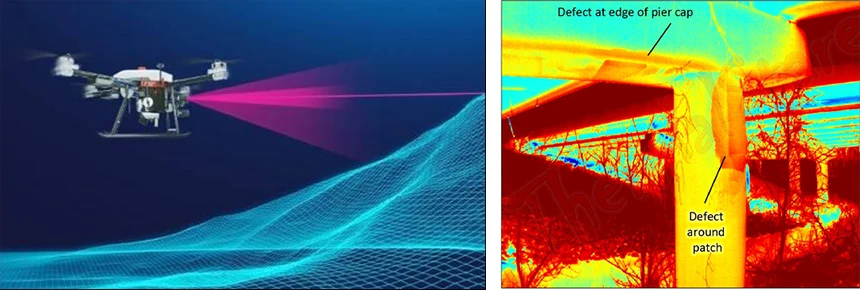
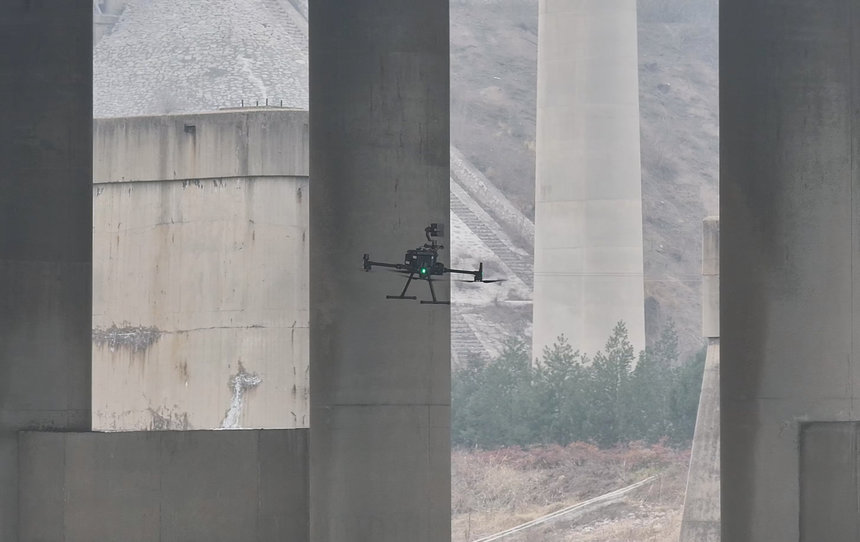
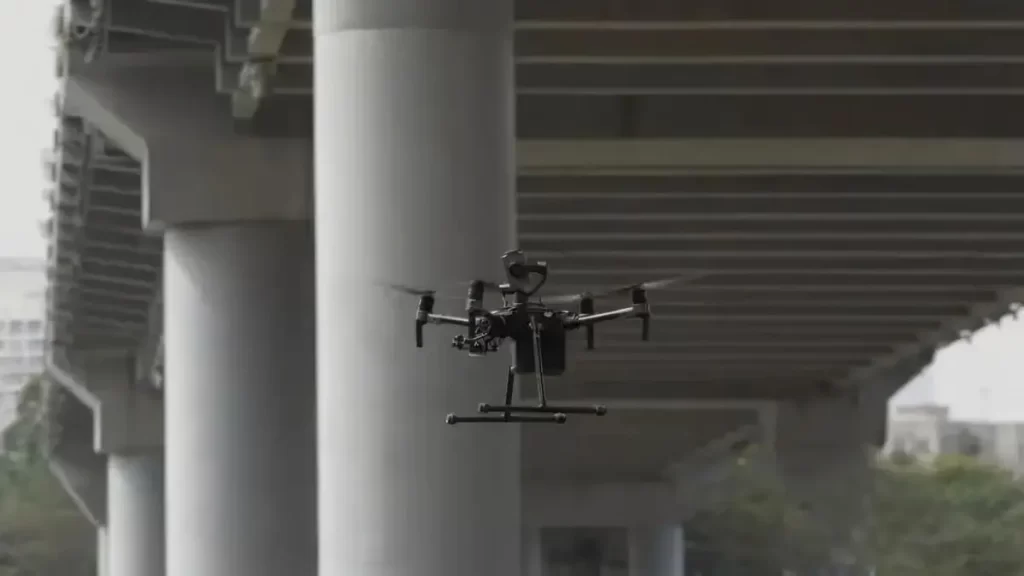
UAVs (drones) capture detailed images of piers and abutments from difficult angles.
AI-powered image analysis automatically identifies cracks, surface erosion, and corrosion.
Laser scanning and 3D digital twin modeling visualize bridge deformation in real time, allowing precise comparison with design data.
For example, Riebo’s AI Bridge Inspection Solution integrates UAV imaging, crack detection, and digital twin analysis, enabling engineers to evaluate bridge substructures quickly and make data-driven maintenance decisions.
These tools not only improve safety by reducing manual inspection risks but also help prioritize repairs based on accurate, measurable data.
Conclusion
Bridge piers and foundations are the unseen pillars that keep a bridge stable and safe.
Cracks, settlement, and scouring might develop slowly, but without timely detection, they can lead to severe damage or even collapse.
Regular, well-planned inspection—combined with modern technologies like drones and AI—allows engineers to detect early signs of deterioration, maintain structural balance, and extend the service life of bridges.
In the future, intelligent inspection solutions such as Riebo’s AI Bridge Inspection Solution will continue to make bridge maintenance more efficient, accurate, and reliable—protecting infrastructure and ensuring public safety.