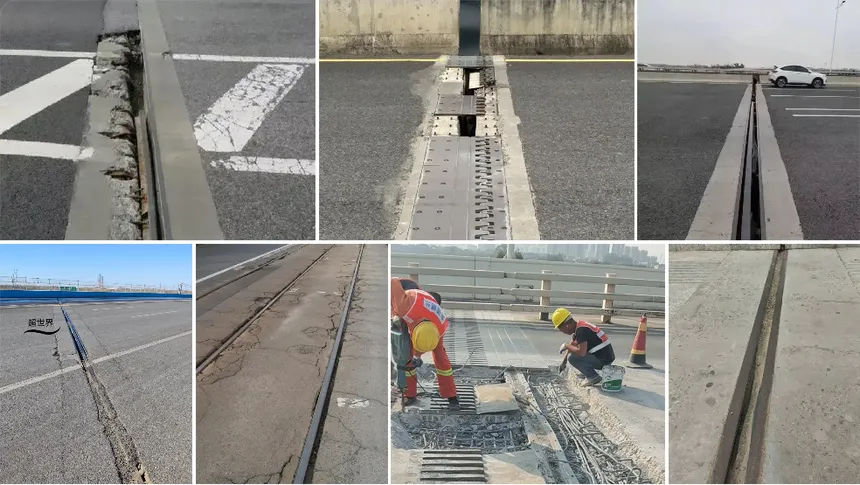
Bridge expansion joints may be small in size, but they play a critical role in ensuring the safety, durability, and comfort of a bridge. They allow the bridge deck to expand and contract with temperature changes and traffic loads. However, if these joints are poorly installed or not maintained, they can become a major source of damage, noise, and even structural risk over time.
This article explains how proper installation, inspection, and maintenance can prevent bridge expansion joint problems — in plain language — and how Riebo’s Drone Bridge Inspection Solution can help engineers detect hidden issues early.
1. Choosing the Right Expansion Joint System
Selecting the right expansion joint is crucial to the bridge’s structural performance. The ideal system should:
- Adapt to movement between bridge spans without causing cracks or stress.
- Provide a smooth and comfortable surface for vehicles.
- Be easy to inspect and maintain over time.
In short, the joint should balance flexibility, durability, and accessibility.
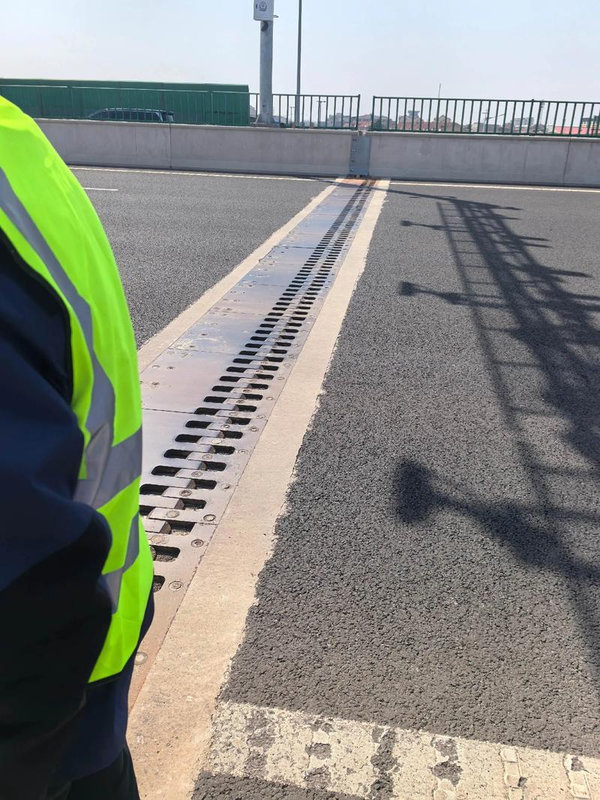
2. Installation and Quality Control
During construction, precision is key. Expansion joints must be installed according to exact temperature and alignment requirements.
If a joint is installed too tight or loose, it can lead to early cracking or deformation. Key steps include:
- Cleaning the installation area and ensuring proper waterproofing.
- Aligning the joint steel plates carefully before concrete pouring.
- Checking bolts and connections after installation.
Even small mistakes during installation can lead to water leakage or corrosion, which eventually weakens the bridge deck.
3. Anchor Installation and Positioning
Anchor bolts are the “hidden strength” behind expansion joints. They connect the joint structure securely to the bridge deck and abutments.
To ensure reliability:
- The bolts must be set at the correct depth and spacing.
- The steel reinforcement around them should be well integrated with concrete.
- The alignment must match the designed position within a tolerance of a few millimeters.
This ensures that the expansion joint stays stable under heavy traffic and thermal stress.
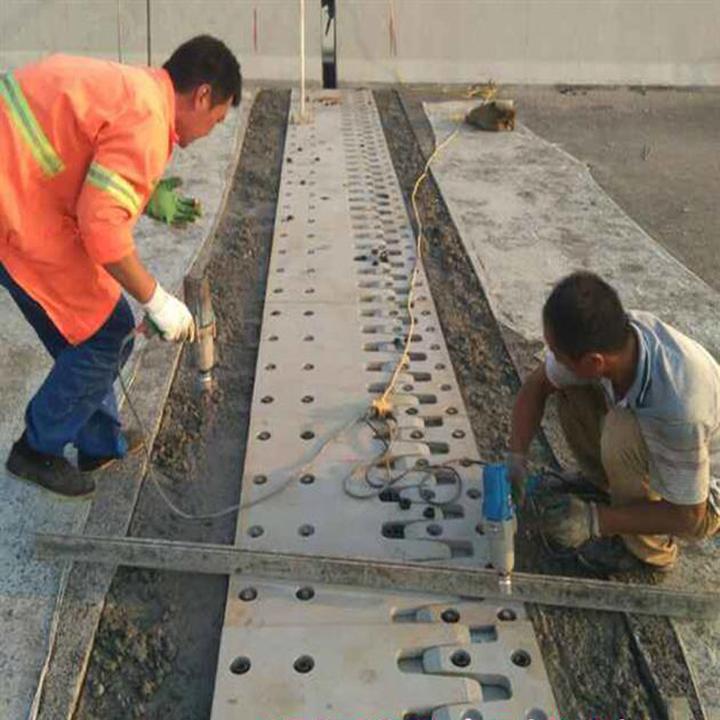
4. Continuous Joints: Design and Construction
For long-span bridges, continuous joints (long joint strips connecting multiple bridge sections) are often used. Typically, every 30 meters of bridge length should have a joint width of about 6 cm. The installation must ensure smoothness and uniform depth so that the driving surface remains level and comfortable.
Poor joint leveling can cause bumping and noise during driving, and even damage vehicle suspensions over time.
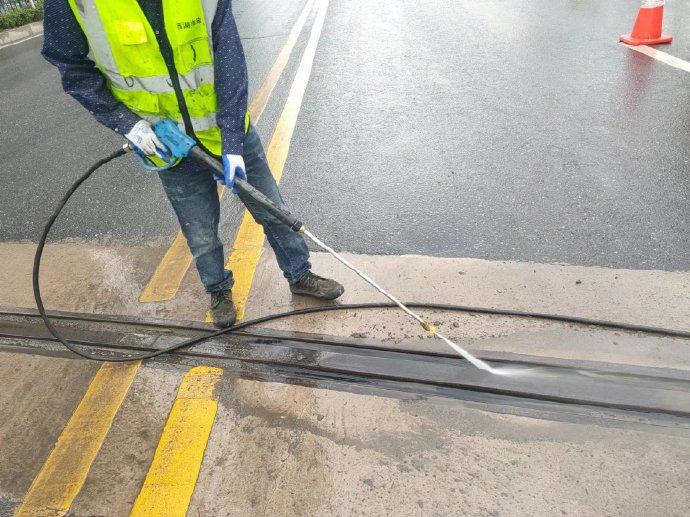
5. Regular Maintenance and Prevention
Even after installation, expansion joints require regular maintenance to prevent long-term damage. Routine tasks include:
- Cleaning out sand, debris, and water that can block the joint.
- Repairing cracks or corrosion promptly.
- Ensuring drainage and sealing systems remain functional.
Neglecting these steps can lead to rust, water leakage, and freezing damage — especially in cold or coastal environments.
6. Improving Continuous Joint Design
Modern bridges are increasingly adopting improved continuous joint systems — featuring double sealing, waterproof layers, and lightweight composite materials. These upgrades reduce noise, extend service life, and make future maintenance easier.
In design, engineers should also ensure proper load distribution and surface flatness, keeping the bridge safe and comfortable for decades.
7. How Drones Are Enhancing Bridge Joint Inspection
Traditionally, inspecting bridge expansion joints meant manual climbing, lane closures, and safety risks. Now, with Riebo’s Drone Bridge Inspection Solution, this process becomes faster, safer, and more precise.

Riebo’s drones can:
- Capture high-resolution images of bridge joints and deck surfaces.
- Use AI-powered analysis to detect cracks, spalling, and material aging.
- Monitor hard-to-reach areas under the bridge without disrupting traffic.
By combining drone data with non-destructive testing results, engineers can form a complete understanding of bridge joint health — preventing problems before they threaten structural safety.
Conclusion
Expansion joints are small but vital. Proper design, installation, and maintenance keep bridges safe, quiet, and smooth for decades of service. With the help of Riebo’s Drone Bridge Inspection Solution, engineers now have a smarter way to monitor and maintain these essential components — ensuring that every bridge continues to stand strong under the test of time, weather, and traffic.