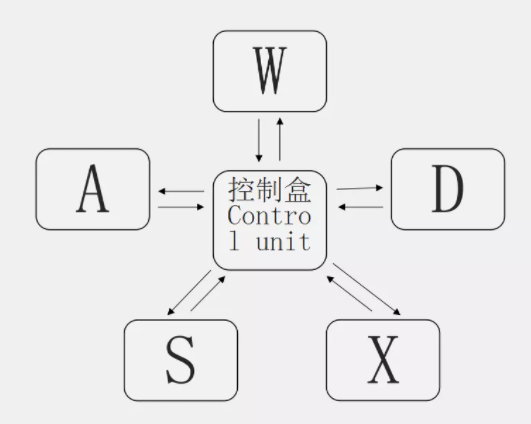
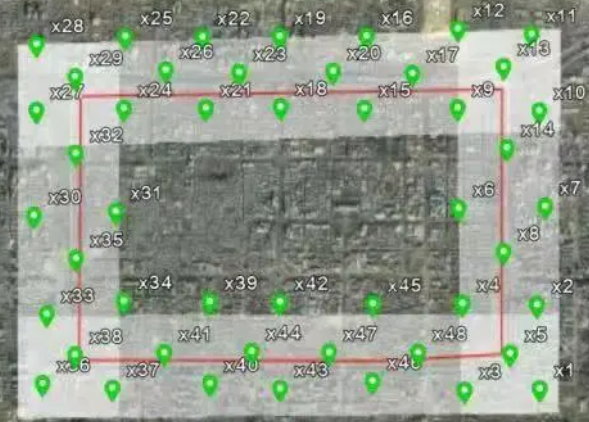
In daily operations, Riebo’s technical team frequently receives customer inquiries about speckle artifacts appearing in 3D photogrammetry models. The issue has become so common that it is even included as an internal technical assessment question: under what conditions do model speckles occur, and how can they be mitigated?
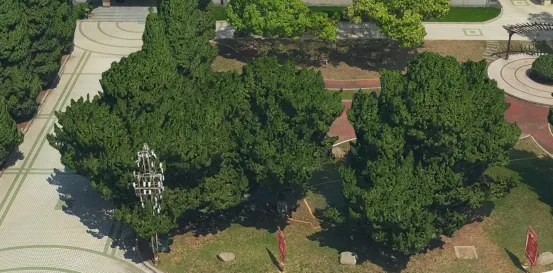
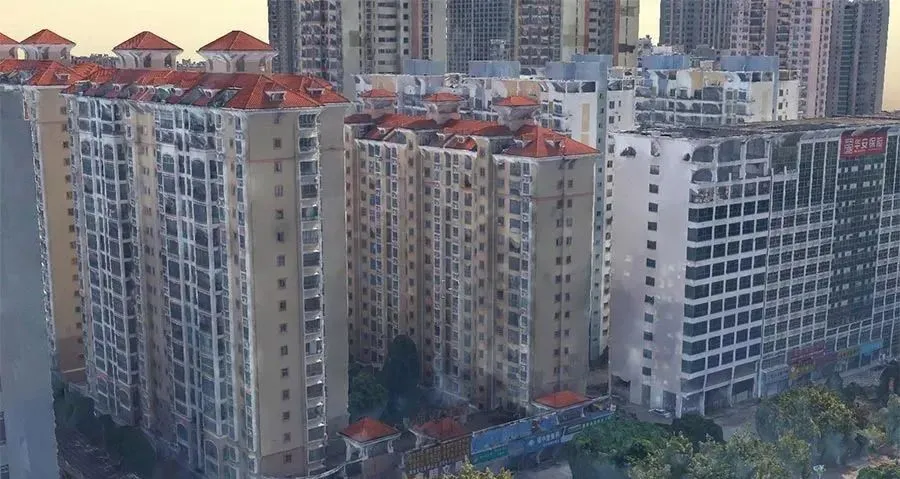 Mottling can seriously affect the appearance of the model
This highlights a persistent challenge in oblique photogrammetry. Speckle artifacts often degrade the visual quality of 3D models and remain one of the most noticeable imperfections in final deliverables. While many users attempt to eliminate these issues by carefully selecting flight times or performing manual color balancing across large volumes of images, these approaches typically require significant time and labor while still producing limited improvements.
This raises an important question: is it possible to address speckle artifacts at the source rather than relying on post-processing?
To address this challenge, Riebo introduces a new approach based on Kalman filter-based exposure smoothing, designed to reduce speckle artifacts directly during data acquisition.
Main Causes of Speckle Artifacts in 3D Models
Weather and Lighting Variations
Experienced aerial survey professionals understand that ideal oblique photogrammetry conditions typically occur either on clear days with stable sunlight or on bright overcast days. In these situations, lighting conditions remain relatively stable, reducing sudden brightness variations across captured images.
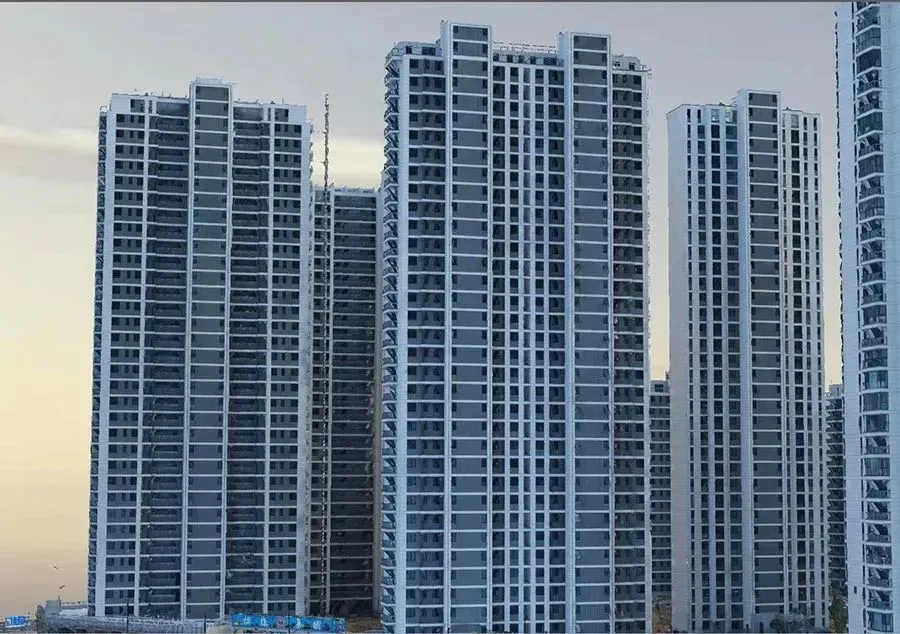
Overcast conditions can even be advantageous. Cloud layers act as a natural diffuser, softening shadows and creating uniform illumination across the scene. This results in more consistent textures and smoother 3D models.
However, such ideal conditions are not always available. During long aerial missions, lighting conditions can change rapidly as clouds move, creating inconsistent brightness between images. These variations often lead to visible speckle artifacts in reconstructed models.
Surface Reflection and Object Characteristics
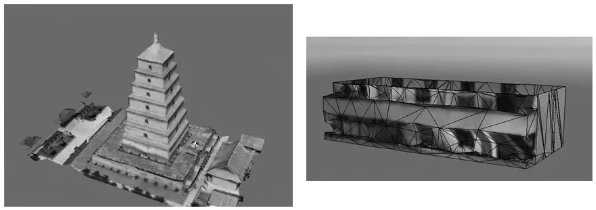
Modern urban environments often include glass curtain walls and reflective surfaces. These reflections can produce irregular brightness patterns across building facades, which later appear as speckle artifacts in 3D models.
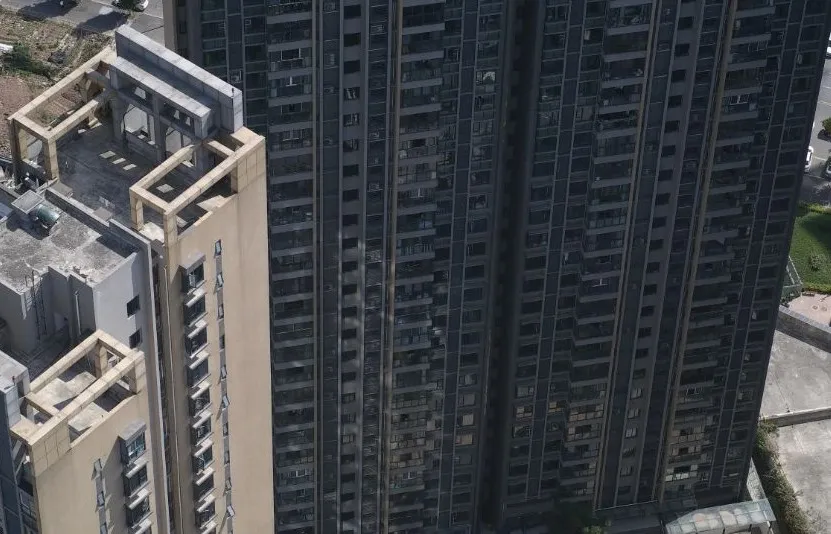 The mottled texture on the building surface
Interestingly, while reflections may negatively affect visual consistency, they can sometimes improve feature matching by introducing additional texture. This can help reduce reconstruction gaps, even though it may still impact model aesthetics.
Exposure Variations Caused by Texture Differences
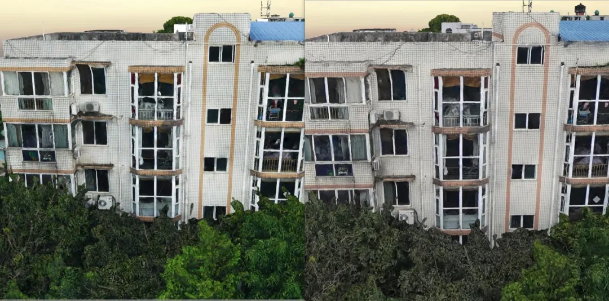
Even when ambient lighting remains stable, camera exposure can still fluctuate due to texture differences in the scene. Automatic exposure systems adjust brightness based on the observed surface, which means that even identical materials may appear brighter or darker depending on surrounding textures.
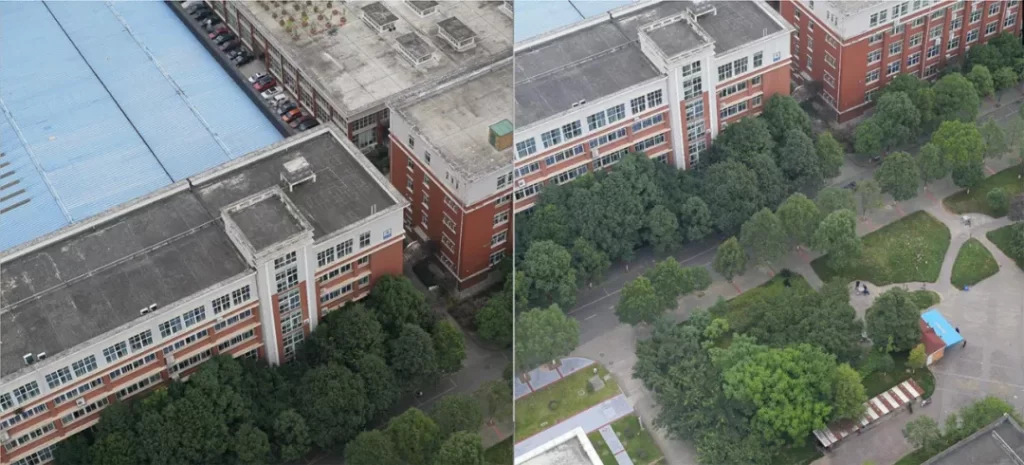 Photos taken continuously with the same lens show inconsistent brightness of the building facades
This issue becomes particularly noticeable in dense urban areas, where rapid texture variation causes inconsistent exposure across building surfaces. As a result, the final 3D model may exhibit uneven brightness and speckled patterns.
The solution introduced by Riebo specifically targets this type of exposure-related speckle problem.
Aerial Camera Exposure Principles
Common exposure algorithms used in aerial imaging include average brightness methods, weighted average methods, and histogram-based approaches. Among these, average brightness is the most widely used. This method calculates the average pixel brightness and continuously adjusts exposure parameters to reach a target brightness level.
Weighted average methods assign different weights to various regions of an image. This is similar to different metering modes in conventional cameras. Histogram-based methods evaluate brightness distribution and adjust exposure accordingly.
In aerial photogrammetry, exposure is typically handled using either fixed exposure or automatic exposure.
Fixed exposure ensures consistent brightness across images, preventing speckle artifacts caused by exposure variation. However, this method requires stable lighting conditions. When lighting changes significantly, the entire dataset may become overexposed or underexposed. For this reason, fixed exposure is rarely used in outdoor aerial mapping, though it may work well in controlled environments such as indoor scenes.
Automatic exposure, on the other hand, adapts to changing lighting conditions throughout the day. While this approach handles environmental light variation effectively, it cannot fully resolve exposure inconsistencies caused by surface texture changes.
Riebo’s engineering team explored a hybrid approach by combining fixed exposure with real-time solar radiation monitoring. The concept involved installing a radiation sensor or wide-angle high-frame-rate camera above the system to continuously measure sunlight intensity and adjust exposure parameters accordingly.
In theory, this solution could maintain consistent exposure regardless of lighting variation. However, in practice, drone attitude changes introduced measurement inconsistencies. Even with cosine correction techniques, it was difficult to eliminate exposure fluctuations caused by UAV movement.
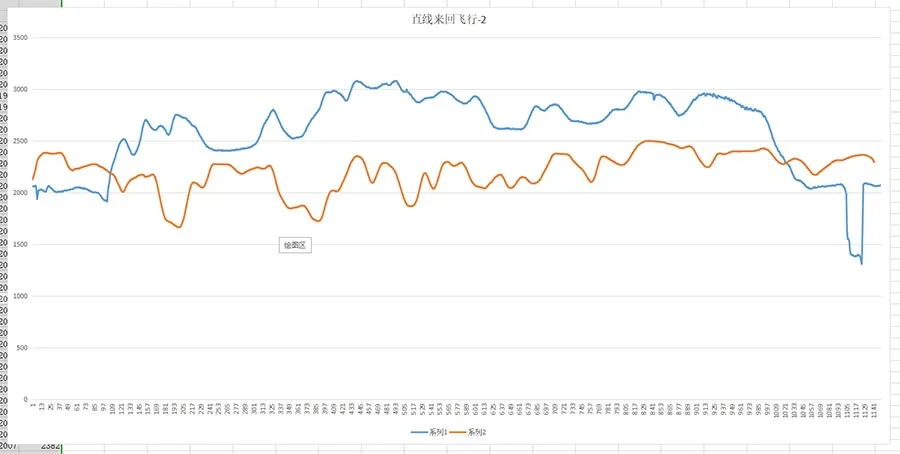 The change in the attitude of the unmanned aerial vehicle leads to changes in the metering value
Although a stabilized gimbal-mounted sensor could potentially solve this issue, the additional weight and complexity made the solution impractical for most drone platforms.
Kalman Filter-Based Exposure Smoothing
During aerial data acquisition, exposure variations are influenced by two main factors: environmental lighting changes and surface texture variations. Lighting changes typically affect all camera lenses simultaneously, while texture variations affect individual lenses differently.
By analyzing these characteristics, exposure adjustments can be optimized. When all lenses show synchronized exposure changes, the system identifies environmental lighting variation and adjusts exposure accordingly. However, when exposure differences occur independently across lenses, the system treats these variations as noise rather than meaningful changes.
This is where Kalman filtering becomes effective. Kalman filtering is an optimization algorithm based on state-space models. It predicts future system states by minimizing estimation variance and filtering noise from dynamic data.
In camera exposure control, the imaging process can be modeled as a dynamic system. The Kalman filter predicts the next exposure value based on historical data and then refines the prediction using actual observations. This iterative process smooths exposure transitions and reduces abrupt brightness changes.
In practical terms, the Kalman filter works like a predictive smoothing mechanism. By analyzing exposure trends, it reduces sudden fluctuations caused by texture variations while still allowing necessary adjustments for environmental lighting changes. The result is smoother image brightness and significantly reduced speckle artifacts in final 3D models.
Conclusion
Speckle artifacts in oblique photogrammetry models are caused by multiple factors, including lighting variation, reflective surfaces, and automatic exposure adjustments. Traditional solutions such as manual color balancing or strict flight scheduling often require significant effort while delivering limited improvements.
By introducing Kalman filter-based exposure smoothing, Riebo addresses speckle artifacts at the source during data acquisition. This approach improves brightness consistency across images, enhances model quality, and reduces post-processing workload.
For professionals involved in large-scale 3D modeling, smart city mapping, or infrastructure inspection, improving exposure stability can significantly enhance both efficiency and model quality.
Riebo’s advanced aerial mapping cameras integrate intelligent exposure control and high-precision imaging capabilities, helping users achieve consistent, high-quality 3D models even under challenging environmental conditions.